




Menu

Make-Up Air Unit Services in Boston – Minimize Downtime with Industrial-Grade MUA Solutions

Titan HVAC Boston delivers commercial make-up air repair, MUA unit installation, and preventive maintenance that keeps your facility compliant, your ventilation balanced, and your operations running without interruption across Greater Boston.

Slider Image 1
Slider Image 2
Slider Image 3
Slider Image 4
Slider Image 5
Slider Image 7
Slider Image 8
Slider Image 9
Slider Image 10
Slider Image 11

Why Boston Commercial Kitchens and Industrial Facilities Need Reliable Make-Up Air Systems

Boston's dense commercial corridors, from the Seaport District to Cambridge's tech hubs, house facilities that depend on continuous ventilation. When your exhaust hood pulls contaminated air out of a commercial kitchen or industrial space, a make-up air unit must replace that volume to maintain neutral building pressure. Without proper MUA unit installation or timely commercial make-up air repair, you risk negative pressure, which pulls in unconditioned outdoor air through every crack and doorway.

Boston's climate amplifies the problem. Winter temperatures drop below 20°F, and summer humidity climbs past 70 percent. A failing make-up air system forces your heating or cooling equipment to work overtime, driving up energy costs and stressing your HVAC infrastructure. Negative pressure also disrupts exhaust performance, creating code violations and health hazards in food service operations.

Commercial MUA services are not optional in high-volume environments. Restaurants in Back Bay, manufacturing facilities in Dorchester, and lab spaces in Kendall Square all require make-up air system maintenance to meet Massachusetts building codes and maintain IAQ standards. A broken MUA unit shuts down exhaust hoods, which shuts down your operation. Delayed repairs mean lost revenue, failed inspections, and employee discomfort.

MUA unit replacement becomes necessary when older systems cannot keep pace with increased exhaust demands or fail to condition incoming air. Titan HVAC Boston handles the full spectrum of commercial make-up air repair, from motor replacements and damper adjustments to complete system retrofits.

Why Boston Commercial Kitchens and Industrial Facilities Need Reliable Make-Up Air Systems
How We Deliver Precision Make-Up Air System Maintenance and Repair

How We Deliver Precision Make-Up Air System Maintenance and Repair

We start every service call with airflow measurement and pressure differential testing. Using calibrated manometers and hot-wire anemometers, we confirm whether your MUA unit is delivering the correct CFM to offset exhaust volume. Imbalanced airflow is the root cause of most commercial ventilation failures, and we quantify the gap before recommending any repair.

Our commercial MUA services include motor and belt inspection, damper actuator calibration, and burner or heat exchanger evaluation for gas-fired units. We check safety interlocks that tie the MUA unit to your exhaust hood, so the system only operates when required. If your unit uses a rooftop curb mount, we inspect the weatherproofing and flashing to prevent water intrusion, which is common in Boston's freeze-thaw cycles.

MUA unit installation requires coordination with your exhaust system, ductwork, and control sequences. We size the unit based on actual exhaust CFM, not generic estimates. For restaurant clients, we account for Type I hood exhaust rates and verify that the MUA discharge does not blow directly onto cooking surfaces or disrupt fire suppression zones. For industrial clients, we design tempered air delivery that maintains workspace comfort without creating drafts.

Make-up air unit replacement involves removing the old unit, patching or reinforcing the roof curb, and integrating new controls with your BMS or standalone thermostat. We use direct-drive EC motors when possible to reduce maintenance and improve energy efficiency. Our installations meet Massachusetts Mechanical Code Chapter 4 and NFPA 96 requirements for commercial kitchen ventilation.

Commercial make-up air repair often addresses neglected components: clogged filters, failed dampers, or corroded heat exchangers. We carry common parts on our trucks to minimize downtime.

What to Expect During Your MUA Service Call

Make-Up Air Unit Services in Boston – Minimize Downtime with Industrial-Grade MUA Solutions
01

Site Assessment and Diagnostics

We measure airflow at the MUA discharge and exhaust points, then test building pressure with all exhaust systems running. This reveals whether your unit is undersized, malfunctioning, or poorly controlled. We inspect electrical connections, gas lines, and safety interlocks. You receive a diagnostic report with pressure readings and CFM data before we proceed with repairs.
02

Repair or Replacement Execution

Once you approve the scope, we schedule work during off-hours to avoid disrupting your operation. We replace motors, dampers, or igniters as needed, then recalibrate airflow and verify interlock functionality. For MUA unit replacement, we coordinate crane access, disconnect utilities, and complete the installation in a single mobilization. All work is performed by Massachusetts-licensed technicians with commercial ventilation experience.
03

Testing and Documentation

After repairs or installation, we conduct a full system test. We cycle the exhaust hood, verify MUA activation, and confirm that building pressure remains neutral. You receive a service report with before-and-after airflow data, parts replaced, and recommended maintenance intervals. We also provide documentation for health inspectors or insurance audits. Our goal is to hand you a system that operates reliably until the next scheduled service.

Why Boston Facility Managers Trust Titan HVAC for Commercial Make-Up Air Solutions

Boston's commercial real estate demands expertise in older building retrofits and modern high-rise installations. Titan HVAC Boston has worked in both environments. We have installed MUA units on rooftops with limited crane access in Beacon Hill, and we have retrofitted outdated systems in South Boston warehouses converting to mixed-use spaces. We understand the structural and logistical challenges unique to this city.

Our technicians hold Massachusetts HVAC licenses and are trained in NFPA 96 and IMC ventilation standards. We know that commercial make-up air repair in a restaurant is a health department issue, not just a comfort issue. We also know that industrial facilities cannot afford extended downtime, so we stock high-failure-rate components and offer emergency dispatch for critical MUA failures.

We coordinate with local mechanical inspectors and provide documentation that satisfies both the City of Boston ISD and private code consultants. For new MUA unit installation, we pull permits, submit engineering drawings when required, and schedule inspections. You do not need to manage compliance paperwork.

Our commercial MUA services extend beyond one-time repairs. We offer preventive maintenance contracts that include quarterly filter changes, annual burner tune-ups, and biannual airflow verification. Scheduled maintenance prevents the sudden failures that shut down your kitchen or force your employees to work in poorly ventilated conditions.

We also provide energy audits for older MUA systems. Many units installed before 2010 lack variable-speed controls or economizer functions. We can retrofit your existing unit with demand-controlled ventilation or recommend a high-efficiency replacement that cuts energy costs by 30 percent or more.

What You Get with Titan HVAC Boston Make-Up Air Services

Rapid Response and Flexible Scheduling

We dispatch commercial technicians within 24 hours for MUA failures that threaten your operation. If your exhaust hood is disabled because the MUA unit will not activate, we prioritize your call. For non-emergency make-up air system maintenance, we schedule around your business hours. Most repairs are completed in a single visit. Full MUA unit replacement typically requires one to two days, depending on rigging complexity and utility shutdowns.

Detailed System Evaluation

Every service call begins with airflow measurement and pressure testing. We do not guess. We use calibrated instruments to measure CFM at the MUA discharge and compare it to your exhaust demand. You receive a written diagnostic report with pressure differentials, component condition notes, and repair recommendations. This data-driven approach prevents unnecessary part replacements and ensures that the root cause is addressed.

Code-Compliant Workmanship

All MUA unit installation and commercial make-up air repair work is performed to Massachusetts Mechanical Code standards and NFPA 96 guidelines for commercial kitchens. We pull permits when required, coordinate inspections, and provide stamped drawings for projects that require engineering review. Your system will pass inspection the first time. We also provide O&M manuals and control sequence documentation for facility managers and maintenance staff.

Preventive Maintenance Programs

Our maintenance contracts include quarterly filter changes, belt tension checks, and damper lubrication. We also perform annual combustion analysis on gas-fired MUA units and verify safety interlock operation. Scheduled make-up air system maintenance prevents the sudden failures that shut down your operation. You receive advance notice before each visit, and we provide a service summary with photos after every inspection. Preventive maintenance extends equipment life and reduces emergency repair costs.

Frequently Asked Questions

You Have Questions,
We Have Answers

What maintenance does a makeup air unit need? +

Makeup air units require quarterly filter inspections and replacements to maintain airflow efficiency. Your maintenance schedule should include annual belt tension checks, motor lubrication, and damper operation tests. Boston's freeze-thaw cycles demand biannual inspection of outdoor air intake dampers and heating coils for ice damage. Commercial kitchens must clean grease accumulation from intake louvers monthly to prevent fire hazards and maintain code compliance. Check gas connections and burner assemblies annually. Fan bearings need lubrication every six months. Failed maintenance leads to negative building pressure, HVAC system strain, and potential code violations during health inspections.

How much does it cost to install makeup air? +

Commercial makeup air unit installation costs vary based on CFM capacity, heating method, and structural integration requirements. A basic unit for a small restaurant ranges from mid-four to low-five figures. Larger commercial kitchens with multiple hoods require higher capacity systems in the mid-five-figure range. Boston projects often face higher labor costs due to union requirements and building code complexities in older structures. Rooftop installations require structural reinforcement assessments. Gas line extensions, electrical upgrades, and ductwork fabrication add to base equipment costs. Get multiple quotes that include permitting, engineering calculations, and post-installation balancing for accurate budgeting.

What is the $5000 rule for AC? +

The $5000 rule refers to HVAC repair cost-benefit analysis. When repair costs exceed $5000 and your unit has reached 50 percent of its expected lifespan, replacement often delivers better ROI than repair. For commercial operations, this calculation includes downtime costs and energy efficiency gains. A 12-year-old makeup air unit needing $6000 in compressor and control repairs should trigger replacement consideration. Boston's energy costs make newer, efficient units attractive. Factor in tax incentives and utility rebates. This rule applies to standard HVAC equipment but requires commercial-specific analysis for makeup air systems serving code-required exhaust.

What is makeup air in HVAC? +

Makeup air in HVAC refers to conditioned outdoor air that replaces air exhausted from your building. Commercial kitchens exhaust large volumes through hoods, creating negative pressure that strains HVAC systems and causes drafts. A makeup air unit introduces fresh air, heats or cools it, and delivers it to maintain neutral building pressure. Without it, exhaust fans work harder, doors become difficult to open, and carbon monoxide backdrafts occur in gas appliance areas. Boston mechanical codes require makeup air when exhaust exceeds 400 CFM. The system protects indoor air quality, reduces energy waste, and ensures proper exhaust hood operation.

What is the life expectancy of a makeup air unit? +

Commercial makeup air units last 15 to 20 years with proper maintenance. Heating components and motors typically need replacement at the 12 to 15-year mark. Boston's coastal humidity and freeze-thaw cycles can reduce lifespan if outdoor components lack proper weatherproofing. Units serving high-grease environments like commercial kitchens may require more frequent component replacement due to contamination. Fan assemblies and dampers wear faster under continuous operation. Corrosion from salt air in coastal Boston areas accelerates deterioration. Regular maintenance extends lifespan significantly. Budget for major overhauls at year 10. Newer units with variable frequency drives and better controls often justify early replacement through energy savings.

Can I service my AC myself? +

You should not service commercial makeup air units yourself. These systems require specialized knowledge of airflow balancing, gas combustion safety, and commercial building codes. Improper service creates liability exposure if fire or carbon monoxide incidents occur. Boston requires licensed contractors for any work involving gas connections, electrical controls above 30 volts, or systems serving commercial cooking operations. Insurance may deny claims if unlicensed work contributed to equipment failure or accidents. Filter changes represent the only owner-appropriate task. Leave motor repairs, damper adjustments, combustion testing, and control calibration to qualified technicians who carry proper insurance and understand code requirements.

Do makeup air units require filters? +

Makeup air units require intake filters to protect internal components and maintain indoor air quality. Commercial installations typically use MERV 8 to MERV 11 filters for adequate particulate removal without excessive static pressure. Boston's urban environment demands more frequent filter changes due to soot and pollution. Grease-laden kitchen exhaust requires washable or disposable grease filters at air intake points to prevent contamination. Clogged filters reduce airflow, increase energy consumption, and cause system imbalance. Check filters monthly in high-use environments. Some units include filter pressure switches that alert you to replacement needs. Proper filtration protects heat exchangers and extends equipment life.

What happens if you don't have makeup air? +

Operating without required makeup air creates dangerous negative building pressure. Exhaust fans pull air from any available source, causing backdrafting at water heaters and furnaces that can introduce carbon monoxide into occupied spaces. Doors become difficult to open, impacting emergency egress. Your HVAC system works harder, pulling unconditioned air through every crack and gap, which increases energy costs. In commercial kitchens, inadequate makeup air reduces exhaust hood capture efficiency, allowing smoke and grease to escape into dining areas. Boston inspectors cite makeup air deficiencies during health and safety inspections. Negative pressure also prevents proper bathroom and kitchen exhaust operation.

Will Home Depot install a range hood? +

Home Depot does not install commercial makeup air units required for code-compliant range hood operation in restaurants or commercial kitchens. Their residential installation services cover basic home range hoods under 400 CFM that rarely require dedicated makeup air. Commercial projects in Boston need licensed mechanical contractors who understand Massachusetts commercial building codes, airflow calculations, and health department requirements. Makeup air systems require engineering, permits, gas line work, and integration with existing HVAC. Choose contractors experienced with commercial kitchen installations who can provide proper documentation for inspections. Home improvement stores serve residential needs, not commercial code-required mechanical systems.

What is the tax credit for the new air conditioner 2025? +

The 2025 Energy Efficient Home Improvement Credit covers residential HVAC but excludes commercial makeup air units. Residential central air conditioners meeting efficiency requirements qualify for 30 percent of costs up to $600 for the unit itself. Commercial property owners should explore Section 179D deductions for energy-efficient commercial building improvements instead. Massachusetts offers additional state incentives through Mass Save for commercial HVAC upgrades. Makeup air units with heat recovery may qualify for utility rebates. Consult your tax advisor about bonus depreciation opportunities for commercial equipment. Federal credits target residential properties, so commercial operations need different strategies for tax benefits on HVAC investments.

How Boston's Coastal Climate and Dense Urban Layout Affect Commercial MUA Systems

Boston's proximity to the harbor and its high humidity levels accelerate corrosion in rooftop MUA units. Salt air from Boston Harbor reaches inland neighborhoods, attacking heat exchangers, dampers, and electrical enclosures. Many facilities in the Seaport and East Boston experience premature component failure because their MUA units are not designed for marine environments. We recommend stainless steel or coated components for installations within three miles of the waterfront. Boston's winter wind chill also stresses MUA burners and ignition systems, causing more frequent service calls than in inland cities.

Boston's strict mechanical codes and active inspection enforcement mean that commercial MUA services must be performed by licensed contractors familiar with local requirements. The City of Boston ISD enforces NFPA 96 for commercial kitchens and requires interlocked make-up air for any Type I exhaust hood. Facilities in historic districts face additional scrutiny regarding rooftop equipment visibility and noise. Titan HVAC Boston navigates these local regulations daily. We maintain relationships with Boston mechanical inspectors and understand the documentation required for permit approvals and final inspections.
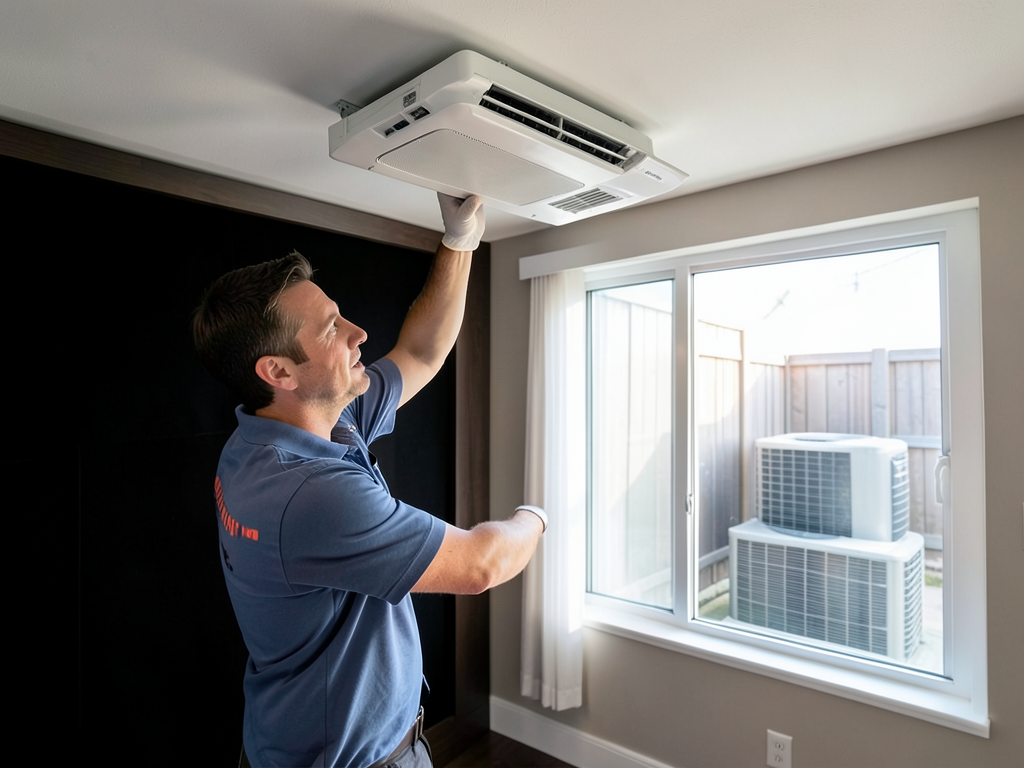
HVAC Services in The Boston Area

We are proud to serve our valued clients across the entire region. Whether you're in the city center or a surrounding community, our dedicated team is ready to provide top-notch HVAC services right to your doorstep. You can locate our main office here, and we encourage you to reach out to schedule a service, explore our offerings, or discuss your heating and cooling needs with our expert team. We look forward to serving you!

Address:
Titan HVAC Boston, 94 Shirley St, Boston, MA, 02119

Additional Services We Offer

Our news updates

Latest Articles & News from The Blogs

Finding a Silent HVAC Solution for Your Home Theater or Media Room in Wellesley If you've ever had to pause…

Finding a Silent HVAC Solution for Your Home Theater or Media Room in Wellesley

Finding a Silent HVAC Solution for Your Home Theater or Media Room in Wellesley If you've ever had to pause…

What the New SEER2 Efficiency Standards Mean for Your Next Boston AC Upgrade

What the New SEER2 Efficiency Standards Mean for Your Next Boston AC Upgrade The Department of Energy rolled out new…

How Smart Vents Can Fix Hot and Cold Spots in Large Multi-Story Newton Homes

Large multi-story homes in Newton often suffer from uneven temperatures where some rooms feel like a sauna while others stay…

Contact Us

Do not wait for a failed MUA unit to shut down your operation. Call Titan HVAC Boston at (617) 758-1599 for commercial make-up air repair, MUA unit installation, or a preventive maintenance plan tailored to your facility.