
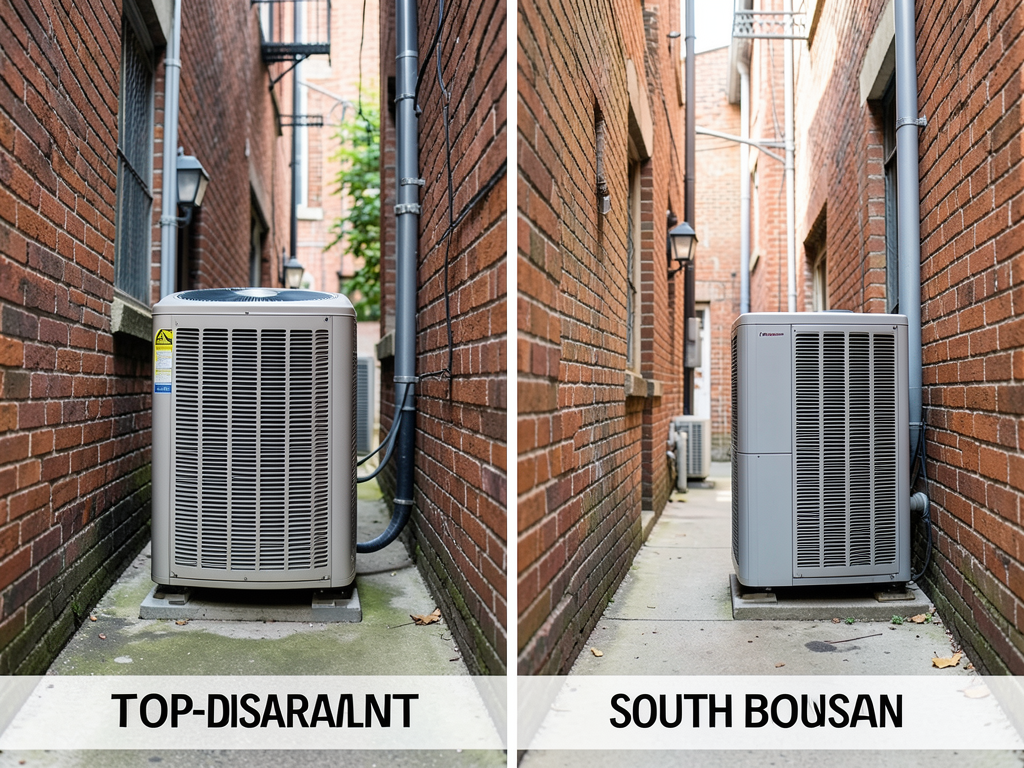
Silent Cooling Solutions for South Boston Homeowners With Neighbors Only Inches Away
Living in South Boston means enjoying the charm of historic row houses and the buzz of city life. But when your outdoor AC condenser sits just feet from a neighbor’s bedroom window, noise becomes more than an annoyance—it becomes a source of tension. If you’re searching for the quietest outdoor AC units for tight spaces, you’re not alone. Southie’s ‘lot-line’ homes demand solutions that balance powerful cooling with near-silent operation and compact footprints. Boston noise ordinances.
Modern inverter-driven side-discharge units are engineered specifically for these challenges. They deliver whisper-quiet performance—often under 60 decibels—while fitting into narrow side yards and tight alleys where traditional top-discharge models simply won’t work. In this guide, we’ll break down the technical specs, local regulations, and installation strategies that make these systems the best fit for South Boston’s unique urban landscape. The Most Reliable Heat Pump Installation Teams in Cambridge.
What Makes an AC Unit Quiet in a Tight Urban Space?
The noise level of an outdoor condenser depends on three main factors: compressor type, fan speed control, and physical design. Single-stage compressors run at full blast or off, creating loud on/off cycles. Inverter compressors, on the other hand, modulate their speed continuously, reducing both noise and energy use. Pair that with variable-speed fans and you get a unit that hums at under 55 dB—quieter than a normal conversation. Benefits of Inverter Technology.
Side-discharge designs also matter. Instead of blowing hot air straight up, they vent horizontally through the sides, allowing for shallower depth and closer wall clearance. This is critical in South Boston where side yards can be as narrow as three feet. Proper airflow clearance—usually 12-24 inches on the sides and back—prevents recirculation and keeps the system efficient without disturbing the neighbors.. Read more about How to Silence a Noisy AC Unit on Your South End Roof Deck.
Top Ultra-Quiet Side-Discharge Models for South Boston
When space and noise are both critical, these models stand out. They combine inverter technology, slim footprints, and corrosion-resistant coatings ideal for Boston’s coastal climate.
Mitsubishi P-Series Side-Discharge Heat Pump
The P-Series is a favorite among South Boston contractors for its 17-21.6 SEER2 efficiency and sound levels as low as 49 dB. At just 12 inches deep, it fits where traditional units can’t. The inverter compressor adjusts in 1% increments, eliminating the loud startup surge common in older models.
Daikin Fit Side-Discharge System
Daikin’s Fit series offers a compact 14-inch depth and operates between 47-72 dB depending on capacity. Its advanced sound blanket and swept-wing fan blades reduce turbulence noise. The Fit is particularly effective in zero-lot-line scenarios where side clearance is minimal.
Carrier Compact Inverter Heat Pump
Carrier’s compact inverter model delivers 18-20 SEER2 efficiency with sound levels starting at 52 dB. Its side-discharge airflow pattern and small footprint make it a strong candidate for Southie’s narrow passages. The unit also features a corrosion-resistant pre-coated steel cabinet for coastal durability.
Technical Comparison: Decibel Levels, Dimensions, and Efficiency
| Model | Sound Level (dB) | Width x Depth x Height (in) | SEER2 Rating |
|---|---|---|---|
| Mitsubishi P-Series | 49-62 | 33 x 12 x 28 | 17-21.6 |
| Daikin Fit | 47-72 | 37 x 14 x 28 | 18-20 |
| Carrier Compact | 52-65 | 35 x 13 x 29 | 18-20 |
Lower decibel ratings mean less disturbance to neighbors. The Mitsubishi P-Series leads in quiet operation, while the Daikin Fit offers the best balance of size and noise for extremely tight spots.
Boston Noise Ordinances and Installation Regulations
Boston’s noise code limits residential HVAC equipment to 70 dB during the day and 60 dB at night in most zones. However, in dense neighborhoods like South Boston, even 60 dB can be disruptive when a unit sits near a bedroom window. Some condo associations and historic districts impose stricter limits, sometimes as low as 55 dB. Upgrading Historic Back Bay Homes with Central Air (Without Ruining the Interior Walls).
Massachusetts’ Stretch Energy Code also affects installations. It requires new or replacement HVAC systems to meet minimum efficiency standards, which aligns perfectly with inverter-driven heat pumps. Mass Save rebates can offset up to $2,500 of the cost for qualifying high-efficiency units, making quiet, efficient technology more affordable for South Boston homeowners. Mass Save rebates.
Installation Strategies to Minimize Noise and Maximize Clearance
Even the quietest unit can become a nuisance without proper installation. Vibration isolation pads under the condenser prevent structure-borne noise from traveling through the ground. In narrow alleys, sound blankets or acoustic barriers can further reduce noise reflection off brick walls.
Clearance is critical. Side-discharge units still need adequate airflow—typically 12-24 inches on the sides and back. In South Boston’s tight lots, this means precise site measurement before ordering equipment. A unit placed too close to a wall will short-cycle, reducing efficiency and increasing wear.
Corrosion resistance is another local factor. Boston’s coastal air accelerates rust on aluminum fins and steel cabinets. Look for units with pre-coated or galvanized steel cabinets and epoxy-coated coils to extend lifespan in salty, humid conditions.
Mass Save Heat Pump Rebates for South Boston Homes
Mass Save offers substantial rebates for high-efficiency heat pumps that meet ENERGY STAR criteria. For a whole-home system, rebates can range from $500 to $2,500 depending on SEER2 and HSPF ratings. These incentives make inverter-driven side-discharge units not just quieter but also more cost-effective over time.
To qualify, the system must be installed by a certified contractor and meet specific efficiency thresholds. Many South Boston homeowners pair these rebates with seasonal promotions from manufacturers, further reducing upfront costs.
Why Side-Discharge Units Are Ideal for South Boston’s Urban Fabric
South Boston’s housing stock—historic triple-deckers, brick row houses, and narrow infill lots—creates unique HVAC challenges. Traditional top-discharge condensers require more overhead clearance and often protrude into usable yard space. Side-discharge models solve this by venting horizontally, allowing installation flush against walls or in tight side yards.
The inverter technology also aligns with Boston’s climate. Variable-speed operation handles the city’s humid summers and cold winters more efficiently than single-stage units, reducing both energy bills and the frequency of cycling on and off.
Frequently Asked Questions
How much clearance does a side-discharge AC unit need?
Most side-discharge units require 12-24 inches of clearance on the sides and back for proper airflow. Always check the manufacturer’s specifications and local building codes before installation.
Can I install a quiet AC unit in a historic district?
Yes, but you may need approval from the local historic commission. Many districts allow modern HVAC if it doesn’t alter the building’s exterior appearance and meets noise limits.
Do inverter heat pumps work in Boston’s cold winters?
Modern inverter heat pumps are designed to operate efficiently down to 0°F or lower. They provide both cooling and heating, making them ideal for Boston’s seasonal extremes.
How do I know if my neighbor will complain about noise?
If your unit is within 10 feet of a neighbor’s window, noise becomes a higher risk. Choosing a model under 55 dB and using sound barriers can prevent complaints.
Are there Mass Save rebates for heat pumps in South Boston?
Yes. Mass Save offers rebates up to $2,500 for qualifying high-efficiency heat pumps. Your contractor can help you navigate the application process.
Call (617) 758-1599 Today to Schedule Your Site Measurement and Noise Consultation
Choosing the right quiet AC unit for your South Boston home isn’t just about picking the lowest decibel rating. It’s about matching the right technology to your lot’s dimensions, your neighbor’s peace of mind, and Boston’s building codes. Our team has installed dozens of side-discharge systems in tight urban spaces, and we know how to get it right the first time. Finding the Right Ductless Mini Split for a Beacon Hill Brownstone.
Don’t let another summer of noisy nights or HOA complaints pass by. Call (617) 758-1599 today to schedule your site measurement and noise consultation. We’ll measure your space, explain your options, and show you exactly how much you can save with Mass Save rebates.
Pick up the phone and call (617) 758-1599 before the next heat wave hits. Your neighbors—and your energy bill—will thank you.