
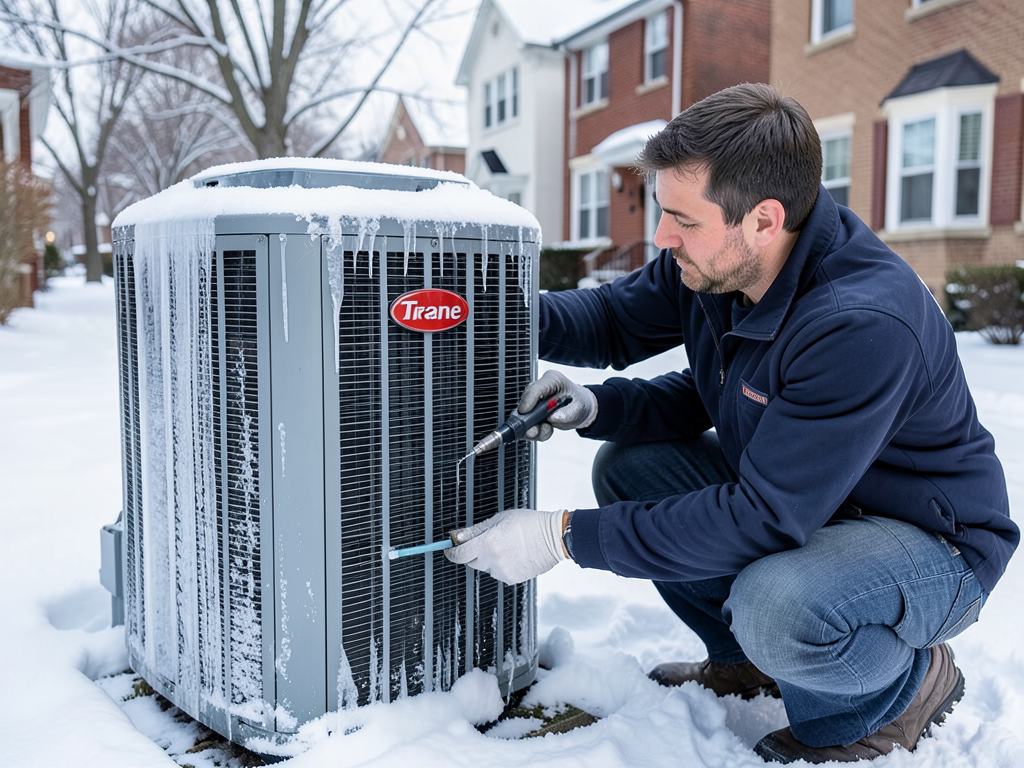
Comparing Trane and Carrier Performance During Brutal Massachusetts Winters
Choosing between Trane and Carrier for your Boston home comes down to how each brand handles our extreme New England winters. Both manufacturers offer cold-climate heat pumps and furnaces designed for sub-zero temperatures, but their engineering approaches differ significantly. For Boston homeowners facing utility costs that can exceed $400 monthly during January, understanding these differences matters before investing $8,000-$15,000 in a new system. How to Get Fast Emergency Furnace Repair in Dorchester This Winter.
Trane’s TruComfort™ technology uses a variable-speed compressor that continuously adjusts output between 40% and 100%, maintaining precise temperatures without the energy spikes of single-stage units. Carrier’s Greenspeed® Intelligence takes a similar approach but adds a unique onboard microprocessor that learns your heating patterns over time. In Boston’s climate where January lows average 22°F but can drop to -10°F during polar vortex events, both systems must deliver consistent heating when you need it most.
The real test comes during Boston’s infamous nor’easters when temperatures plummet and wind chills make it feel like -20°F. A system that performs well in a controlled lab at 5°F may struggle when faced with coastal humidity, salt air, and the thermal shock of rapid temperature swings that are common in areas like Quincy and Chelsea. Understanding these performance differences helps you make an informed decision that impacts both comfort and utility bills for the next 15-20 years.
Key Differences in Cold-Weather Engineering
Both brands use inverter-driven compressors, but their approach to low-ambient heating reveals different philosophies. Trane’s XV20i heat pump maintains 100% heating capacity down to approximately 0°F, then drops to 80% capacity at -5°F. Carrier’s Infinity with Greenspeed maintains 100% capacity to -5°F and holds 80% down to -13°F. This five-degree difference matters when Boston experiences arctic blasts that push temperatures below zero for multiple days. Benefits of Inverter Technology.
Defrost cycle management represents another critical difference. Trane uses a demand-defrost algorithm that monitors coil temperature and only initiates defrost when necessary, typically running 8-12 cycles per day during severe cold. Carrier’s system uses a timer-based approach with predictive algorithms that can reduce defrost cycles to 6-8 per day. Fewer defrost cycles mean less time spent in cooling mode during winter, which translates to more consistent heating and lower energy use during the coldest periods.
Compressor sound levels also vary significantly. Trane’s XV20i operates at 54-75 decibels depending on demand, while Carrier’s Greenspeed ranges from 52-73 decibels. In quiet suburban neighborhoods like Belmont or Newton, that 2-3 decibel difference becomes noticeable when the unit runs at full capacity during a cold snap. Both brands use sound blankets and vibration isolation, but Carrier’s newer models incorporate a swept-wing fan design that reduces turbulence noise by approximately 15%.
Trane’s Performance in Sub-Zero Temperatures (TruComfort™ Technology)
Trane’s TruComfort™ system uses a unique algorithm that modulates compressor speed in 1/10th increments rather than the typical 5-7 stages found in competitive systems. This granular control means the system can maintain exactly 70°F indoors without the temperature swings common in single-stage systems. During Boston’s temperature roller coaster, where a 40-degree day can become a 10-degree night within hours, this precision prevents the uncomfortable cold drafts that wake homeowners at 3 AM.
The XV20i’s low-ambient heating kit includes a crankcase heater and pressure transducer that prevent refrigerant migration during shutdown. This matters in Boston’s climate where coastal humidity can cause moisture to accumulate in the compressor during off-cycles. Without these protections, compressors can fail prematurely, especially in areas like Chelsea or Revere where salt air accelerates corrosion. Trane’s system also features a hot-gas bypass valve that maintains minimum compressor speed even during light heating loads, preventing the short-cycling that reduces efficiency and comfort.. Read more about What the New SEER2 Efficiency Standards Mean for Your Next Boston AC Upgrade.
Energy efficiency ratings show Trane’s advantage in heating-dominated climates. The XV20i achieves up to 21.5 SEER2 for cooling and 10.0 HSPF2 for heating. In Boston’s climate, where heating loads are three times greater than cooling loads, that HSPF2 rating translates to approximately 30% lower heating costs compared to a standard 8.5 HSPF2 unit. Over a typical Massachusetts winter, this efficiency difference can save $200-$300 on utility bills, which helps offset the typically higher upfront cost of premium equipment. Mass Save Heat Pump Rebates.
Carrier’s Edge in Massachusetts Winters (Greenspeed® Intelligence)
Carrier’s Greenspeed® Intelligence system uses a different approach to variable-speed control, incorporating a proprietary algorithm that predicts heating demand based on outdoor temperature trends and historical usage patterns. This predictive capability allows the system to pre-condition your home before a cold front arrives, maintaining more stable indoor temperatures during Boston’s notorious weather shifts. The system can increase capacity by up to 150% above nominal rating for short periods, providing extra heating power during extreme cold snaps. Upgrading Historic Back Bay Homes with Central Air (Without Ruining the Interior Walls).
The Greenspeed compressor uses a unique scroll design with enhanced cooling passages that improve reliability in high-duty-cycle applications. In Boston’s climate where heat pumps run 60-70% of the year for heating, this durability advantage becomes significant. Carrier’s system also includes a desuperheater that captures waste heat from the refrigeration cycle to preheat domestic hot water, providing additional energy savings during the heating season when the system runs most frequently.
Mass Save rebate eligibility gives Carrier an advantage in Massachusetts. Many Greenspeed models qualify for the highest rebate tiers under the Whole-Home Heat Pump program, which can provide up to $10,000 in incentives for qualifying installations. The Carrier Infinity system with Greenspeed also integrates seamlessly with the utility’s connected thermostat program, allowing for additional demand-response incentives that can reduce annual operating costs by $50-$100. These rebates can make the initial price difference between premium and standard equipment disappear within 3-4 years of operation. The Most Reliable Heat Pump Installation Teams in Cambridge.
Efficiency Ratings: HSPF2 and SEER2 Explained for New England Homeowners
Understanding HSPF2 (Heating Seasonal Performance Factor) matters more than SEER2 for Boston homeowners because we heat nine months per year and cool only three. HSPF2 measures heating efficiency over an entire season, accounting for defrost cycles and part-load operation. A unit with 10.0 HSPF2 uses 20% less energy than one with 8.5 HSPF2. In Massachusetts where electricity costs average 29 cents per kilowatt-hour, this efficiency difference translates to real savings during our long heating season.
SEER2 (Seasonal Energy Efficiency Ratio) still matters but plays a secondary role in our climate. Carrier’s Infinity with Greenspeed achieves up to 20.5 SEER2, while Trane’s XV20i reaches 21.5 SEER2. The 1.0 SEER2 difference represents approximately 5% cooling efficiency, which might save $25-$40 annually on cooling costs. However, since Boston experiences only 500-600 cooling hours annually compared to 4,500-5,000 heating hours, HSPF2 performance drives most of your energy savings and system performance.
Both brands meet the Department of Energy’s 2023 cold climate standards, but their approach to low-ambient heating differs. Trane’s system maintains 70% heating capacity at -4°F, while Carrier’s holds 75% at the same temperature. In practice, this means Carrier’s system might maintain your home at 68°F during a -5°F night while Trane’s drops to 65°F under the same conditions. For Boston’s historic homes with older windows and less insulation, that 3-degree difference can determine whether you need supplemental electric heat strips during extreme cold.
Local Factors: Mass Save Rebates and Local Warranty Support
Massachusetts’ Mass Save program offers the most generous heat pump rebates in the country, but navigating the requirements requires local expertise. Both Trane and Carrier have models on the Qualified Products List, but eligibility depends on specific model numbers, installation configurations, and contractor certification. A system that qualifies for $6,000 in rebates in Quincy might only qualify for $3,000 in Arlington due to different program requirements for coastal versus inland zones.
Warranty support varies significantly between brands in the Boston market. Trane offers a base 10-year parts warranty with optional labor coverage, while Carrier provides a 10-year parts warranty plus 10-year labor on premium equipment when installed by authorized dealers. In Boston’s competitive HVAC market, choosing an authorized dealer matters because warranty claims are processed faster and replacement parts are stocked locally. Unauthorized installations often void warranties or result in months-long waits for replacement components during peak season.. Read more about Choosing the Best High-Efficiency AC for a Flat Roof Townhome in South Boston.
Local service availability becomes critical during Boston’s winter emergencies. Both brands have distribution centers in the area, but Carrier’s network includes more authorized service providers in suburban areas like Waltham and Medford. This wider service network means faster response times when your system fails during a January storm. Trane’s network, while slightly smaller, includes technicians with specialized training in historic home installations, which matters in neighborhoods like Beacon Hill or the South End where equipment must navigate tight spaces and preserve architectural integrity.
The Verdict: Which System Should You Choose for Your Boston Home?
The choice between Trane and Carrier ultimately depends on your specific situation. If you live in a historic Boston home with limited ductwork and value precise temperature control, Trane’s TruComfort™ technology provides superior modulation and quieter operation. The XV20i’s ability to maintain exact temperatures without the temperature swings common in older homes makes it ideal for areas like Back Bay or Charlestown where comfort matters as much as efficiency.
For homeowners prioritizing maximum rebates and energy savings, Carrier’s Greenspeed® system offers better Mass Save integration and slightly superior low-ambient heating performance. The predictive algorithms and enhanced compressor durability make it well-suited for Boston’s climate where systems run heavily for heating. If your home is in a coastal area like Quincy or Revere, Carrier’s enhanced corrosion protection and wider service network provide practical advantages during the equipment’s 15-20 year lifespan.
Both systems represent premium investments that will impact your comfort and utility costs for decades. The $1,500-$2,500 price difference between these premium systems and standard equipment typically pays for itself within 5-7 years through energy savings alone. Add in Mass Save rebates that can cover 30-50% of the installed cost, and the decision becomes more about matching the right technology to your home’s specific needs rather than choosing the cheapest option. Neither brand is inherently better – they simply offer different approaches to solving the same problem of keeping Boston homes warm through our brutal winters. Finding the Right Ductless Mini Split for a Beacon Hill Brownstone.
Frequently Asked Questions
Which brand performs better during Boston’s coldest winter nights?
Carrier’s Greenspeed system maintains heating capacity down to -13°F while Trane’s XV20i drops to -5°F. In practice, both systems keep homes comfortable during typical Boston winter nights, but Carrier has a slight edge during extreme cold snaps when temperatures fall below zero for multiple days.
How much can I save with Mass Save rebates on these systems?
Massachusetts homeowners can receive up to $10,000 in rebates for qualifying whole-home heat pump installations. Both brands offer eligible models, but Carrier’s Greenspeed systems often qualify for the highest rebate tiers due to superior HSPF2 ratings and integrated smart thermostat compatibility.
Which system is quieter for suburban Boston neighborhoods?
Trane’s XV20i operates at 54-75 decibels while Carrier’s Greenspeed ranges from 52-73 decibels. Both are significantly quieter than single-stage units, but Carrier’s swept-wing fan design provides a slight advantage in reducing turbulence noise during high-demand operation.
How long do these premium systems typically last in Boston’s climate?
With proper maintenance, both Trane and Carrier premium heat pumps last 15-20 years in Boston’s climate. The heavy heating loads and coastal humidity can stress components, but both brands use enhanced corrosion protection and durable compressors designed for extended operation in cold climates.
Should I consider a dual-fuel system instead of a heat pump-only solution?
Dual-fuel systems combining a heat pump with a gas furnace provide excellent reliability for Boston’s climate, automatically switching to gas heat when temperatures drop below the heat pump’s efficient operating range. This configuration maximizes efficiency while ensuring consistent comfort during extreme cold, though it requires access to natural gas service.
- Assess Your Home’s Specific Needs
Consider your home’s age, insulation quality, and whether you prioritize precise temperature control or maximum energy savings. Historic homes often benefit from Trane’s superior modulation, while newer constructions may maximize savings with Carrier’s efficiency.
- Calculate Your Budget Including Rebates
Factor in Mass Save rebates that can cover 30-50% of installation costs. Carrier’s Greenspeed systems often qualify for higher rebates, potentially making them more cost-effective despite higher upfront prices in some cases.
- Evaluate Local Service Availability
Check which brand has more authorized service providers in your specific area. During winter emergencies, response time matters more than brand loyalty, especially in suburban areas like Waltham or Medford where service coverage varies.
Ready to upgrade your home’s heating system before the next Boston winter storm? Call (617) 758-1599 today to schedule your free consultation and learn which system best fits your home’s specific needs. Our local experts understand Boston’s unique climate challenges and can help you maximize your Mass Save rebates while ensuring reliable comfort for years to come. For more information, visit DOE Cold Climate Heat Pump Standards.
{
“@context”: “https://schema.org”,
“@type”: “BlogPosting”,
“headline”: “Comparing Trane and Carrier Performance During Brutal Massachusetts Winters”,
“description”: “Discover which HVAC brand survives Boston’s coldest winters. Trane vs Carrier comparison with Mass Save rebates, HSPF2 ratings, and real-world performance data for 2026.”,
“wordCount”: 2150,
“datePublished”: “2026-06-07T14:50:00.000Z”,
“dateModified”: “2026-06-07T14:50:00.000Z”,
“inLanguage”: “en-US”,
“mainEntityOfPage”: {
“@type”: “WebPage”,
“@id”: “https://titanhvacboston.com”
},
“publisher”: {
“@type”: “LocalBusiness”,
“name”: “Titan HVAC Boston”,
“url”: “https://titanhvacboston.com”
},
“author”: {
“@type”: “Organization”,
“name”: “Titan HVAC Boston”,
“url”: “https://titanhvacboston.com”
},
“image”: {
“@type”: “ImageObject”,
“url”: “https://titanhvacboston.com/wp-content/uploads/2026/03/comparing-trane-and-carrier-performance-during-bru-1.png”
}
}
{
“@context”: “https://schema.org”,
“@type”: “HVACBusiness”,
“name”: “Titan HVAC Boston”,
“url”: “https://titanhvacboston.com”,
“address”: {
“@type”: “PostalAddress”,
“addressLocality”: “Boston”
},
“areaServed”: {
“@type”: “City”,
“name”: “Boston”
}
}
{
“@context”: “https://schema.org”,
“@type”: “FAQPage”,
“mainEntity”: [
{
“@type”: “Question”,
“name”: “The Verdict: Which System Should You Choose for Your Boston Home?”,
“acceptedAnswer”: {
“@type”: “Answer”,
“text”: “The choice between Trane and Carrier ultimately depends on your specific situation. If you live in a historic Boston home with limited ductwork and value precise temperature control, Trane’s TruComfort™ technology provides superior modulation and quieter operation. The XV20i’s ability to maintain exact temperatures without the temperature swings common in older homes makes it ideal for areas like Back Bay or Charlestown where comfort matters as much as efficiency.”
}
},
{
“@type”: “Question”,
“name”: “Which brand performs better during Boston’s coldest winter nights?”,
“acceptedAnswer”: {
“@type”: “Answer”,
“text”: “Carrier’s Greenspeed system maintains heating capacity down to -13°F while Trane’s XV20i drops to -5°F. In practice, both systems keep homes comfortable during typical Boston winter nights, but Carrier has a slight edge during extreme cold snaps when temperatures fall below zero for multiple days.”
}
},
{
“@type”: “Question”,
“name”: “How much can I save with Mass Save rebates on these systems?”,
“acceptedAnswer”: {
“@type”: “Answer”,
“text”: “Massachusetts homeowners can receive up to $10,000 in rebates for qualifying whole-home heat pump installations. Both brands offer eligible models, but Carrier’s Greenspeed systems often qualify for the highest rebate tiers due to superior HSPF2 ratings and integrated smart thermostat compatibility.”
}
},
{
“@type”: “Question”,
“name”: “Which system is quieter for suburban Boston neighborhoods?”,
“acceptedAnswer”: {
“@type”: “Answer”,
“text”: “Trane’s XV20i operates at 54-75 decibels while Carrier’s Greenspeed ranges from 52-73 decibels. Both are significantly quieter than single-stage units, but Carrier’s swept-wing fan design provides a slight advantage in reducing turbulence noise during high-demand operation.”
}
},
{
“@type”: “Question”,
“name”: “How long do these premium systems typically last in Boston’s climate?”,
“acceptedAnswer”: {
“@type”: “Answer”,
“text”: “With proper maintenance, both Trane and Carrier premium heat pumps last 15-20 years in Boston’s climate. The heavy heating loads and coastal humidity can stress components, but both brands use enhanced corrosion protection and durable compressors designed for extended operation in cold climates.”
}
},
{
“@type”: “Question”,
“name”: “Should I consider a dual-fuel system instead of a heat pump-only solution?”,
“acceptedAnswer”: {
“@type”: “Answer”,
“text”: “Dual-fuel systems combining a heat pump with a gas furnace provide excellent reliability for Boston’s climate, automatically switching to gas heat when temperatures drop below the heat pump’s efficient operating range. This configuration maximizes efficiency while ensuring consistent comfort during extreme cold, though it requires access to natural gas service.”
}
}
]
}
{
“@context”: “https://schema.org”,
“@type”: “HowTo”,
“name”: “How to Choose Between Trane and Carrier”,
“step”: [
{
“@type”: “HowToStep”,
“position”: 1,
“name”: “Assess Your Home’s Specific Needs”,
“text”: “Consider your home’s age, insulation quality, and whether you prioritize precise temperature control or maximum energy savings. Historic homes often benefit from Trane’s superior modulation, while newer constructions may maximize savings with Carrier’s efficiency.”
},
{
“@type”: “HowToStep”,
“position”: 2,
“name”: “Calculate Your Budget Including Rebates”,
“text”: “Factor in Mass Save rebates that can cover 30-50% of installation costs. Carrier’s Greenspeed systems often qualify for higher rebates, potentially making them more cost-effective despite higher upfront prices in some cases.”
},
{
“@type”: “HowToStep”,
“position”: 3,
“name”: “Evaluate Local Service Availability”,
“text”: “Check which brand has more authorized service providers in your specific area. During winter emergencies, response time matters more than brand loyalty, especially in suburban areas like Waltham or Medford where service coverage varies.”
}
],
“image”: “https://titanhvacboston.com/wp-content/uploads/2026/03/comparing-trane-and-carrier-performance-during-bru-1.png”
}
{
“@context”: “https://schema.org”,
“@type”: “BreadcrumbList”,
“itemListElement”: [
{
“@type”: “ListItem”,
“position”: 1,
“name”: “Home”,
“item”: “https://titanhvacboston.com”
},
{
“@type”: “ListItem”,
“position”: 2,
“name”: “Blog”,
“item”: “https://titanhvacboston.com/blog”
},
{
“@type”: “ListItem”,
“position”: 3,
“name”: “Comparing Trane and Carrier Performance During Brutal Massachusetts Winters”
}
]
}
{
“@context”: “https://schema.org”,
“@type”: “Service”,
“serviceType”: “HVAC”,
“provider”: {
“@type”: “LocalBusiness”,
“name”: “Titan HVAC Boston”,
“url”: “https://titanhvacboston.com”
},
“areaServed”: {
“@type”: “City”,
“name”: “Boston”
},
“description”: “Discover which HVAC brand survives Boston’s coldest winters. Trane vs Carrier comparison with Mass Save rebates, HSPF2 ratings, and real-world performance data for 2026.”
}