
Choosing the Best High-Efficiency AC for a Flat Roof Townhome in South Boston
Living in a flat roof townhome in South Boston means dealing with unique HVAC challenges. Traditional split systems with outdoor condensers on the ground aren’t practical when you have no yard space and limited roof access. The good news is that several high-efficiency cooling solutions work perfectly for these urban homes. From packaged rooftop units to ductless mini-splits, you have options that can handle Boston’s humid summers while saving you money on energy bills. Boston Inspectional Services Department.
The key is finding a system that works with your building’s structure, meets local codes, and takes advantage of available rebates. South Boston’s historic flat-roofed townhomes need specialized installation approaches that account for weight distribution, snow load requirements, and potential historic district regulations. Let’s explore the best high-efficiency AC options for your specific situation. Finding the Right Ductless Mini Split for a Beacon Hill Brownstone.
Why Flat Roof HVAC Installation is Unique in South Boston
South Boston’s flat-roofed townhomes present distinct challenges that homeowners in other neighborhoods don’t face. The lack of attic space means no room for traditional ductwork, and the urban density makes ground-level outdoor units impractical. Most Southie townhomes are three-story buildings with flat roofs that were originally designed for coal heating, not modern cooling systems.
The coastal location adds another layer of complexity. Salt air from nearby Dorchester Bay can accelerate corrosion on rooftop equipment, while the heavy snowfall Boston receives each winter creates structural concerns for rooftop installations. Your roof must support the weight of the unit plus potential snow accumulation that can exceed 40 pounds per square foot during major storms. The Most Reliable Heat Pump Installation Teams in Cambridge.
Local building codes also play a role. Boston’s Inspectional Services Department has specific requirements for rooftop equipment, including setback distances from roof edges, noise ordinances that limit decibel levels, and permitting processes that can take several weeks. Historic district regulations in certain South Boston blocks may restrict visible equipment modifications. Upgrading Historic Back Bay Homes with Central Air (Without Ruining the Interior Walls).

Top 4 Flat Roof AC Systems for South Boston Townhomes
Rooftop Units (RTUs) / Packaged Systems
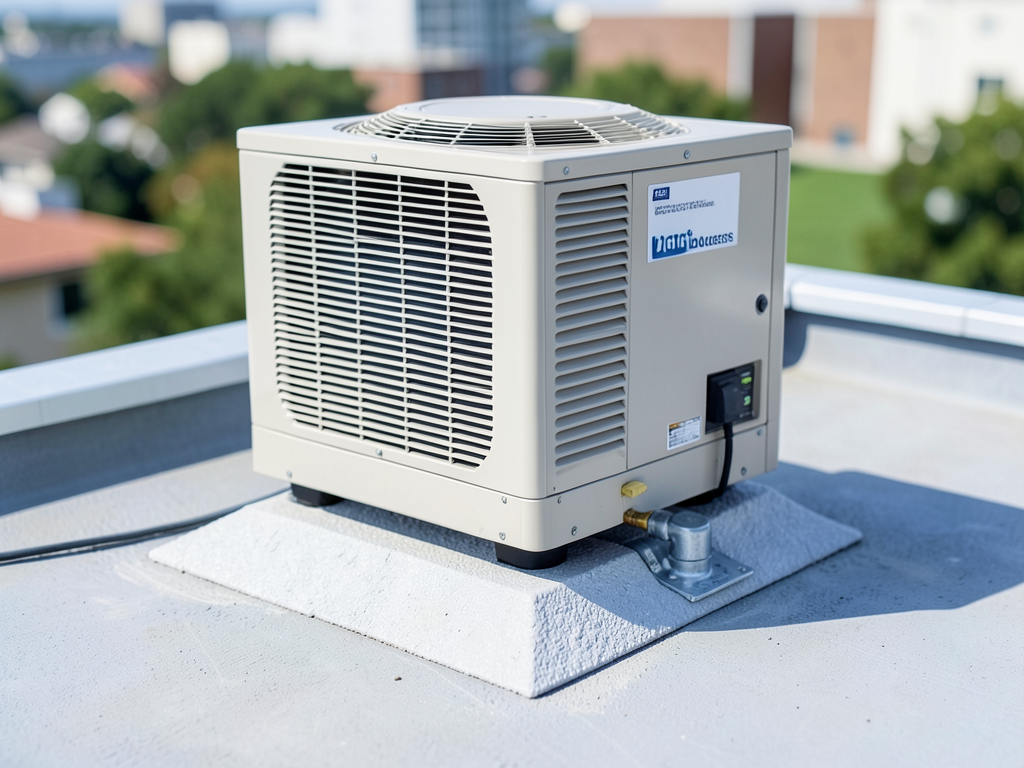
Rooftop units offer the most straightforward solution for flat roof townhomes. These all-in-one systems contain the compressor, condenser, and air handler in a single cabinet that sits directly on your roof. Modern RTUs achieve SEER2 ratings up to 18, providing excellent efficiency for South Boston’s cooling needs.
Installation involves mounting the unit on a roof curb or sleepers to ensure proper drainage and prevent water pooling. The system connects to your home through a single penetration point, minimizing roof modifications. RTUs work well for townhomes up to 2,500 square feet and can include electric heating strips for year-round comfort.
The main advantage is simplicity. One unit handles everything, and maintenance is straightforward since all components are in one accessible location. The downside is the initial cost and the need for structural assessment to ensure your roof can handle the weight.
Ductless Mini-Split Heat Pumps
Ductless mini-splits have become increasingly popular for South Boston’s flat roof townhomes. These systems use an outdoor condenser unit mounted on the roof or a wall bracket, connected to indoor air handlers mounted on your walls or ceilings. The outdoor unit can be placed on a roof-mounted pad that distributes weight across multiple support points.
Modern mini-splits achieve SEER2 ratings up to 22, making them among the most efficient options available. They offer zoned cooling, allowing you to control temperatures in different areas of your home independently. This is particularly useful for South Boston’s older townhomes where some rooms may heat up more than others due to sun exposure or poor insulation.
Installation is less invasive than RTUs since you don’t need a large rooftop footprint. The small refrigerant lines that connect indoor and outdoor units can be routed through walls with minimal modification. However, you’ll need multiple indoor units for whole-home cooling, which some homeowners find visually intrusive.
VRF (Variable Refrigerant Flow) Systems
VRF systems represent the high-end solution for flat roof townhomes that need maximum efficiency and zoning capability. These sophisticated systems use a single outdoor unit connected to multiple indoor units throughout your home. The variable refrigerant flow technology adjusts output precisely to match cooling demand in each zone.
SEER2 ratings for premium VRF systems can exceed 25, offering the best efficiency available. The systems operate quietly and provide simultaneous heating and cooling to different zones, perfect for South Boston’s unpredictable shoulder seasons. They also recover waste heat from cooling zones to heat other areas, maximizing efficiency.
The main drawback is cost. VRF systems require professional design and installation, and the equipment itself costs more than traditional options. However, for larger townhomes or those with unusual cooling challenges, the investment often pays for itself through energy savings.
Commercial Chillers (for Larger South Boston Complexes)
For larger flat roof townhome complexes or converted industrial buildings in South Boston, commercial chillers might be the answer. These systems cool water that circulates through air handlers throughout the building, providing centralized cooling with excellent efficiency.
Modern water-cooled chillers achieve impressive efficiency levels and can serve multiple units in a building. They’re particularly effective for mixed-use buildings where commercial spaces on the ground floor need cooling while residential units above have different requirements.
The installation requires significant upfront investment and coordination with other building owners or your condo association. However, the long-term operating costs and reliability make chillers attractive for larger properties.
Structural Considerations & Building Codes
Before installing any rooftop HVAC system in South Boston, you need a structural engineer’s assessment. Most townhomes built before 1980 weren’t designed to support heavy rooftop equipment. A typical RTU weighs 300-800 pounds, and that weight concentrates on a small footprint rather than distributing across the roof structure.
The Massachusetts State Building Code requires structural calculations showing your roof can support the equipment plus the snow load requirement of 40 pounds per square foot for most of eastern Massachusetts. This means if your unit weighs 400 pounds, your roof must support an additional 1,600 pounds of snow for the same area. Mass Save rebates and incentives.
Roof curbs are essential for proper installation. These metal frames elevate the unit above the roof surface, creating drainage paths and preventing water from pooling around the equipment. Curbs also provide vibration isolation and make future unit replacement easier without roof penetration repairs.
Boston’s noise ordinance limits exterior equipment to 70 decibels at the property line during daytime hours. This affects your choice of unit and may require sound barriers or strategic placement away from bedroom windows of adjacent buildings.
Historic district regulations in parts of South Boston, particularly near East Broadway and certain blocks off of West Broadway, may require approval from the Boston Landmarks Commission before installing visible rooftop equipment. These approvals can take 30-60 days and may restrict equipment color or placement.
Energy Efficiency & Mass Save Rebates
Massachusetts offers some of the most generous HVAC rebates in the country through the Mass Save program. For high-efficiency rooftop units, you can receive rebates of $300-$1,200 depending on the SEER2 rating. Ductless mini-splits qualify for even larger rebates, with some systems earning up to $1,600 in incentives.
The current Mass Save program requires minimum SEER2 ratings of 15 for split systems and 14 for packaged units to qualify for rebates. Higher efficiency units earn larger rebates, with the top-tier equipment (SEER2 20+) receiving the maximum incentives. These rebates can reduce your upfront cost by 15-25%.
Beyond rebates, high-efficiency systems save money through lower utility bills. A SEER2 18 unit uses about 30% less electricity than a standard SEER 14 unit. In Boston, where electricity rates average $0.28 per kilowatt-hour, this translates to $200-$400 in annual savings for a typical townhome.
Mass Save also offers 0% financing for energy efficiency improvements through their HEAT Loan program. You can finance up to $50,000 over 7 years, making high-efficiency upgrades more affordable by spreading the cost over time while you enjoy the energy savings.
The program includes free home energy assessments that identify the most cost-effective improvements for your specific home. These assessments are particularly valuable for South Boston’s older townhomes, which often have hidden efficiency opportunities like air sealing or insulation upgrades that complement new HVAC equipment.
Maintenance Requirements for Coastal/Urban Roofs
South Boston’s coastal location creates unique maintenance challenges for rooftop HVAC equipment. Salt air accelerates corrosion on aluminum fins, copper tubing, and steel components. Without regular maintenance, you might see efficiency losses of 15-20% within just three years of installation.
Professional maintenance should include coil cleaning every spring to remove salt deposits and urban pollutants that accumulate during winter. The cleaning process uses specialized coil cleaners that neutralize salt and prevent corrosion. Technicians also check for refrigerant leaks, which are more common in coastal environments due to corrosion at joints and connections.
Winter preparation is critical in Boston. Ice dams can form around rooftop units, potentially damaging components or blocking condensate drains. Installing heat tape on critical areas and ensuring proper roof drainage prevents ice-related damage. Some South Boston homeowners install temporary covers during the harshest winter months, though this requires careful installation to avoid moisture trapping.
Condensate drainage requires special attention in cold climates. The condensate line must be properly insulated and sloped to prevent freezing. Many South Boston installations include condensate pumps with freeze protection to ensure reliable operation during shoulder seasons when daytime temperatures are above freezing but nights drop below.
Urban pollutants in South Boston, including vehicle exhaust and construction dust, can clog filters and reduce efficiency. High-efficiency air filters rated MERV 8-11 help protect indoor air quality while maintaining system performance. These filters need replacement every 60-90 days in urban environments, more frequently than in suburban areas.
Annual professional maintenance should include checking all electrical connections, lubricating moving parts, testing safety controls, and verifying refrigerant charge. This preventive maintenance typically costs $150-$250 but can prevent costly repairs and extend equipment life by 3-5 years.
Making Your Final Decision
Choosing the right high-efficiency AC for your South Boston townhome depends on several factors. Consider your budget, the size of your home, your long-term plans, and the specific characteristics of your building. A small one-bedroom unit might be perfectly served by a ductless mini-split, while a larger three-bedroom townhome might benefit from the simplicity of an RTU.
Don’t forget to factor in the Mass Save rebates and financing options, which can significantly change the economics of your decision. The higher upfront cost of premium efficiency equipment often pays for itself through energy savings and rebates within 3-5 years.
Most importantly, work with an HVAC contractor who understands South Boston’s unique requirements. They should be familiar with local building codes, historic district regulations, and the specific challenges of installing equipment on flat roof townhomes in a coastal urban environment.
Ready to upgrade your South Boston townhome with a high-efficiency AC system? Call (617) 758-1599 today to schedule your free consultation and learn which option is best for your home.
Frequently Asked Questions
How much does it cost to install a high-efficiency AC on a flat roof in South Boston?
Installation costs typically range from $6,000 to $15,000 depending on the system type and your home’s specific requirements. Ductless mini-splits often cost less upfront, while premium VRF systems can exceed $20,000. Mass Save rebates and financing options can significantly reduce your net cost.
Do I need a permit to install rooftop HVAC equipment in Boston?
Yes, you need permits from Boston’s Inspectional Services Department for any rooftop HVAC installation. The process includes structural engineering approval, electrical permits, and sometimes historic district review. Your HVAC contractor should handle the permitting process, which typically takes 2-4 weeks.
How long does installation take for a flat roof AC system?
Most installations take 1-3 days for the actual equipment installation, but the entire process from consultation to completion usually takes 3-6 weeks when you include permitting, structural assessments, and scheduling. Emergency replacements can sometimes be completed faster. How to Get Fast Emergency Furnace Repair in Dorchester This Winter.
Can I install the AC unit myself to save money?
No, Massachusetts law requires licensed HVAC contractors to install cooling equipment. DIY installation is illegal and dangerous, potentially causing refrigerant leaks, electrical hazards, and system failures. Professional installation also ensures warranty coverage and code compliance.
{
“@context”: “https://schema.org”,
“@type”: “BlogPosting”,
“headline”: “Choosing the Best High-Efficiency AC for a Flat Roof Townhome in South Boston”,
“description”: “Find the best high-efficiency AC options for flat roof townhomes in South Boston. Learn about rooftop units, mini-splits, Mass Save rebates, and local installation requirements.”,
“wordCount”: 2069,
“datePublished”: “2026-03-13T09:55:00.000Z”,
“dateModified”: “2026-03-13T09:55:00.000Z”,
“inLanguage”: “en-US”,
“mainEntityOfPage”: {
“@type”: “WebPage”,
“@id”: “https://titanhvacboston.com”
},
“publisher”: {
“@type”: “LocalBusiness”,
“name”: “Titan HVAC Boston”,
“url”: “https://titanhvacboston.com”
},
“author”: {
“@type”: “Organization”,
“name”: “Titan HVAC Boston”,
“url”: “https://titanhvacboston.com”
},
“image”: {
“@type”: “ImageObject”,
“url”: “https://titanhvacboston.com/wp-content/uploads/2026/03/choosing-the-best-high-efficiency-ac-for-a-flat-ro-1.png”
}
}
{
“@context”: “https://schema.org”,
“@type”: “HVACBusiness”,
“name”: “Titan HVAC Boston”,
“url”: “https://titanhvacboston.com”,
“address”: {
“@type”: “PostalAddress”,
“addressLocality”: “Boston”
},
“areaServed”: {
“@type”: “City”,
“name”: “Boston”
}
}
{
“@context”: “https://schema.org”,
“@type”: “FAQPage”,
“mainEntity”: [
{
“@type”: “Question”,
“name”: “How much does it cost to install a high-efficiency AC on a flat roof in South Boston?”,
“acceptedAnswer”: {
“@type”: “Answer”,
“text”: “Installation costs typically range from $6,000 to $15,000 depending on the system type and your home’s specific requirements. Ductless mini-splits often cost less upfront, while premium VRF systems can exceed $20,000. Mass Save rebates and financing options can significantly reduce your net cost.”
}
},
{
“@type”: “Question”,
“name”: “Do I need a permit to install rooftop HVAC equipment in Boston?”,
“acceptedAnswer”: {
“@type”: “Answer”,
“text”: “Yes, you need permits from Boston’s Inspectional Services Department for any rooftop HVAC installation. The process includes structural engineering approval, electrical permits, and sometimes historic district review. Your HVAC contractor should handle the permitting process, which typically takes 2-4 weeks.”
}
},
{
“@type”: “Question”,
“name”: “How long does installation take for a flat roof AC system?”,
“acceptedAnswer”: {
“@type”: “Answer”,
“text”: “Most installations take 1-3 days for the actual equipment installation, but the entire process from consultation to completion usually takes 3-6 weeks when you include permitting, structural assessments, and scheduling. Emergency replacements can sometimes be completed faster. How to Get Fast Emergency Furnace Repair in Dorchester This Winter.”
}
},
{
“@type”: “Question”,
“name”: “Can I install the AC unit myself to save money?”,
“acceptedAnswer”: {
“@type”: “Answer”,
“text”: “No, Massachusetts law requires licensed HVAC contractors to install cooling equipment. DIY installation is illegal and dangerous, potentially causing refrigerant leaks, electrical hazards, and system failures. Professional installation also ensures warranty coverage and code compliance.”
}
}
]
}
{
“@context”: “https://schema.org”,
“@type”: “BreadcrumbList”,
“itemListElement”: [
{
“@type”: “ListItem”,
“position”: 1,
“name”: “Home”,
“item”: “https://titanhvacboston.com”
},
{
“@type”: “ListItem”,
“position”: 2,
“name”: “Blog”,
“item”: “https://titanhvacboston.com/blog”
},
{
“@type”: “ListItem”,
“position”: 3,
“name”: “Choosing the Best High-Efficiency AC for a Flat Roof Townhome in South Boston”
}
]
}
{
“@context”: “https://schema.org”,
“@type”: “Service”,
“serviceType”: “HVAC”,
“provider”: {
“@type”: “LocalBusiness”,
“name”: “Titan HVAC Boston”,
“url”: “https://titanhvacboston.com”
},
“areaServed”: {
“@type”: “City”,
“name”: “Boston”
},
“description”: “Find the best high-efficiency AC options for flat roof townhomes in South Boston. Learn about rooftop units, mini-splits, Mass Save rebates, and local installation requirements.”
}