
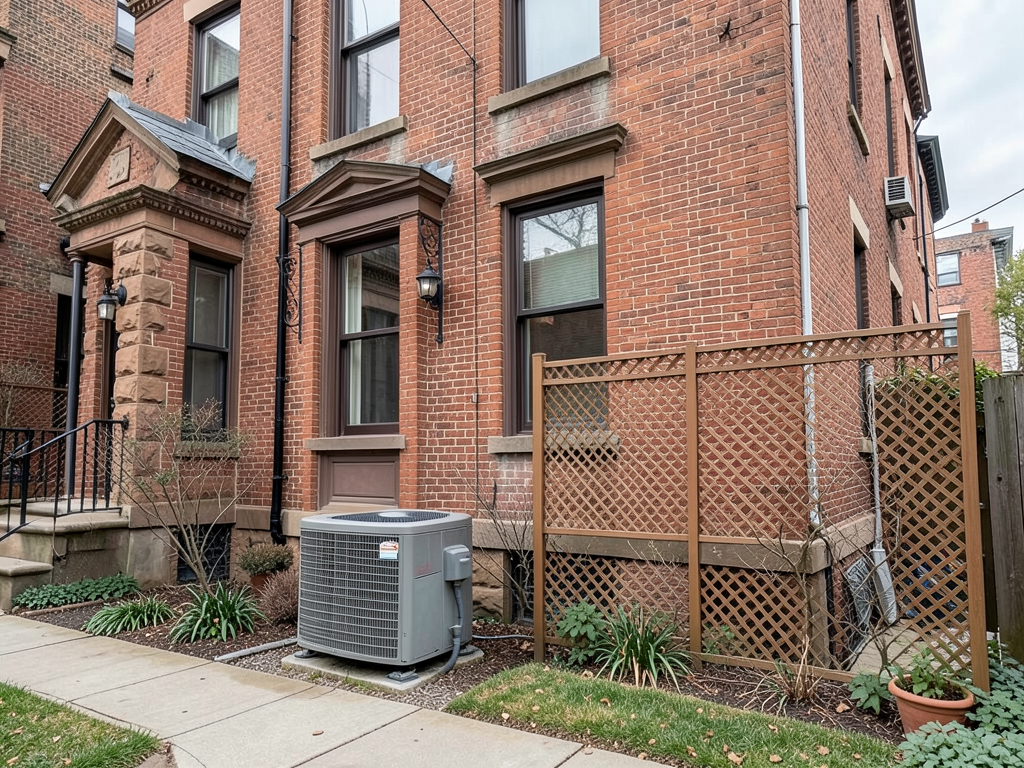
Installing central air conditioning in a historic Boston home is not as simple as choosing a system and scheduling an install. The Boston Landmarks Commission (BLC) oversees any exterior modifications in designated historic districts to preserve architectural integrity. If your home is in Back Bay, Beacon Hill, the South End, or another protected area, you must follow strict guidelines before adding HVAC equipment. Boston Landmarks Commission.
The BLC requires approval for any visible changes from a public way. This includes condenser units, refrigerant line covers, and any structural penetrations. The process starts with a Certificate of Appropriateness application, detailed documentation, and sometimes a public hearing. Understanding these requirements upfront saves time, prevents costly redesigns, and ensures your project moves forward without delays.
Which Boston Neighborhoods Require BLC Approval
The BLC regulates nine local historic districts. Back Bay and Beacon Hill have the most stringent rules due to their architectural significance. The South End and Bay Village also require careful compliance. Other districts include the Aberdeen Architectural Conservation District, Fort Point Channel Landmark District, St. Botolph District, and Mission Hill Triangle. Upgrading Historic Back Bay Homes with Central Air (Without Ruining the Interior Walls).
Each district has unique characteristics. Back Bay brownstones feature uniform limestone facades and strict sightline rules. Beacon Hill homes often have limited outdoor space, making condenser placement more challenging. The South End’s brick bow-fronts require matching mortar and color for any exposed lines or covers. Knowing your district’s specific requirements is critical before planning your installation. The Most Reliable Heat Pump Installation Teams in Cambridge.
The Visibility Rule and Why It Matters
The BLC’s primary concern is visibility from a public way. Any equipment visible from the street, sidewalk, or neighboring properties may require screening or alternative placement. This includes condenser units, heat pump compressors, and even slim duct covers for mini-splits.
Visibility is assessed by standing at street level and looking toward your property. If the equipment is in direct line of sight, the commission may require screening with fencing, landscaping, or placement on a less visible side of the building. In some cases, interior-only solutions like high-velocity systems or ductless mini-splits with concealed line sets are the only compliant options.
Technical Requirements for BLC-Approved HVAC Installations
Equipment placement must minimize visual impact. Condensers should be installed on rear or side yards whenever possible. If front placement is unavoidable, screening with materials that match the building’s architecture is required. For brick buildings, this might mean a brick enclosure with matching mortar joints.
Masonry penetrations for refrigerant lines must be sealed and matched to existing materials. The BLC prohibits mismatched brick or stone patches. Line set covers must be painted or finished to blend with the facade. Noise levels are also regulated. Condensers must operate below 70 decibels at the property line to avoid disturbing neighbors in dense historic districts.
The Certificate of Appropriateness Application Process
Start by filing a Certificate of Appropriateness (COA) with the BLC. This requires detailed plans showing equipment location, screening methods, and how the installation preserves the building’s character. You must submit photos of the proposed installation area, site plans, equipment specifications, and color samples for any covers or enclosures.
The BLC reviews applications in monthly public hearings. Approval can take four to six weeks, sometimes longer if revisions are needed. Denied applications require resubmission with modifications. Working with an HVAC contractor experienced in BLC compliance can streamline this process and increase approval chances. What to Do When Your Back Bay AC Unit Stops Working in July.
Common BLC Approval Scenarios
Approved installations often involve rear-yard condensers with wooden lattice screening that weathers to match the building. Mini-splits with slim duct covers painted to match brick or siding are also frequently approved. Interior-only high-velocity systems that require no exterior penetrations are ideal for properties with severe visibility constraints.
Denied applications typically involve front-yard condensers without screening, mismatched line set covers, or equipment that alters the building’s proportions. The BLC may also deny installations that create noise disturbances or require extensive masonry work that compromises structural integrity.
Frequently Asked Questions
Can I install a mini-split on my brownstone facade?
Only if the evaporator units and line sets are completely concealed from public view. Exposed slim duct covers must be painted or finished to match the existing facade. The BLC often requires mockups before final approval.
How long does BLC approval take?
The process typically takes four to six weeks from application to hearing. Complex projects requiring revisions may take two to three months. Starting the application early is essential to avoid installation delays.
Do I need separate permits from ISD after BLC approval?
Yes. BLC approval covers the historic preservation aspect. You still need building permits from Boston’s Inspectional Services Department (ISD) for electrical, mechanical, and structural work. Your HVAC contractor should coordinate both permit processes.
Working With a BLC-Experienced HVAC Contractor
Choosing a contractor familiar with BLC requirements is crucial. They understand which equipment configurations are most likely to gain approval and can prepare the necessary documentation. Experienced contractors also know local suppliers who provide custom line set covers and screening materials that meet BLC standards.
During the initial consultation, ask about the contractor’s experience with BLC projects in your specific district. Request examples of approved installations and references from similar properties. A knowledgeable contractor can often suggest solutions that preserve your home’s character while providing modern comfort.
Cost Factors for BLC-Compliant HVAC Installations
Compliance adds costs beyond standard installation. Custom screening, matching line set covers, and potential interior-only system upgrades can increase project costs by 15 to 30 percent. Complex masonry work for sealing penetrations may add additional labor hours.
However, these costs are often offset by avoiding fines, delays, and the expense of redoing non-compliant work. Some historic district homeowners also qualify for energy efficiency rebates through Mass Save, which can help offset installation costs for high-efficiency systems. Mass Save energy efficiency rebates.
Interior Solutions When Exterior Modifications Are Prohibited
Some historic properties cannot accommodate any exterior changes. In these cases, interior solutions become necessary. High-velocity HVAC systems use small, flexible ducts that fit within existing wall cavities without requiring large chases. These systems are nearly invisible once installed and provide whole-house cooling without exterior equipment.
Ductless mini-split systems with concealed line sets are another option. The evaporators mount high on walls or ceilings, and the refrigerant lines run through interior walls to a small condenser placed in a less visible location, such as a rear courtyard or mechanical room.
Noise Regulations and Neighbor Considerations
Historic districts have high population density, making noise a significant concern. The BLC and city ordinances limit condenser noise to 70 decibels at the property line. This requirement often necessitates selecting high-efficiency units with variable-speed compressors that operate more quietly than standard models.
Proper equipment sizing also reduces noise. Oversized units cycle on and off frequently, creating more noise disturbance. A correctly sized system runs longer at lower speeds, providing better comfort while minimizing noise impact on neighbors.
Timeline Planning for Your HVAC Project
Successful BLC projects require careful timing. Start the COA application process at least three months before your desired installation date. This allows time for potential revisions and ensures you’re not rushing the approval process. Avoid planning installations during peak BLC meeting seasons when hearing schedules may be full.
Coordinate with your contractor to align BLC approval with equipment lead times. Some high-efficiency or specialty systems require several weeks for delivery. Having your equipment ready when approval arrives prevents project delays.
Final Steps Before Installation
Once you receive BLC approval and ISD permits, schedule your installation during favorable weather conditions. Spring and fall are ideal for exterior work in Boston’s climate. Ensure your contractor obtains all necessary utility locates before beginning work to prevent damage to existing lines or pipes.
After installation, maintain your system according to manufacturer recommendations. Keep exterior equipment clean and clear of debris. If you make any changes to your property’s exterior in the future, consult with the BLC again to ensure continued compliance.
Call (617) 758-1599 Today to Schedule Your BLC Compliance Consultation
Installing central air in your historic Boston home requires expertise in both HVAC systems and historic preservation regulations. Our team has successfully navigated the BLC approval process for dozens of properties in Back Bay, Beacon Hill, and the South End. We understand the specific requirements for each historic district and can help you choose the best system for your home while ensuring full compliance.
Don’t risk delays or fines by working with a contractor unfamiliar with BLC requirements. Call (617) 758-1599 today to schedule your BLC compliance consultation. We’ll assess your property, explain your options, and guide you through the entire approval process. Your comfort and your home’s historic character both deserve expert care.
{
“@context”: “https://schema.org”,
“@type”: “BlogPosting”,
“headline”: “Working With the Boston Landmarks Commission to Install Central Air in Your Historic Home”,
“description”: “Need central air in your historic Boston home? Learn how to navigate BLC rules, permits, and approvals to preserve your property while staying cool.”,
“wordCount”: 1465,
“datePublished”: “2026-05-13T06:57:00.000Z”,
“dateModified”: “2026-05-13T06:57:00.000Z”,
“inLanguage”: “en-US”,
“mainEntityOfPage”: {
“@type”: “WebPage”,
“@id”: “https://titanhvacboston.com”
},
“publisher”: {
“@type”: “LocalBusiness”,
“name”: “Titan HVAC Boston”,
“url”: “https://titanhvacboston.com”
},
“author”: {
“@type”: “Organization”,
“name”: “Titan HVAC Boston”,
“url”: “https://titanhvacboston.com”
},
“image”: {
“@type”: “ImageObject”,
“url”: “https://titanhvacboston.com/wp-content/uploads/2026/03/working-with-the-boston-landmarks-commission-to-in-1.png”
}
}
{
“@context”: “https://schema.org”,
“@type”: “HVACBusiness”,
“name”: “Titan HVAC Boston”,
“url”: “https://titanhvacboston.com”,
“address”: {
“@type”: “PostalAddress”,
“addressLocality”: “Boston”
},
“areaServed”: {
“@type”: “City”,
“name”: “Boston”
}
}
{
“@context”: “https://schema.org”,
“@type”: “FAQPage”,
“mainEntity”: [
{
“@type”: “Question”,
“name”: “Can I install a mini-split on my brownstone facade?”,
“acceptedAnswer”: {
“@type”: “Answer”,
“text”: “Only if the evaporator units and line sets are completely concealed from public view. Exposed slim duct covers must be painted or finished to match the existing facade. The BLC often requires mockups before final approval.”
}
},
{
“@type”: “Question”,
“name”: “How long does BLC approval take?”,
“acceptedAnswer”: {
“@type”: “Answer”,
“text”: “The process typically takes four to six weeks from application to hearing. Complex projects requiring revisions may take two to three months. Starting the application early is essential to avoid installation delays.”
}
},
{
“@type”: “Question”,
“name”: “Do I need separate permits from ISD after BLC approval?”,
“acceptedAnswer”: {
“@type”: “Answer”,
“text”: “Yes. BLC approval covers the historic preservation aspect. You still need building permits from Boston’s Inspectional Services Department (ISD) for electrical, mechanical, and structural work. Your HVAC contractor should coordinate both permit processes.”
}
}
]
}
{
“@context”: “https://schema.org”,
“@type”: “BreadcrumbList”,
“itemListElement”: [
{
“@type”: “ListItem”,
“position”: 1,
“name”: “Home”,
“item”: “https://titanhvacboston.com”
},
{
“@type”: “ListItem”,
“position”: 2,
“name”: “Blog”,
“item”: “https://titanhvacboston.com/blog”
},
{
“@type”: “ListItem”,
“position”: 3,
“name”: “Working With the Boston Landmarks Commission to Install Central Air in Your Historic Home”
}
]
}
{
“@context”: “https://schema.org”,
“@type”: “Service”,
“serviceType”: “HVAC”,
“provider”: {
“@type”: “LocalBusiness”,
“name”: “Titan HVAC Boston”,
“url”: “https://titanhvacboston.com”
},
“areaServed”: {
“@type”: “City”,
“name”: “Boston”
},
“description”: “Need central air in your historic Boston home? Learn how to navigate BLC rules, permits, and approvals to preserve your property while staying cool.”
}