
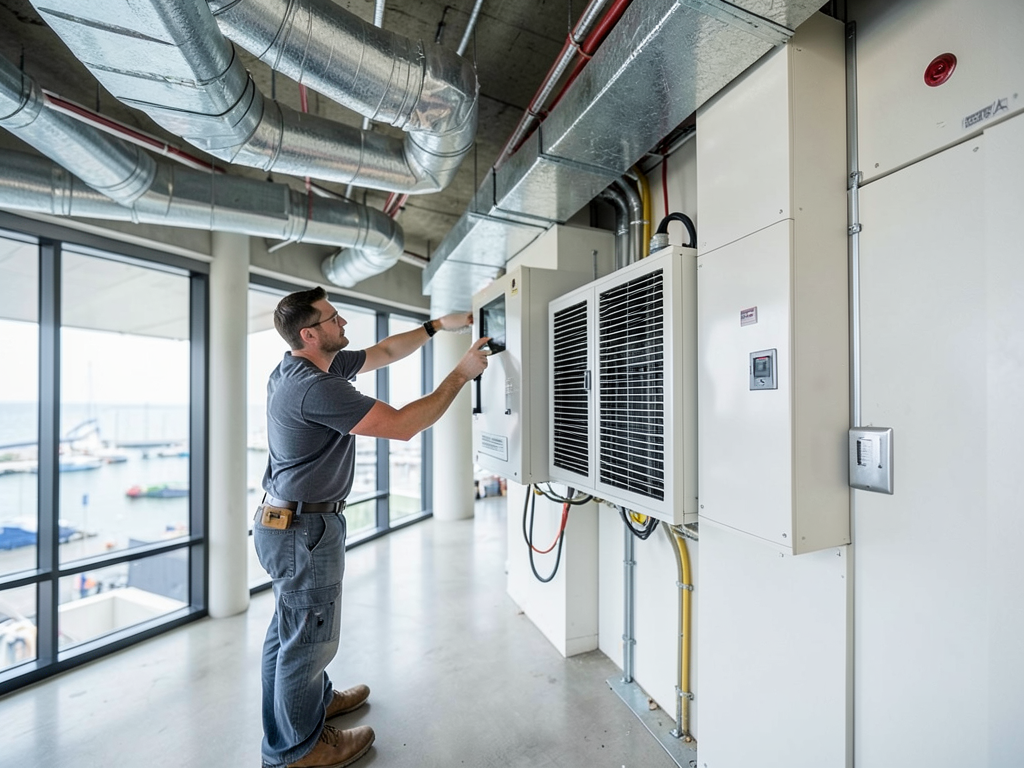
Why Your New Energy Efficient Home in Seaport Needs an ERV System
Your brand-new Seaport condo or townhouse feels perfect—until you notice the air gets stale, windows fog up, or humidity spikes in summer. That’s not a comfort problem. It’s a ventilation problem. Modern energy-efficient homes in Boston’s Seaport District are built so airtight that they trap pollutants, moisture, and stale air inside. Without mechanical ventilation, your indoor air quality suffers even though your utility bills stay low. ENERGY STAR ventilation.
An Energy Recovery Ventilator (ERV) solves this by bringing in fresh outdoor air while transferring heat and moisture between the incoming and outgoing air streams. In Boston’s climate, this means your ERV pre-conditions winter air to reduce heating loads and removes excess summer humidity to keep your home comfortable year-round.. Read more about Managing the High Cost of Heating an Industrial Loft in the Fort Point District.
How an ERV Works: The Science of Heat and Moisture Exchange
An ERV contains a heat exchanger core made of polymer or aluminum plates. As stale indoor air exits your home, it passes through one side of the core. Fresh outdoor air simultaneously enters through the other side. The core transfers both sensible heat (temperature) and latent heat (moisture) between the two air streams without mixing them.
During Boston winters, warm indoor air heats the core. Cold incoming air picks up this heat before entering your living space, reducing the load on your heating system. In summer, the process reverses—cool, dehumidified indoor air chills the core, which then cools and partially dehumidifies hot, humid outdoor air before it enters your home.
ERV vs. HRV: Which is Better for Massachusetts?
The core difference between an ERV and a Heat Recovery Ventilator (HRV) is moisture transfer. An HRV only transfers sensible heat. An ERV transfers both heat and moisture.
| Feature | ERV | HRV | Natural Ventilation |
|---|---|---|---|
| Moisture Transfer | Yes | No | No |
| Summer Humidity Control | Excellent | Poor | Poor |
| Winter Frost Risk | Low | High | N/A |
| Best for Boston Climate | Yes | No | No |
| Energy Recovery | 70-80% | 70-80% | 0% |
Massachusetts summers bring high relative humidity—often 70-90% in July and August. An HRV would bring this humid air inside, forcing your air conditioner to work harder to remove the moisture. An ERV preconditions the air, transferring much of the humidity back outdoors before it enters your home. Mass Save.
Key Benefits for New England Homes
- Improved Indoor Air Quality: Continuous fresh air exchange removes VOCs, cooking odors, and airborne contaminants that accumulate in airtight homes.
- Humidity Control: Maintains optimal 30-50% relative humidity, preventing mold growth and window condensation.
- Energy Efficiency: Recovers 70-80% of heating and cooling energy that would otherwise be lost through ventilation.
- Condensation Prevention: Reduces moisture buildup on windows and in wall cavities that can lead to structural damage.
- Compliance with Building Codes: Meets ASHRAE 62.2 ventilation requirements for new construction in Massachusetts.
Installation Requirements & Maintenance
ERV installation requires dedicated ductwork for supply and exhaust air. In new Seaport construction, this integrates easily during the build process. For retrofits, we typically use existing ductwork or create new runs through utility spaces, attics, or basements. The Most Reliable Heat Pump Installation Teams in Cambridge.
The unit mounts to an interior wall or ceiling, with intake and exhaust vents penetrating the building envelope. All penetrations must be sealed to maintain the airtight envelope that makes your home energy-efficient.
Maintenance involves quarterly filter changes and annual core cleaning. Boston’s urban environment means more dust and pollen accumulation, so more frequent filter changes may be necessary. The core itself lasts 10-15 years with proper care.
Cost, ROI, and Mass Save Rebates
ERV systems for a typical Seaport condo range from $3,500 to $6,000 installed, depending on capacity and installation complexity. The energy savings typically offset 30-40% of the operating cost of a standard ventilation system.
Mass Save offers rebates up to $1,000 for high-efficiency ERV installations in new construction. Federal tax credits may also apply for energy-efficient home improvements. These incentives can reduce your net cost by 20-30%.
The ROI calculation includes: reduced heating and cooling costs, extended HVAC equipment life from reduced runtime, and the health benefits of consistently fresh air. Most homeowners see full payback within 5-7 years. Benefits of Inverter Technology.
Frequently Asked Questions
Will an ERV make my home drafty?
No. ERVs use balanced ventilation—the same amount of air enters as exits. This maintains neutral pressure and prevents drafts. The air exchange happens through the heat exchanger, not through gaps in your home’s envelope.
How much noise does an ERV make?
Modern ERVs operate at 20-40 decibels—quieter than a refrigerator. The outdoor vents are typically located on side walls or roof areas where noise won’t disturb neighbors in dense Seaport developments.
Can I install an ERV myself?
ERV installation requires HVAC licensing, building permits, and proper commissioning to ensure balanced airflow. Improper installation can create pressure imbalances that compromise your home’s energy efficiency and indoor air quality.
How long do ERVs last?
With proper maintenance, ERV cores last 10-15 years. The fans and controls typically last 15-20 years. Regular filter changes and annual cleaning extend system life significantly.
Will an ERV work with my existing HVAC system?
Yes. ERVs integrate with all types of heating and cooling systems—forced air, ductless mini-splits, or radiant heating. The ERV provides ventilation independently of your comfort system.
Don’t Let Your Energy Efficient Home Trap Bad Air
Your Seaport home was built to save energy, but that same airtight construction can trap pollutants, excess moisture, and stale air. An ERV system is not a luxury—it’s essential equipment for maintaining healthy indoor air quality in modern construction.
Without proper ventilation, you risk mold growth, window condensation, and poor air quality that can trigger allergies and respiratory issues. The investment in an ERV pays for itself through energy savings, improved comfort, and the peace of mind that comes with knowing your family breathes clean air year-round.
Call (617) 758-1599 today to schedule your inspection and learn which ERV system is right for your Seaport home. Don’t wait until humidity problems or air quality issues force you to act—be proactive about your indoor environment now. For more information, visit ASHRAE 62.2.