
Why You Need to Clear the Snow Away From Your Heat Pump After a Boston Blizzard
After a major Nor’easter blankets your Quincy neighborhood with two feet of heavy wet snow your heat pump sits buried under a white mound. You might think it can handle the snow but that frozen blanket is slowly choking your system. Restricted airflow forces your compressor to work overtime and within hours you could be facing a costly breakdown or an emergency heat situation that drives your energy bills through the roof. How to Get Fast Emergency Furnace Repair in Dorchester This Winter.
A heat pump needs consistent airflow across its outdoor coil to transfer heat efficiently. When snow blocks the top and sides the system can’t pull in enough air to extract warmth from the environment. This triggers a defrost cycle that uses extra energy and if the snow is too deep the fan blades can’t spin freely. In extreme cases the weight of wet snow can bend delicate aluminum fins or even crack the housing. The result is a system that struggles to keep up with demand and may shut down entirely when you need it most.
The Hidden Dangers of Snow-Covered Heat Pumps
Heavy wet snow is especially problematic for Boston homes. Unlike light powder that can blow off wet snow sticks to every surface and refreezes overnight. This creates an ice shell that traps moisture against the unit. Over time that moisture seeps into electrical connections and can corrode terminals. The defrost cycle kicks in more frequently trying to melt the buildup and each cycle sends a surge of power through your system. Those surges wear down capacitors and stress the compressor motor.
Ice buildup on the fan blades throws them off balance. A wobbling blade can crack or come loose and send shrapnel into the housing. That kind of impact can destroy the fan motor and leave you without heat until a technician can replace the assembly. In historic neighborhoods like Belmont and Watertown where many homes have heat pumps tucked close to the foundation the risk is even higher. Snow sliding off a slate roof can bury a unit in minutes and the weight can warp the mounting pad. Upgrading Historic Back Bay Homes with Central Air (Without Ruining the Interior Walls).
Step-by-Step: How to Clear Snow Safely
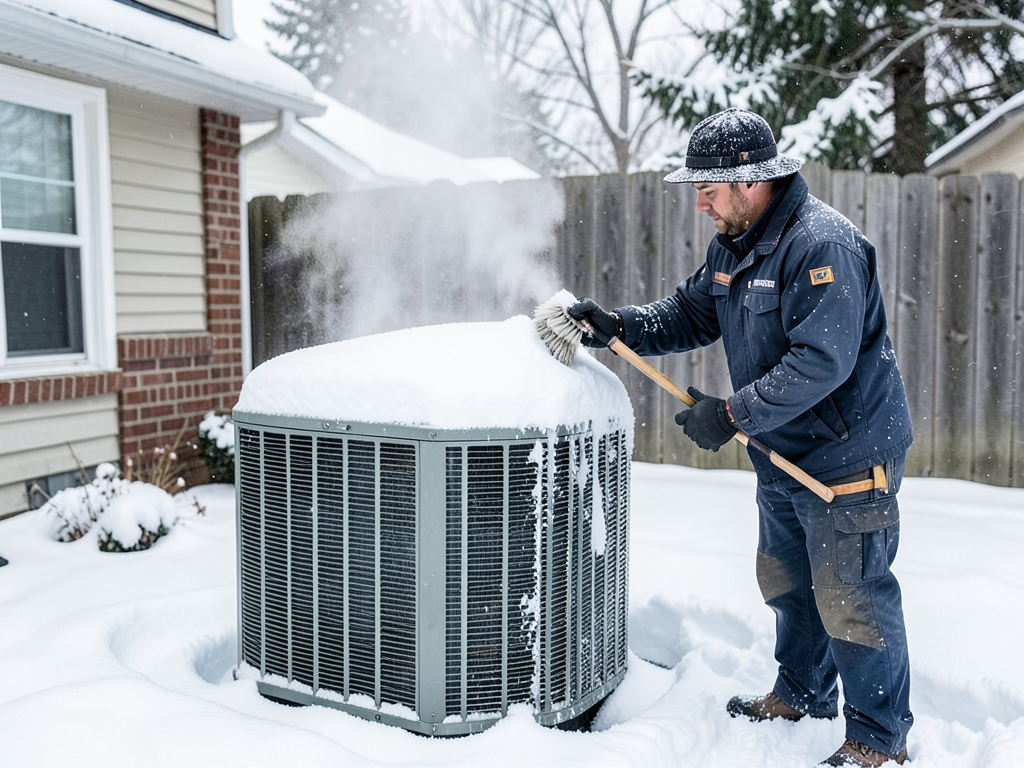
The safest way to clear snow is to act early before it freezes solid. Use a soft-bristle broom or a plastic snow rake to sweep snow off the top of the unit. Work from the sides and push snow away from the base rather than into the fan area. Avoid metal shovels or ice picks. Aluminum fins bend easily and once bent they can’t be straightened without a fin comb tool.
Create a clear zone at least two to three feet around all sides of the heat pump. This space allows air to circulate freely and gives the defrost cycle room to work. If snow is piled against the house above the unit check your gutters. Clogged downspouts can dump roof runoff directly onto the heat pump and create an ice dam that refreezes every night.
For stubborn ice never use salt or chemical de-iccers. Those products can corrode the aluminum fins and damage the base pan. Instead use warm water to melt a channel and let the unit’s defrost cycle finish the job. If you see solid ice encasing the entire unit it’s time to call a professional. Trying to chip away at thick ice can crack refrigerant lines and lead to a costly leak repair. EPA regulations on HVAC emissions.
When to Call a Professional
Some situations require expert help. If your heat pump is completely encased in ice and won’t start a technician can use a controlled steam or hot water method to melt the blockage without damaging components. Strange grinding or buzzing sounds after a storm mean something is loose or rubbing inside the unit. Continuing to run it can destroy the fan motor or compressor.
Vibration is another red flag. If the unit shakes more than usual after clearing snow a blade may be bent or a mount may be loose. An unbalanced fan can cause premature bearing wear and eventually seize up. In historic districts like Cambridge or Somerville where heat pumps are often installed on tight lots a professional can also check that snow clearance meets Massachusetts building code requirements for safe operation. Mass Save energy efficiency programs.
Proactive Winter Tips for Boston Homeowners
Prevention is the best strategy. Install a heat pump stand or riser that elevates the unit at least twelve inches above the ground. This keeps the base out of drifting snow and improves drainage. In areas like Chelsea or Everett where coastal storms bring heavy wet snow a riser can be the difference between smooth operation and a service call.
Check your roof runoff path before the first snow. Extend downspouts away from the heat pump and clear gutters so melting snow flows away from the unit. If your home is in a low spot or near the Mystic River where the water table is high consider adding a gravel drainage bed around the base to prevent ice from forming at the bottom.
During a major storm check the unit every few hours if it’s safe to do so. A quick pass with a broom can prevent a thick ice shell from forming. If you’re away for the weekend or on vacation ask a neighbor to check it. A heat pump buried for two or three days in subfreezing weather can suffer irreversible damage.
Understanding Defrost Cycles and Emergency Heat
Modern heat pumps have an automatic defrost cycle that reverses the refrigerant flow to melt frost off the outdoor coil. You might notice steam rising from the unit during defrost. That’s normal. But if you see the system running in defrost mode constantly or if your thermostat switches to Emergency Heat (AUX) and stays there it means the outdoor coil can’t keep up with the demand.
Emergency Heat uses electric resistance coils or a backup gas furnace and can cost three to five times more to operate than a heat pump. If your system is stuck in Emergency Heat after a storm it’s a sign the outdoor unit is too blocked or damaged to work efficiently. Continuing to run only on backup heat will spike your utility bill and put extra wear on the secondary system.
According to the Massachusetts State Building Code 780 CMR section 120.1 every outdoor HVAC unit must maintain a minimum clearance of thirty inches from any obstruction to ensure proper airflow. That clearance is measured from the outermost part of the unit including any snow or ice buildup. Keeping that space clear isn’t just about efficiency it’s a code requirement that protects your investment.
Heat Pump Stands and Installation Best Practices
If you’re installing a new heat pump in a high-snowfall area ask your contractor about elevated mounting options. Wall-mounted brackets keep the unit above snow level and prevent bottom-up ice buildup. Ground stands with wide bases resist tipping in strong winds and make snow removal easier. In coastal zones like Quincy or Revere where salt air accelerates corrosion choose stainless steel hardware and a composite pad that won’t rot or rust.
During installation the pad should be level and set on a stable base. Clay soil common in parts of Newton and Waltham can shift when wet so a gravel sub-base helps prevent settling. Proper leveling ensures the fan spins true and reduces vibration that can loosen electrical connections over time. The Most Reliable Heat Pump Installation Teams in Cambridge.
If you already have a heat pump on a concrete pad check it after heavy rain or snowmelt. A sinking pad can tilt the unit and cause water to pool inside. That standing water freezes overnight and starts the damaging cycle of ice buildup from the bottom up.
Emergency Heat vs. Heat Pump Mode
Understanding the difference between normal heat pump operation and Emergency Heat can save you money and stress. In normal mode the outdoor unit runs and extracts heat even from cold air. Emergency Heat shuts off the outdoor unit entirely and relies on backup heating. This happens automatically when the outdoor temperature drops below the balance point or when the heat pump can’t meet the thermostat’s demand.. Read more about Is Geothermal Heating and Cooling a Practical Option for Your Weston Estate?.
After a blizzard if your system switches to Emergency Heat and the outdoor temperature is above fifteen degrees Fahrenheit the problem is likely snow blockage or ice on the coil. Clearing the snow and checking for ice dams on the roof can often restore normal operation. If the system still won’t leave Emergency Heat mode there may be a sensor issue or a failed component that needs professional diagnosis.
Running only on Emergency Heat during a long cold snap can double or triple your electric bill. If you notice your thermostat stuck on AUX for more than a few hours after clearing snow it’s time to call for service before the backup system suffers unnecessary wear.
Local Climate Considerations for Boston Heat Pumps
Boston’s climate creates unique challenges for heat pump owners. Nor’easters can drop two feet of wet snow in twenty-four hours and the temperature often hovers near freezing keeping snow in a heavy, packable state. Coastal areas like Chelsea and Revere face additional salt spray that can corrode fins faster than inland neighborhoods.
Inland suburbs like Arlington and Belmont often see deeper snow drifts due to open yards and fewer windbreaks. Those drifts can bury a heat pump mounted just inches off the ground. Historic districts with mature trees add another layer of risk. Falling ice from clogged gutters or branches can damage the top grille and expose the fan to the elements.
Understanding these local patterns helps you plan. If you live in a coastal flood zone or near the Mystic River where the water table is high elevating your heat pump isn’t just about snow it’s about protecting it from seasonal flooding and long-term corrosion.
Maintenance Schedule to Prevent Winter Failures
A simple maintenance routine can prevent most winter heat pump problems. Before the first snow check the pad for level, clear away leaves and debris, and trim back any shrubs within three feet of the unit. Test the system in heating mode to make sure it’s running efficiently.
During winter check the unit after every major storm. A quick sweep with a broom takes five minutes and can save you a costly service call. If you hear new noises or notice the system running constantly check for snow buildup on the top or sides. Early detection is key.
Schedule a professional tune-up in late fall. A technician can test the defrost cycle, check refrigerant levels, and verify that all electrical connections are tight. They can also apply a protective coating to the fins if you’re in a coastal area. This coating repels moisture and slows corrosion from salt air.
If your heat pump is over ten years old consider a pre-winter inspection even if it seems to be working fine. Older compressors are more vulnerable to the stress of restricted airflow and a small repair now can prevent a mid-winter breakdown. What to Do When Your Back Bay AC Unit Stops Working in July.
Cost Factors and Energy Savings
Neglecting snow clearance can cost you in several ways. A system running in Emergency Heat can use three to five times more electricity than normal operation. If your heat pump is buried for a week during a cold snap you could see an extra two hundred to five hundred dollars on your next bill.
Repair costs add up quickly. A damaged fan motor runs six hundred to nine hundred dollars to replace. A cracked compressor can cost fifteen hundred to twenty-five hundred dollars installed. In many cases a single major repair approaches the cost of a new high-efficiency unit.
Keeping your heat pump clear and well-maintained protects your energy savings. Modern inverter-driven heat pumps can achieve seasonal efficiencies of three hundred to four hundred percent. That means for every dollar you spend you get three to four dollars worth of heat. Snow blockage can cut that efficiency in half and erase your energy savings in a single winter. Benefits of Inverter Technology.
Safety Tips for DIY Snow Removal
Always turn off the power before clearing snow. Most units have a disconnect switch near the base. If you can’t find it turn off the breaker at the panel. This prevents the system from starting while you’re working and protects you from moving parts.
Wear gloves to protect your hands from sharp aluminum fins. If you use a broom choose one with soft bristles. For heavy snow use a plastic snow rake with an extendable handle so you can clear the top without standing on a ladder.
Never use hot water from an indoor tap to melt ice. The temperature shock can crack the coil or housing. If you need to melt ice use lukewarm water from an outdoor spigot or let the unit’s defrost cycle handle it. Keep children and pets away while you’re working to avoid accidents with tools or falling snow.
Frequently Asked Questions
How often should I check my heat pump after a snowstorm?
Check it every four to six hours during heavy snowfall and once the snow stops clear a two to three foot perimeter around the unit. If you’re away ask a neighbor to check it.
Can I use a leaf blower to clear snow off my heat pump?
A leaf blower can work for light fluffy snow but avoid using it on wet heavy snow. The moisture can damage the blower and the force can bend delicate fins.
What should I do if my heat pump is making a loud noise after clearing snow?
Turn off the power immediately and call a professional. Loud noises often mean a loose or damaged fan blade or a failing motor bearing.
Is it normal for steam to come out of my heat pump?
Yes. Steam during the defrost cycle is normal. It usually lasts five to ten minutes and is followed by a return to normal heating operation.
How much does it cost to repair a heat pump damaged by snow and ice?
Repair costs vary widely. A simple fan motor replacement runs six hundred to nine hundred dollars. A damaged compressor can cost fifteen hundred to twenty-five hundred dollars installed.
- Turn Off Power
Locate the disconnect switch or turn off the breaker to prevent accidental startup.
- Gently Remove Snow
Use a soft-bristle broom or plastic rake to sweep snow off the top and sides.
- Create Clearance Zone
Clear a two to three foot perimeter around the unit for proper airflow.
- Check for Ice
Look for ice buildup on the top or sides. Use warm water if needed to melt thin ice.
- Restore Power and Test
Turn the power back on and listen for normal operation. Call a professional if you hear unusual noises.
Comparison of Snow Removal Tools
| Tool | Best For | Risk to Unit | Cost Range |
|---|---|---|---|
| Soft-bristle broom | Light to medium snow | Very low | $15-$30 |
| Plastic snow rake | Heavy wet snow on top | Low | $25-$50 |
| Leaf blower | Light fluffy snow only | Medium | $50-$150 |
| Metal shovel | Not recommended | High (fin damage) | $20-$40 |
| Ice pick | Not recommended | Very high (coil damage) | $10-$20 |
Protect Your Heat Pump This Winter
A few minutes of snow removal after each storm can save you thousands in repair costs and keep your home warm all winter. If you hear strange noises or see ice buildup that won’t melt call a professional before the problem gets worse. For fast emergency service in Quincy Arlington Belmont or anywhere in Greater Boston call (617) 758-1599 today to schedule your inspection. Don’t wait until the next blizzard leaves you without heat.
Need help clearing your heat pump or want a pre-winter safety check? Pick up the phone and call (617) 758-1599 before the next storm hits. Our NATE-certified technicians are ready to keep your system running safely and efficiently all season long.
For more tips on heat pump maintenance and emergency repair services visit our emergency furnace repair guide or learn about the most reliable heat pump installation teams in Cambridge.
{
“@context”: “https://schema.org”,
“@type”: “BlogPosting”,
“headline”: “Why You Need to Clear the Snow Away From Your Heat Pump After a Boston Blizzard”,
“description”: “Learn why clearing snow from your heat pump is critical after a Boston blizzard. Protect your system from damage and keep your home warm this winter.”,
“wordCount”: 2721,
“datePublished”: “2026-05-26T06:11:00.000Z”,
“dateModified”: “2026-05-26T06:11:00.000Z”,
“inLanguage”: “en-US”,
“mainEntityOfPage”: {
“@type”: “WebPage”,
“@id”: “https://titanhvacboston.com”
},
“publisher”: {
“@type”: “LocalBusiness”,
“name”: “Titan HVAC Boston”,
“url”: “https://titanhvacboston.com”
},
“author”: {
“@type”: “Organization”,
“name”: “Titan HVAC Boston”,
“url”: “https://titanhvacboston.com”
},
“image”: {
“@type”: “ImageObject”,
“url”: “https://titanhvacboston.com/wp-content/uploads/2026/03/why-you-need-to-clear-the-snow-away-from-your-heat-1.png”
}
}
{
“@context”: “https://schema.org”,
“@type”: “HVACBusiness”,
“name”: “Titan HVAC Boston”,
“url”: “https://titanhvacboston.com”,
“address”: {
“@type”: “PostalAddress”,
“addressLocality”: “Boston”
},
“areaServed”: {
“@type”: “City”,
“name”: “Boston”
}
}
{
“@context”: “https://schema.org”,
“@type”: “FAQPage”,
“mainEntity”: [
{
“@type”: “Question”,
“name”: “How often should I check my heat pump after a snowstorm?”,
“acceptedAnswer”: {
“@type”: “Answer”,
“text”: “Check it every four to six hours during heavy snowfall and once the snow stops clear a two to three foot perimeter around the unit. If you’re away ask a neighbor to check it.”
}
},
{
“@type”: “Question”,
“name”: “Can I use a leaf blower to clear snow off my heat pump?”,
“acceptedAnswer”: {
“@type”: “Answer”,
“text”: “A leaf blower can work for light fluffy snow but avoid using it on wet heavy snow. The moisture can damage the blower and the force can bend delicate fins.”
}
},
{
“@type”: “Question”,
“name”: “What should I do if my heat pump is making a loud noise after clearing snow?”,
“acceptedAnswer”: {
“@type”: “Answer”,
“text”: “Turn off the power immediately and call a professional. Loud noises often mean a loose or damaged fan blade or a failing motor bearing.”
}
},
{
“@type”: “Question”,
“name”: “Is it normal for steam to come out of my heat pump?”,
“acceptedAnswer”: {
“@type”: “Answer”,
“text”: “Yes. Steam during the defrost cycle is normal. It usually lasts five to ten minutes and is followed by a return to normal heating operation.”
}
},
{
“@type”: “Question”,
“name”: “How much does it cost to repair a heat pump damaged by snow and ice?”,
“acceptedAnswer”: {
“@type”: “Answer”,
“text”: “Repair costs vary widely. A simple fan motor replacement runs six hundred to nine hundred dollars. A damaged compressor can cost fifteen hundred to twenty-five hundred dollars installed.”
}
}
]
}
{
“@context”: “https://schema.org”,
“@type”: “HowTo”,
“name”: “How to Clear Snow from Your Heat Pump”,
“step”: [
{
“@type”: “HowToStep”,
“position”: 1,
“name”: “Turn Off Power”,
“text”: “Locate the disconnect switch or turn off the breaker to prevent accidental startup.”
},
{
“@type”: “HowToStep”,
“position”: 2,
“name”: “Gently Remove Snow”,
“text”: “Use a soft-bristle broom or plastic rake to sweep snow off the top and sides.”
},
{
“@type”: “HowToStep”,
“position”: 3,
“name”: “Create Clearance Zone”,
“text”: “Clear a two to three foot perimeter around the unit for proper airflow.”
},
{
“@type”: “HowToStep”,
“position”: 4,
“name”: “Check for Ice”,
“text”: “Look for ice buildup on the top or sides. Use warm water if needed to melt thin ice.”
},
{
“@type”: “HowToStep”,
“position”: 5,
“name”: “Restore Power and Test”,
“text”: “Turn the power back on and listen for normal operation. Call a professional if you hear unusual noises.”
}
],
“image”: “https://titanhvacboston.com/wp-content/uploads/2026/03/why-you-need-to-clear-the-snow-away-from-your-heat-1.png”
}
{
“@context”: “https://schema.org”,
“@type”: “BreadcrumbList”,
“itemListElement”: [
{
“@type”: “ListItem”,
“position”: 1,
“name”: “Home”,
“item”: “https://titanhvacboston.com”
},
{
“@type”: “ListItem”,
“position”: 2,
“name”: “Blog”,
“item”: “https://titanhvacboston.com/blog”
},
{
“@type”: “ListItem”,
“position”: 3,
“name”: “Why You Need to Clear the Snow Away From Your Heat Pump After a Boston Blizzard”
}
]
}
{
“@context”: “https://schema.org”,
“@type”: “Service”,
“serviceType”: “HVAC”,
“provider”: {
“@type”: “LocalBusiness”,
“name”: “Titan HVAC Boston”,
“url”: “https://titanhvacboston.com”
},
“areaServed”: {
“@type”: “City”,
“name”: “Boston”
},
“description”: “Learn why clearing snow from your heat pump is critical after a Boston blizzard. Protect your system from damage and keep your home warm this winter.”
}