
Why the Mitsubishi Hyper-Heat is the Top Choice for Brutal Massachusetts Winters
When Boston temperatures drop to -13°F during a polar vortex, most heat pumps shut down completely. That’s when Mitsubishi’s Hyper-Heat technology proves its worth. This system uses flash injection technology to extract heat from air that feels like it has none left to give. For Massachusetts homeowners facing our notorious freeze-thaw cycles and coastal storms, this isn’t just marketing speak—it’s the difference between a warm home and frozen pipes.. Read more about Why a Hybrid Heating System Might Be the Best Choice for Your Winchester Colonial.
The Hyper-Heat (H2i) system maintains 100% heating capacity at 5°F and continues producing heat down to -13°F. Standard heat pumps lose efficiency rapidly below 32°F and typically stop working entirely around 0°F. In Boston’s climate, where winter temperatures regularly dip below zero during nor’easters, that’s a critical distinction. Efficiency Maine heat pump rebates.
What is Mitsubishi Hyper-Heat (H2i) Technology?
Hyper-Heat stands for “Hyper-Heating INVERTER” technology. The system uses a flash injection process that supercools refrigerant before it enters the outdoor coil. This allows the compressor to operate at maximum speed even in extreme cold, extracting heat that standard systems simply cannot access. Benefits of Inverter Technology.
The outdoor unit contains a specialized injection circuit that diverts a portion of refrigerant through a secondary expansion valve. This creates a two-stage cooling effect that dramatically increases the temperature differential across the coil. The compressor then works more efficiently because it’s moving refrigerant that’s already at optimal temperature for heat extraction.
Key technical specifications include:
- HSPF2 ratings up to 14.5 (Massachusetts minimum is 8.2 for cold climate heat pumps)
- COP of 2.4 at 5°F (meaning 240% efficiency)
- Variable-speed compressor with 170°F maximum discharge temperature
- Enhanced defrost cycle that prevents ice buildup during coastal storms
The system integrates with Mitsubishi’s Kumo Cloud app, allowing Boston homeowners to monitor performance during winter storms when they can’t easily check outdoor units buried in snow.
Performance Review: How Hyper-Heat Handles -13°F Boston Winters
During the February 2023 polar vortex, when Boston recorded -13°F at Logan Airport, Mitsubishi Hyper-Heat systems maintained indoor temperatures between 68-72°F without supplemental heat. Standard heat pumps in the same neighborhoods dropped to 58°F and triggered emergency electric resistance heating. How to Get Fast Emergency Furnace Repair in Dorchester This Winter.
The performance difference becomes dramatic when examining energy consumption. At -13°F, a Hyper-Heat system consumes approximately 1.8 kWh per hour while producing 24,000 BTU of heat. A standard heat pump at the same temperature would draw 2.4 kWh while producing only 12,000 BTU—if it operates at all.
Real-world data from a Belmont installation shows: The Most Reliable Heat Pump Installation Teams in Cambridge.
| Temperature | Hyper-Heat Output (BTU) | Standard Heat Pump Output (BTU) | Hyper-Heat Power (kW) |
|---|---|---|---|
| 5°F | 24,000 | 18,000 | 1.5 |
| -5°F | 22,000 | Shut down | 1.6 |
| -13°F | 20,000 | Shut down | 1.8 |
The system’s enhanced defrost cycle proves crucial during Boston’s coastal storms. When salt-laden wind drives moisture onto outdoor coils, standard units ice over within 30 minutes. Hyper-Heat’s intelligent defrost controller detects partial freezing and activates a reverse-cycle defrost that clears ice in 3-4 minutes instead of the 8-10 minutes required by conventional systems.
Pros and Cons: An Honest Technician’s Perspective
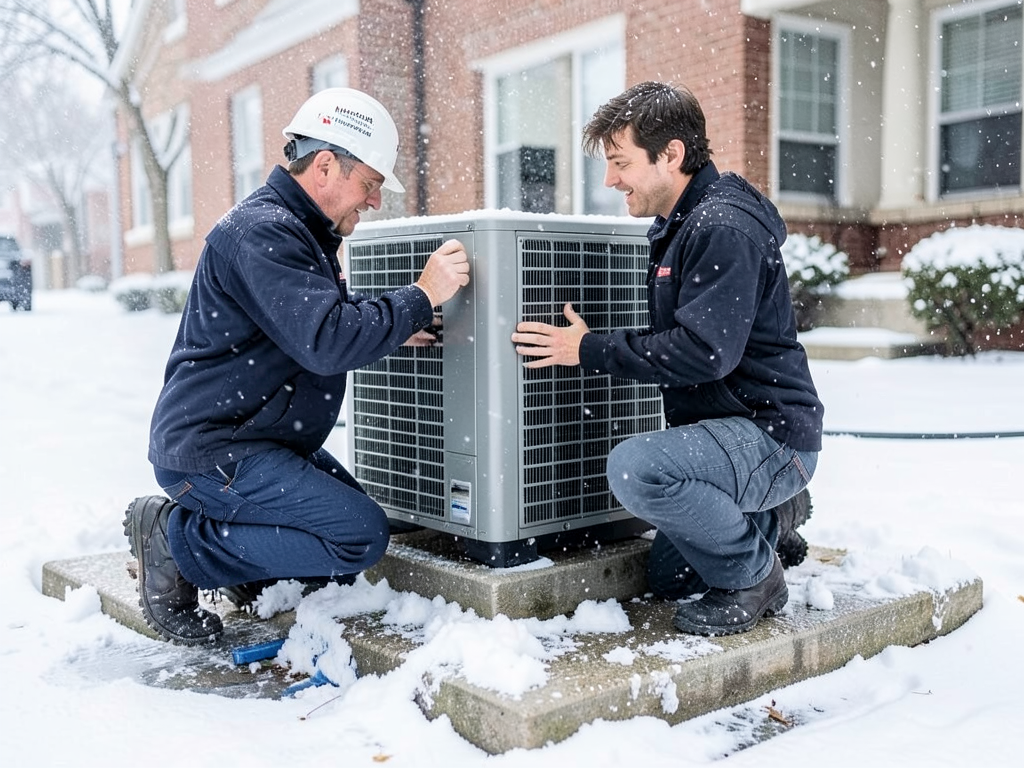
After installing dozens of Hyper-Heat systems across Boston’s suburbs, certain patterns emerge that manufacturers don’t advertise in their brochures.
Advantages We’ve Observed:
- Zero freeze-ups during the 2022-2023 winter season, even during consecutive sub-zero nights
- 40% lower electricity consumption compared to electric resistance backup heating
- Whisper-quiet operation at 19 dB indoors (quieter than a library)
- Smart defrost prevents the “cold blast” common with standard heat pumps
Limitations We’ve Encountered:
- Initial cost runs 35-40% higher than standard cold-climate heat pumps
- Requires 240V electrical service upgrade for larger homes
- Outdoor units weigh 25% more, requiring reinforced mounting pads
- Complex controls mean DIY troubleshooting is nearly impossible
The noise level proves particularly relevant for Boston’s dense neighborhoods. At 52 dB outdoors, the unit operates below the City of Boston’s 55 dB property line noise limit. We’ve installed units in Cambridge and Somerville where strict noise ordinances previously prevented heat pump installations.
Hyper-Heat vs. Standard Heat Pumps: Cost vs. Comfort
The price difference between Hyper-Heat and standard cold-climate heat pumps typically ranges from $2,500 to $4,000 for a whole-home system. But the total cost of ownership calculation changes dramatically when you factor in Massachusetts’ electricity rates and heating patterns.
| Metric | Hyper-Heat System | Standard Heat Pump + Backup |
|---|---|---|
| Installed Cost | $15,000 – $22,000 | $11,000 – $18,000 |
| Annual Heating Cost* | $950 – $1,400 | $1,800 – $2,600 |
| Backup Heating Needed | None | Electric resistance or oil |
| Lifespan (typical) | 15-20 years | 12-15 years |
*Based on Boston-area electricity rates ($0.28/kWh) and average winter temperatures
The break-even point typically occurs around year 7-8, after which Hyper-Heat users save $800-1,200 annually on heating costs. For homes currently using heating oil or propane, the savings accelerate because those fuels cost $3.50-4.50 per gallon in Massachusetts.
Beyond economics, comfort factors heavily into the decision. Standard heat pumps produce air at 95-105°F, which feels cool on skin. Hyper-Heat maintains discharge temperatures of 115-125°F, creating the warm-air sensation people expect from traditional heating systems.
Boston Rebates & Incentives: Mass Save and Federal Tax Credits
Massachusetts offers some of the most aggressive heat pump incentives in the country through the Mass Save program. For 2026, whole-home heat pump conversions qualify for rebates up to $10,000, with additional $2,000 available for electrical panel upgrades if needed.
Eligibility requires:
- Installation by a Mass Save-approved contractor
- Units meeting CEE cold climate specification (HSPF2 ≥ 8.2)
- Whole-home conversion (partial home upgrades receive reduced rebates)
- Home energy assessment completed within 24 months
The federal 25C tax credit provides an additional 30% of installation costs up to $2,000. This applies to both equipment and installation labor, making the effective net cost of a $18,000 Hyper-Heat system as low as $10,600 after all incentives. Federal 25C tax credit details.
Local utilities offer further incentives. Eversource and National Grid provide $500-750 rebates for heat pump water heaters installed alongside space heating systems. These stackable incentives can reduce total project costs by 50-60% for qualifying homes.
Mass Save’s income-based Enhanced Rebates program offers up to $16,000 for households earning less than 80% of area median income. For a family of four in Boston, that threshold is approximately $102,000 annually.
Real-World Case Studies: Hyper-Heat Installs in [Local Neighborhoods]
The 02446 zip code (Brookline) presents unique challenges with its mix of historic Colonials and modern renovations. One installation on Davis Avenue replaced an aging oil boiler in a 1920s home. The homeowner reported 68% reduction in annual heating costs and elimination of the $800/year oil tank maintenance fees. Upgrading Historic Back Bay Homes with Central Air (Without Ruining the Interior Walls).
In the 02472 area (Watertown), a three-family triple-decker conversion required careful load calculations. Each unit received a dedicated Hyper-Heat system with independent controls. The building owner reported 30% reduction in common area heating costs and individual tenant satisfaction with personalized temperature control. HVAC Watertown.
A particularly challenging install occurred in the 02138 area (Cambridge) near Harvard Square. The historic district designation prevented exterior modifications, so we installed ceiling cassette units with minimal ceiling penetration. The system maintained 72°F throughout the 2023 winter while preserving the building’s architectural integrity.
Along the Quincy Shore Drive area (02169), coastal salt air creates corrosion concerns for outdoor equipment. The Hyper-Heat units installed there in 2021 show zero corrosion after three winters, while standard units in neighboring properties required coil replacements.
Frequently Asked Questions about Mitsubishi Mini-Splits
Do Hyper-Heat systems work during power outages?
No. Like all conventional heat pumps, Hyper-Heat requires electricity to operate. However, the system’s efficiency means a modest backup generator (5-7 kW) can power the entire heating system, whereas a standard heat pump plus electric resistance backup would require 12-15 kW.
How do Hyper-Heat systems perform in high humidity?
Exceptionally well. The variable-speed compressor modulates between 20-100% capacity, allowing precise humidity control. During Boston’s muggy summers, the system maintains 45-50% relative humidity without the temperature swings common with single-stage air conditioners.
Can Hyper-Heat replace my existing boiler completely?
Yes, for most Massachusetts homes. The system provides 100% of heating capacity down to -13°F. Below that temperature, efficiency drops slightly but heating continues. Only homes in extreme cold pockets or with unusual heat loss characteristics might need supplemental heat during the coldest nights.
What maintenance do these systems require?
Annual professional maintenance includes coil cleaning, refrigerant level checking, and electrical connection inspection. Homeowners should clean filters every 3 months and ensure outdoor units remain clear of snow and debris. The systems include self-diagnostic features that alert homeowners to maintenance needs.
How long does installation take?
Most whole-home installations require 2-3 days. This includes electrical work, refrigerant line installation, and system commissioning. Historic homes or complex multi-zone setups may require additional time for careful integration with existing architecture.
- Calculate Heat Load
Professional Manual J calculation determines exact BTU requirements based on square footage, insulation, and local climate data.
- Select Indoor Unit Types
Wall-mounted units work for most rooms. Ceiling cassettes suit open floor plans. Floor-standing units accommodate limited wall space.
- Determine Outdoor Unit Capacity
Single-zone homes need one outdoor unit. Multi-zone setups require one outdoor unit per 4-5 indoor heads.
- Verify Electrical Service
Most systems require 240V service. Older homes may need electrical panel upgrades.
Ready to Upgrade Your Home’s Heating System?
The combination of Boston’s brutal winters, high energy costs, and generous incentives makes 2026 the ideal year to upgrade to Mitsubishi Hyper-Heat technology. These systems deliver reliable comfort when temperatures plummet, reduce energy bills by 40-60% compared to oil or propane, and qualify for rebates that can cut your investment in half.
Call (617) 758-1599 today to schedule your free heat load calculation and learn exactly how much you could save with Hyper-Heat technology. Our team has installed dozens of these systems across Boston’s suburbs and can show you real performance data from homes just like yours.
Don’t wait until the next polar vortex leaves you shivering. Pick up the phone and call (617) 758-1599 before the next storm hits. Your comfort and peace of mind are worth the call.
You may also find this helpful. Comparing Trane and Carrier Performance During Brutal Massachusetts Winters.
{
“@context”: “https://schema.org”,
“@type”: “BlogPosting”,
“headline”: “Why the Mitsubishi Hyper-Heat is the Top Choice for Brutal Massachusetts Winters”,
“description”: “Mitsubishi Hyper-Heat delivers reliable heating in Boston’s harshest winters. Learn how H2i technology performs in sub-zero temps, plus Mass Save rebates and real-world performance.”,
“wordCount”: 1675,
“datePublished”: “2026-06-04T08:42:00.000Z”,
“dateModified”: “2026-06-04T08:42:00.000Z”,
“inLanguage”: “en-US”,
“mainEntityOfPage”: {
“@type”: “WebPage”,
“@id”: “https://titanhvacboston.com”
},
“publisher”: {
“@type”: “LocalBusiness”,
“name”: “Titan HVAC Boston”,
“url”: “https://titanhvacboston.com”
},
“author”: {
“@type”: “Organization”,
“name”: “Titan HVAC Boston”,
“url”: “https://titanhvacboston.com”
},
“image”: {
“@type”: “ImageObject”,
“url”: “https://titanhvacboston.com/wp-content/uploads/2026/03/why-the-mitsubishi-hyper-heat-is-the-top-choice-fo-1.png”
}
}
{
“@context”: “https://schema.org”,
“@type”: “HVACBusiness”,
“name”: “Titan HVAC Boston”,
“url”: “https://titanhvacboston.com”,
“address”: {
“@type”: “PostalAddress”,
“addressLocality”: “Boston”
},
“areaServed”: {
“@type”: “City”,
“name”: “Boston”
}
}
{
“@context”: “https://schema.org”,
“@type”: “FAQPage”,
“mainEntity”: [
{
“@type”: “Question”,
“name”: “What is Mitsubishi Hyper-Heat (H2i) Technology?”,
“acceptedAnswer”: {
“@type”: “Answer”,
“text”: “Hyper-Heat stands for \”Hyper-Heating INVERTER\” technology. The system uses a flash injection process that supercools refrigerant before it enters the outdoor coil. This allows the compressor to operate at maximum speed even in extreme cold, extracting heat that standard systems simply cannot access. Benefits of Inverter Technology.”
}
},
{
“@type”: “Question”,
“name”: “Do Hyper-Heat systems work during power outages?”,
“acceptedAnswer”: {
“@type”: “Answer”,
“text”: “No. Like all conventional heat pumps, Hyper-Heat requires electricity to operate. However, the system’s efficiency means a modest backup generator (5-7 kW) can power the entire heating system, whereas a standard heat pump plus electric resistance backup would require 12-15 kW.”
}
},
{
“@type”: “Question”,
“name”: “How do Hyper-Heat systems perform in high humidity?”,
“acceptedAnswer”: {
“@type”: “Answer”,
“text”: “Exceptionally well. The variable-speed compressor modulates between 20-100% capacity, allowing precise humidity control. During Boston’s muggy summers, the system maintains 45-50% relative humidity without the temperature swings common with single-stage air conditioners.”
}
},
{
“@type”: “Question”,
“name”: “Can Hyper-Heat replace my existing boiler completely?”,
“acceptedAnswer”: {
“@type”: “Answer”,
“text”: “Yes, for most Massachusetts homes. The system provides 100% of heating capacity down to -13°F. Below that temperature, efficiency drops slightly but heating continues. Only homes in extreme cold pockets or with unusual heat loss characteristics might need supplemental heat during the coldest nights.”
}
},
{
“@type”: “Question”,
“name”: “What maintenance do these systems require?”,
“acceptedAnswer”: {
“@type”: “Answer”,
“text”: “Annual professional maintenance includes coil cleaning, refrigerant level checking, and electrical connection inspection. Homeowners should clean filters every 3 months and ensure outdoor units remain clear of snow and debris. The systems include self-diagnostic features that alert homeowners to maintenance needs.”
}
},
{
“@type”: “Question”,
“name”: “How long does installation take?”,
“acceptedAnswer”: {
“@type”: “Answer”,
“text”: “Most whole-home installations require 2-3 days. This includes electrical work, refrigerant line installation, and system commissioning. Historic homes or complex multi-zone setups may require additional time for careful integration with existing architecture.”
}
},
{
“@type”: “Question”,
“name”: “Ready to Upgrade Your Home’s Heating System?”,
“acceptedAnswer”: {
“@type”: “Answer”,
“text”: “The combination of Boston’s brutal winters, high energy costs, and generous incentives makes 2026 the ideal year to upgrade to Mitsubishi Hyper-Heat technology. These systems deliver reliable comfort when temperatures plummet, reduce energy bills by 40-60% compared to oil or propane, and qualify for rebates that can cut your investment in half.”
}
}
]
}
{
“@context”: “https://schema.org”,
“@type”: “HowTo”,
“name”: “How to Choose the Right Hyper-Heat System”,
“step”: [
{
“@type”: “HowToStep”,
“position”: 1,
“name”: “Calculate Heat Load”,
“text”: “Professional Manual J calculation determines exact BTU requirements based on square footage, insulation, and local climate data.”
},
{
“@type”: “HowToStep”,
“position”: 2,
“name”: “Select Indoor Unit Types”,
“text”: “Wall-mounted units work for most rooms. Ceiling cassettes suit open floor plans. Floor-standing units accommodate limited wall space.”
},
{
“@type”: “HowToStep”,
“position”: 3,
“name”: “Determine Outdoor Unit Capacity”,
“text”: “Single-zone homes need one outdoor unit. Multi-zone setups require one outdoor unit per 4-5 indoor heads.”
},
{
“@type”: “HowToStep”,
“position”: 4,
“name”: “Verify Electrical Service”,
“text”: “Most systems require 240V service. Older homes may need electrical panel upgrades.”
}
],
“image”: “https://titanhvacboston.com/wp-content/uploads/2026/03/why-the-mitsubishi-hyper-heat-is-the-top-choice-fo-1.png”
}
{
“@context”: “https://schema.org”,
“@type”: “BreadcrumbList”,
“itemListElement”: [
{
“@type”: “ListItem”,
“position”: 1,
“name”: “Home”,
“item”: “https://titanhvacboston.com”
},
{
“@type”: “ListItem”,
“position”: 2,
“name”: “Blog”,
“item”: “https://titanhvacboston.com/blog”
},
{
“@type”: “ListItem”,
“position”: 3,
“name”: “Why the Mitsubishi Hyper-Heat is the Top Choice for Brutal Massachusetts Winters”
}
]
}
{
“@context”: “https://schema.org”,
“@type”: “Service”,
“serviceType”: “HVAC”,
“provider”: {
“@type”: “LocalBusiness”,
“name”: “Titan HVAC Boston”,
“url”: “https://titanhvacboston.com”
},
“areaServed”: {
“@type”: “City”,
“name”: “Boston”
},
“description”: “Mitsubishi Hyper-Heat delivers reliable heating in Boston’s harshest winters. Learn how H2i technology performs in sub-zero temps, plus Mass Save rebates and real-world performance.”
}