
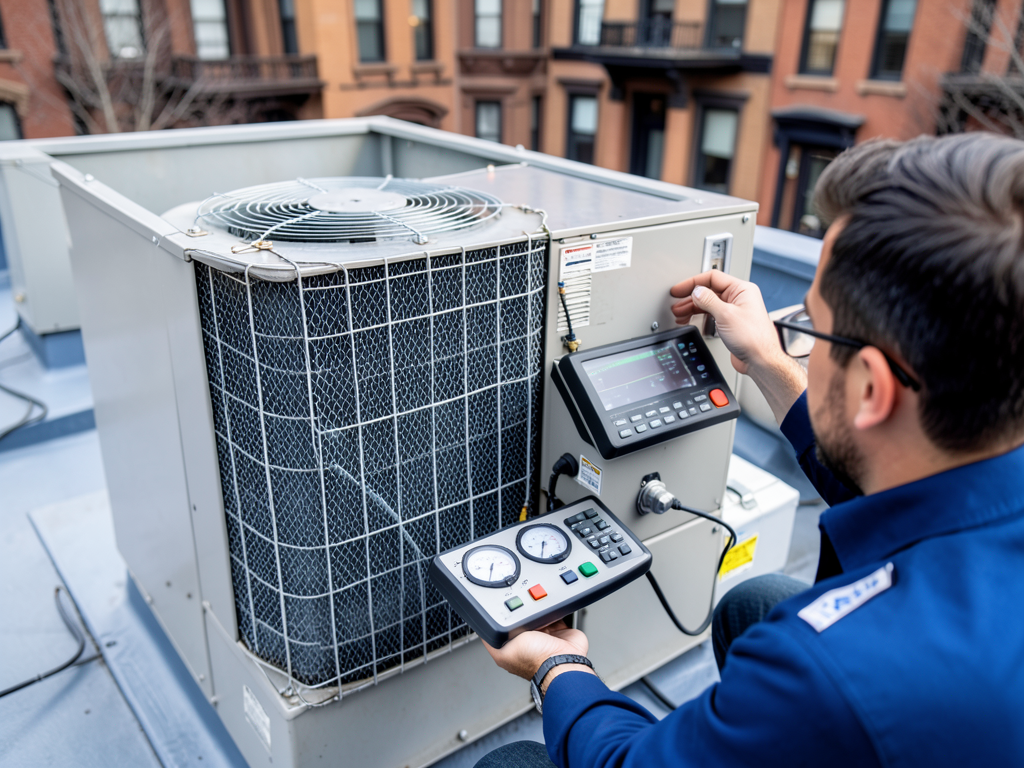
What to Do When Your Back Bay AC Unit Stops Working in July
When your air conditioning fails in Back Bay during a July heatwave, the clock starts ticking. Historic brownstones along Commonwealth Avenue and modern condos near Copley Square can quickly become unbearable without cooling. This guide walks you through immediate steps to take when your AC stops working, common failure points in Back Bay’s unique building stock, and how to get fast professional help.. Read more about Upgrading Historic Back Bay Homes with Central Air (Without Ruining the Interior Walls).
Immediate Steps When Your AC Fails
Before calling for help, take these quick actions to potentially restore cooling and protect your system:
- Check the Thermostat
Verify it’s set to “cool” and the temperature is below room temperature. Replace batteries if it’s battery-powered.
- Inspect the Circuit Breaker
Locate your electrical panel and check if the AC breaker has tripped. Reset it once if needed.
- Examine the Air Filter
A completely clogged filter can shut down your system. Replace it if it’s visibly dirty.
- Clear the Condenser Area
Remove debris, leaves, or furniture blocking airflow around your outdoor unit.
Common AC Problems in Back Bay Homes
Back Bay’s mix of historic and modern buildings creates unique HVAC challenges. Understanding these can help you communicate with your technician:
Historic Brownstone Issues
Many Back Bay brownstones built before 1940 have original HVAC systems or recent retrofits. Common problems include:
- Undersized ductwork that restricts airflow
- Outdated refrigerant lines that develop leaks
- Insufficient insulation in walls and attics
Modern Condo Challenges
Newer high-rise buildings near the Prudential Center face different issues:
- Shared mechanical systems with complex zoning
- High-rise wind loads affecting rooftop units
- Building management restrictions on after-hours service
Why Back Bay AC Systems Fail in July
July in Boston brings specific conditions that stress HVAC systems. Here’s what’s happening:
Heat Island Effect
Back Bay’s dense urban environment can be 5-7 degrees warmer than surrounding areas. This forces AC units to run continuously, accelerating wear on compressors and motors.
Humidity Challenges
Coastal humidity levels often exceed 80% in July. Older systems struggle to remove moisture, causing coils to freeze and airflow to diminish.
Age-Related Failures
Many Back Bay buildings are over 100 years old. HVAC systems typically last 15-20 years. If your system is older, July heat can be the final straw.
Diagnostic Signs Your AC Needs Professional Repair
Knowing what to look for can help you describe the problem accurately when you call for service:
Auditory Clues
Clicking sounds often indicate electrical issues. Grinding noises suggest failing bearings. Hissing sounds typically mean refrigerant leaks.
Visual Indicators
Ice buildup on refrigerant lines indicates airflow problems or low refrigerant. Water pooling around the indoor unit suggests condensate drain issues. Excessive vibration may mean loose components.
Olfactory Signs
Burning smells require immediate shutdown. Musty odors often indicate mold in ductwork. Chemical smells can signal refrigerant leaks.
Emergency AC Repair Services in Back Bay
When DIY troubleshooting fails, professional help becomes essential. Here’s what to expect from emergency HVAC services in Back Bay:. Read more about Emergency HVAC Repair Services Available 24-7 in South Boston.
24/7 Availability
July heat emergencies don’t follow business hours. Quality HVAC companies maintain after-hours dispatch teams specifically for heat-related calls.
Rapid Response Times
Most Back Bay service areas can dispatch within 2-4 hours during peak season. Companies familiar with the area’s parking challenges and building layouts respond faster.
Diagnostic Process
Professional technicians follow a systematic approach:
- Verify system operation and measure electrical parameters
- Check refrigerant levels and pressures
- Inspect ductwork for leaks or blockages
- Test thermostat communication and calibration
- Examine electrical connections and safety controls
Cost Factors for AC Repair in Back Bay
Repair costs vary based on several factors specific to Back Bay properties:
Building Access
Historic buildings may require special permits for equipment installation. High-rise condos often need elevator reservations and coordination with building management.
System Age and Parts Availability
Older systems may need obsolete parts that are harder to source. Modern systems use standardized components that are readily available.
Urgency Premium
Emergency calls during heatwaves often carry premium pricing. However, the cost of lost productivity or discomfort often justifies the expense.. Read more about 24-Hour Emergency Air Conditioning Repair in the Financial District.
Preventing Future AC Failures
After your immediate crisis is resolved, consider these preventive measures:
Seasonal Maintenance
Annual spring tune-ups can identify potential failures before they occur. This includes cleaning coils, checking refrigerant levels, and testing electrical components. Air Duct Cleaning.
System Upgrades
Modern high-efficiency systems with inverter technology can handle Back Bay’s demanding conditions more effectively. They also qualify for Mass Save rebates. Benefits of Inverter Technology.
Smart Thermostat Installation
Wi-Fi enabled thermostats can alert you to system problems before you notice discomfort. They also optimize runtime to reduce wear.
Choosing the Right HVAC Contractor in Back Bay
Not all HVAC companies are created equal. Look for these qualifications when selecting a contractor:
Local Experience
Companies familiar with Back Bay’s building codes, historic district regulations, and parking constraints provide smoother service.
Technical Certifications
NATE certification indicates advanced technical knowledge. EPA Section 608 certification ensures proper refrigerant handling.
Insurance and Licensing
Verify Massachusetts HVAC licensing and general liability insurance. This protects you from liability and ensures code compliance.
Energy Efficiency Considerations
July AC failures often reveal opportunities for efficiency improvements:
SEER Ratings
Older systems typically operate at 8-10 SEER. Modern units achieve 16-22 SEER, significantly reducing energy consumption during peak summer months.
Smart Zoning
Historic homes often have uneven cooling. Smart zoning systems direct cooling where needed, reducing overall system load.
Insulation Upgrades
Adding attic insulation and sealing air leaks can reduce cooling load by 20-30%, extending system life.
When to Consider Replacement vs. Repair
Age, efficiency, and repair history help determine whether to repair or replace your AC system:
Age Considerations
Systems over 15 years old often cost more to repair than replace, especially when factoring in energy savings.
Repair Frequency
If you’ve needed multiple repairs in the past two years, replacement often makes more financial sense.
Energy Costs
Modern high-efficiency systems can reduce cooling costs by 30-50%, potentially paying for themselves within 3-5 years.
Frequently Asked Questions
How long should I wait before calling for emergency AC service?
If indoor temperatures exceed 85°F or if you hear unusual noises, call immediately. Heat-related illnesses can develop quickly in vulnerable populations.
Can I run my AC if it’s leaking water?
Small amounts of condensation are normal, but active leaks indicate problems. Turn off the system to prevent water damage and call for service.
Will my AC work harder if I set the thermostat very low?
Setting temperatures below 70°F doesn’t cool faster but does increase energy consumption and system wear. Aim for 72-78°F for optimal efficiency.
How can I prepare for future AC failures?
Keep emergency contact information handy, know your system’s age and model number, and maintain a clear path to your equipment for service access.
Call for Professional AC Service in Back Bay
When your AC fails in July, don’t wait for the situation to worsen. Professional technicians can diagnose and repair most issues within hours, restoring comfort to your Back Bay home or condo.
Call (617) 758-1599 today to schedule your inspection. Our NATE-certified technicians understand Back Bay’s unique HVAC challenges and provide rapid, reliable service when you need it most.
Additional Resources
For more information about HVAC systems and energy efficiency, visit these authoritative sources:
Related Services
We also provide these related services for Back Bay properties:
- Ductless mini-split installation for historic brownstones
- Smart thermostat integration and programming
- Seasonal maintenance and tune-up services
- Emergency heating repair for winter months