
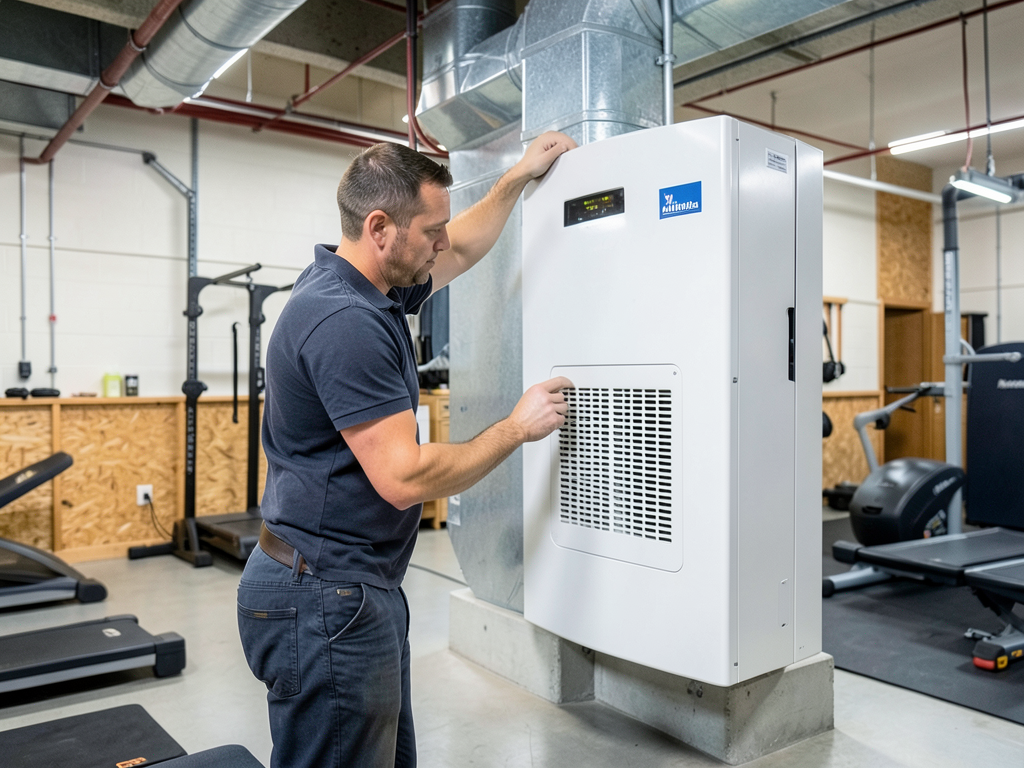
The Best Way to Keep Your Basement Home Gym From Getting Sweaty and Musty in Milton
Basement home gyms in Milton trap heat and moisture fast. Without proper ventilation the air turns stale and damp creating the perfect conditions for mold and that musty smell you cannot ignore. The best way to fix this is a combination of active air exchange like an Energy Recovery Ventilator and targeted cooling such as a ductless mini-split system. These solutions keep humidity low and air fresh year-round even during humid New England summers. ductless mini-split systems.
Why Standard Home Ventilation Fails in a Gym Environment
Regular home airflow systems are not built to handle the extra heat and moisture a workout space produces. During exercise you exhale more CO2 and release sweat that evaporates into the air. Rubber gym mats and foam equipment also off-gas volatile organic compounds that build up without proper ventilation. Standard basement vents cannot keep up with the rapid air changes needed for a gym so stale humid air stays trapped.
Boston Climate Considerations: Managing Humidity and Temperature
Milton sits in a humid continental climate with wet summers and cold winters. Summer humidity often climbs above seventy percent making condensation a constant threat in basements. Winter brings dry cold air that can make unheated basements feel damp and chilly. These swings mean your gym needs year-round climate control not just a fan or window. High humidity promotes mold growth on walls and equipment while cold drafts make workouts uncomfortable.
Top Ventilation Solutions for Home Gyms
Energy Recovery Ventilators (ERVs) – The Gold Standard
An ERV exchanges stale indoor air with fresh outdoor air while transferring heat and moisture between the streams. This keeps your gym air fresh without wasting energy. In summer an ERV removes excess humidity before it enters your space. In winter it captures heat from outgoing air to warm the fresh supply. ERVs meet ASHRAE 62.2 ventilation standards which require a minimum air exchange rate for healthy indoor air quality. ASHRAE 62.2 ventilation standards.
Ductless Mini-Split Systems for Temperature Control
A ductless mini-split provides targeted cooling and heating without bulky ductwork. The indoor unit mounts on your wall and connects to an outdoor compressor. You can set exact temperatures and many models include dehumidification modes. This is ideal for basements where running ducts is impractical. Mini-splits use inverter technology to adjust power use based on demand saving energy compared to traditional systems. Benefits of Inverter Technology.
High-CFM Exhaust Fans and Intake Vents
For a simpler solution high-CFM exhaust fans remove humid air quickly. Pair these with intake vents or a small window fan to bring in fresh air. This setup works best in mild weather or as a supplement to an ERV or mini-split. Look for fans rated for at least eight air changes per hour in your gym size to keep air moving.. Read more about Finding a Silent HVAC Solution for Your Home Theater or Media Room in Wellesley.
Calculating Your Needs: The CFM Formula for Gyms
Proper ventilation starts with calculating the right airflow. Measure your gym length times width times height to get cubic feet. Multiply by the desired air changes per hour. For a high-intensity gym aim for eight ACH. Divide the result by sixty to get the required CFM. For example a ten by twelve foot basement with eight-foot ceilings needs about one hundred twenty CFM for eight air changes per hour. This ensures air is refreshed often enough to prevent moisture buildup. Finding the Right Ductless Mini Split for a Beacon Hill Brownstone.
Professional Installation vs. DIY
DIY fans and portable dehumidifiers help but they rarely solve the core problem. Professional installation ensures your ERV or mini-split is correctly sized and placed for maximum efficiency. Technicians handle electrical work and secure outdoor units to prevent vibration or damage. They also verify that systems meet Massachusetts building codes and can advise on Mass Save rebates to offset costs. Cutting corners often leads to higher energy bills and ongoing moisture issues. Mass Save rebates.
Additional Tips to Keep Your Gym Fresh
- Install a hygrometer to monitor humidity and keep it between forty and sixty percent.
- Use mold-resistant paint on basement walls to prevent growth.
- Place rubber mats on a vapor barrier to reduce moisture absorption.
- Run your ventilation system during and after workouts to clear CO2 and odors.
- Clean or replace HVAC filters every three months to maintain airflow.
Common Mistakes That Make Basements Musty
Ignoring humidity control is the biggest mistake. Many homeowners rely only on a window or small fan which cannot handle the moisture load. Another error is blocking vents with equipment or storage which restricts airflow. Skipping regular maintenance on dehumidifiers or ERVs lets mold and dust build up inside the units. Finally using the wrong sized equipment wastes energy and leaves pockets of stale air.
Why Milton Homes Need Special Attention
Milton homes often feature historic construction with fieldstone or brick foundations common in older New England towns. These materials absorb moisture and can sweat in humid conditions. Many basements also have limited windows making natural ventilation difficult. The combination of older construction and high local humidity means Milton basements need active mechanical ventilation more than newer homes with modern vapor barriers. Upgrading Historic Back Bay Homes with Central Air (Without Ruining the Interior Walls).
Cost Factors and Long-Term Savings
Installing an ERV or mini-split requires an upfront investment but saves money over time. Lower humidity protects your equipment and flooring from damage. Better air quality reduces allergens and mold remediation costs. Energy-efficient systems lower utility bills especially when paired with smart thermostats. Many Massachusetts homeowners also qualify for Mass Save rebates which can cut installation costs by up to thirty percent. The Most Reliable Heat Pump Installation Teams in Cambridge.
When to Call a Professional
If your gym smells musty or you see condensation on walls it is time to call an HVAC expert. Other signs include uneven temperatures workout discomfort and visible mold spots. A professional can test air quality measure humidity and recommend the right system for your space. Do not wait until the problem worsens since mold remediation is far more expensive than prevention.
Final Thoughts
Keeping your basement gym fresh in Milton means more than just opening a window. It takes the right mix of ventilation dehumidification and temperature control to handle Boston’s humid summers and cold winters. An ERV or ductless mini-split gives you reliable comfort and protects your investment in home fitness. Start with a professional assessment to get the system that fits your space and budget.
Call (617) 758-1599 today to schedule your inspection and take the first step toward a healthier workout space.
Frequently Asked Questions
How much does it cost to install a mini-split in a basement gym?
Installation costs vary by unit size and home layout but typically range from three thousand to seven thousand dollars before rebates. Mass Save incentives can reduce this by up to thirty percent.
Can I use a portable dehumidifier instead of an ERV?
Portable dehumidifiers help but do not provide fresh air exchange. An ERV removes stale air and brings in filtered outdoor air which is critical for workout spaces with high CO2 levels.
How often should I run the ventilation system in my gym?
Run the system during workouts and for at least thirty minutes after to clear moisture and odors. Keep it on a low setting during idle times to maintain air quality.
{
“@context”: “https://schema.org”,
“@type”: “BlogPosting”,
“headline”: “The Best Way to Keep Your Basement Home Gym From Getting Sweaty and Musty in Milton”,
“description”: “Stop musty odors and excess moisture in your Milton basement gym with expert ventilation tips, ERV systems, and humidity control solutions.”,
“wordCount”: 1236,
“datePublished”: “2026-05-24T08:37:00.000Z”,
“dateModified”: “2026-05-24T08:37:00.000Z”,
“inLanguage”: “en-US”,
“mainEntityOfPage”: {
“@type”: “WebPage”,
“@id”: “https://titanhvacboston.com”
},
“publisher”: {
“@type”: “LocalBusiness”,
“name”: “Titan HVAC Boston”,
“url”: “https://titanhvacboston.com”
},
“author”: {
“@type”: “Organization”,
“name”: “Titan HVAC Boston”,
“url”: “https://titanhvacboston.com”
},
“image”: {
“@type”: “ImageObject”,
“url”: “https://titanhvacboston.com/wp-content/uploads/2026/03/the-best-way-to-keep-your-basement-home-gym-from-g-1.png”
}
}
{
“@context”: “https://schema.org”,
“@type”: “HVACBusiness”,
“name”: “Titan HVAC Boston”,
“url”: “https://titanhvacboston.com”,
“address”: {
“@type”: “PostalAddress”,
“addressLocality”: “Boston”
},
“areaServed”: {
“@type”: “City”,
“name”: “Boston”
}
}
{
“@context”: “https://schema.org”,
“@type”: “FAQPage”,
“mainEntity”: [
{
“@type”: “Question”,
“name”: “How much does it cost to install a mini-split in a basement gym?”,
“acceptedAnswer”: {
“@type”: “Answer”,
“text”: “Installation costs vary by unit size and home layout but typically range from three thousand to seven thousand dollars before rebates. Mass Save incentives can reduce this by up to thirty percent.”
}
},
{
“@type”: “Question”,
“name”: “Can I use a portable dehumidifier instead of an ERV?”,
“acceptedAnswer”: {
“@type”: “Answer”,
“text”: “Portable dehumidifiers help but do not provide fresh air exchange. An ERV removes stale air and brings in filtered outdoor air which is critical for workout spaces with high CO2 levels.”
}
},
{
“@type”: “Question”,
“name”: “How often should I run the ventilation system in my gym?”,
“acceptedAnswer”: {
“@type”: “Answer”,
“text”: “Run the system during workouts and for at least thirty minutes after to clear moisture and odors. Keep it on a low setting during idle times to maintain air quality.”
}
}
]
}
{
“@context”: “https://schema.org”,
“@type”: “BreadcrumbList”,
“itemListElement”: [
{
“@type”: “ListItem”,
“position”: 1,
“name”: “Home”,
“item”: “https://titanhvacboston.com”
},
{
“@type”: “ListItem”,
“position”: 2,
“name”: “Blog”,
“item”: “https://titanhvacboston.com/blog”
},
{
“@type”: “ListItem”,
“position”: 3,
“name”: “The Best Way to Keep Your Basement Home Gym From Getting Sweaty and Musty in Milton”
}
]
}
{
“@context”: “https://schema.org”,
“@type”: “Service”,
“serviceType”: “HVAC”,
“provider”: {
“@type”: “LocalBusiness”,
“name”: “Titan HVAC Boston”,
“url”: “https://titanhvacboston.com”
},
“areaServed”: {
“@type”: “City”,
“name”: “Boston”
},
“description”: “Stop musty odors and excess moisture in your Milton basement gym with expert ventilation tips, ERV systems, and humidity control solutions.”
}