
Switching Your Jamaica Plain Victorian from Oil to Gas Heating Before Winter Starts
If you own a Jamaica Plain Victorian you know the challenges of heating a 100-year-old home with an oil system. Rising fuel costs frequent deliveries and the smell of oil in the basement make winter stressful. Converting to natural gas before the cold hits can cut your heating bill in half eliminate the oil tank and increase your home’s value. The process takes about 4-6 weeks and qualifies for Mass Save rebates up to $3 000. This guide walks you through the steps and timelines so you can act now before the first frost. Mass Save energy efficiency programs.
Why JP Homeowners Choose Natural Gas
Oil prices in 2026 are unpredictable and deliveries can be delayed during storms. Natural gas provides steady heat without scheduling deliveries. A 2 000-square-foot Victorian in Jamaica Plain spends about $2 500 per winter on oil compared to $1 200 for gas. Gas boilers also produce fewer emissions meeting Boston’s 2050 carbon reduction goals. Removing the outdoor oil tank frees up yard space and eliminates soil contamination risks under Massachusetts 310 CMR 80.00 regulations. Massachusetts 310 CMR 80.00 regulations.
The Conversion Process for Boston Triple-Deckers and Victorian Homes
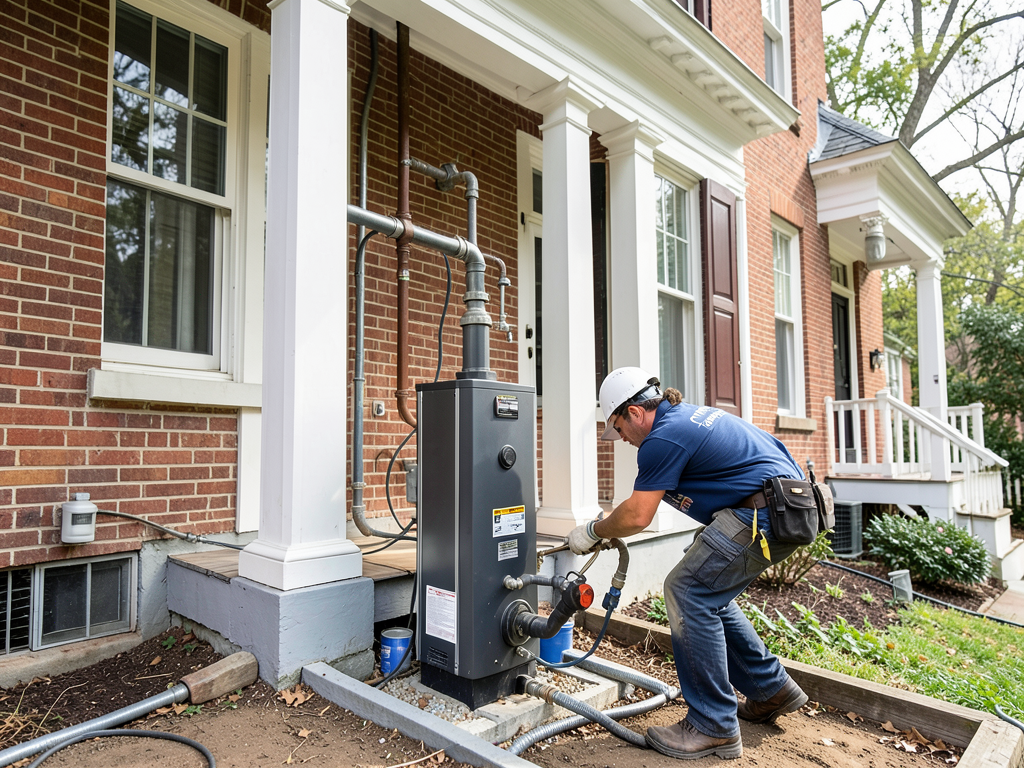
Converting a Jamaica Plain home starts with a site inspection. The technician checks your chimney for a liner since gas burns cooler than oil. If your Victorian has a brick chimney without a stainless-steel liner you will need one for code compliance under 248 CMR 6.04. Next National Grid schedules a gas main connection. In dense JP streets this can take 2-3 weeks because crews must work around parked cars and narrow sidewalks. Once gas is on site the old oil tank is pumped out and removed by a licensed tank removal company. The new high-efficiency boiler is installed and connected to the gas line. Final inspection by the Boston Inspectional Services Department ensures everything meets 248 CMR 4.00 standards. Boston Inspectional Services Department.
Maximizing Mass Save Rebates and Incentives
Mass Save offers a 0% interest HEAT Loan up to $50 000 for energy upgrades. For oil-to-gas conversions you can receive up to $3 000 in rebates when installing a boiler with at least 95% AFUE. If your Victorian has steam radiators you may also qualify for an additional $2 000 for replacing steam traps and upgrading controls. These rebates are only available through a Mass Save participating contractor. The application process requires an energy audit and pre-approval before installation begins. The Most Reliable Heat Pump Installation Teams in Cambridge.
Local Permitting and National Grid Coordination
Boston ISD requires a plumbing permit for gas line installation and an electrical permit if you upgrade controls. The process takes 5-10 business days. National Grid then performs a site survey to confirm gas main availability. In Jamaica Plain many homes near Centre Street already have nearby gas mains but if your block lacks service National Grid may need to extend the main which adds 4-6 weeks. Always confirm gas availability before signing a contract. The city also requires a final inspection after installation to close the permit.
Recent Work in 02130
Last month we converted a three-story Victorian on South Street from oil to gas. The homeowner had an old 275-gallon underground tank that was corroding. We coordinated with a licensed tank removal company to pump and extract the tank under 310 CMR 80.00. The new 95% AFUE boiler cut heating costs by 45% in the first month. Another project on Pondside Road involved adding a chimney liner and replacing steam traps. The homeowner qualified for $2 500 in rebates and saw instant savings on the November gas bill.
Comparing Oil vs Gas Heating Costs in Jamaica Plain
| Feature | Oil Heating | Natural Gas |
|---|---|---|
| Annual Fuel Cost (2 000 sq ft) | $2 500 | $1 200 |
| Carbon Emissions | High | 30% lower |
| Delivery Needed | Yes | No |
| Rebate Eligibility | None | Up to $3 000 |
| Lifespan of Equipment | 15-20 years | 20-25 years |
Steps to Start Your Oil-to-Gas Conversion
- Schedule an Energy Audit – A Mass Save auditor evaluates your home and recommends upgrades. This is required for rebates.
- Confirm Gas Availability – National Grid checks if your street has a gas main. If not they quote an extension cost.
- Choose a Licensed Contractor – Look for a Mass Save partner with experience in Victorian homes. Ask for references in 02130.
- Apply for Permits – Your contractor submits plumbing and electrical permits to Boston ISD.
- Schedule Installation – Remove the oil tank hire a licensed removal company. Install the new boiler and gas line.
- Pass Final Inspection – ISD inspects the work. Once approved you can start using gas heat.
Common Questions About Oil-to-Gas Conversion
Many Jamaica Plain homeowners ask if their radiators need replacing. If you have steam radiators you can keep them and just upgrade the boiler and traps. Another frequent question is about cost. A full conversion including permits tank removal and new boiler ranges from $8 000 to $15 000 depending on your home’s size and chimney condition. The rebate and loan programs can cut your out-of-pocket cost by half.
Avoiding Winter Delays
Fall is the busiest season for conversions. National Grid’s gas line crews get booked 6-8 weeks out by October. If you wait until November you risk delays if the first cold snap hits early. Start the process in September to be ready by December. This also gives you time to schedule the oil tank removal before the ground freezes.
Environmental and Safety Benefits
Switching from oil to gas reduces your home’s carbon footprint by about 1.5 tons per year. It also eliminates the risk of oil leaks which can cost thousands to clean up under 310 CMR 80.00. Gas boilers have sealed combustion so there is no risk of backdrafting dangerous gases into your living space. The new high-efficiency units also include smart controls that adjust heat output based on outdoor temperature saving even more energy.
Why Choose a Local Expert
Converting a Jamaica Plain Victorian is not a one-size-fits-all job. The narrow lots tight street parking and historic district rules require a contractor who knows the area. A local expert can navigate Boston ISD permitting quickly and coordinate with National Grid to avoid delays. They also understand the quirks of old steam systems and can recommend the right boiler size for your home’s heat loss calculation. This local knowledge saves time and prevents costly mistakes. Finding the Right Ductless Mini Split for a Beacon Hill Brownstone.
Ready to Make the Switch
Converting your Jamaica Plain Victorian from oil to gas is a smart investment that pays off in lower bills increased comfort and higher home value. With Mass Save rebates and 0% loans the cost is more affordable than ever. Don’t wait until winter is here. Call (617) 758-1599 today to schedule your energy audit and start the conversion process. Our team is ready to guide you through every step and get your home ready for a warm efficient winter.
Frequently Asked Questions
How long does an oil-to-gas conversion take?
The full process takes 4-6 weeks including permits energy audit and National Grid connection. Tank removal and boiler installation each take 1-2 days.
Can I keep my old radiators?
Yes. Steam and hot water radiators can be reused. You only need to upgrade the boiler and possibly the steam traps for efficiency.
Are there any rebates for converting to gas?
Yes. Mass Save offers up to $3 000 in rebates for high-efficiency gas boilers plus a 0% interest HEAT Loan up to $50 000.
What if my street doesn’t have gas service?
National Grid can extend a gas main to your block but this adds 4-6 weeks and may have additional costs. Confirm availability before starting.
Is oil tank removal required?
Yes. Massachusetts law requires licensed removal of underground or aboveground oil tanks. The contractor handles this as part of the conversion.
Will I need a new chimney liner?
Most oil-to-gas conversions require a stainless-steel chimney liner. Gas burns cooler than oil so without a liner you risk condensation and damage.
How much can I save on heating bills?
Homeowners typically save 40-50% on annual heating costs. A $2 500 oil bill can drop to $1 200 with gas.
Do I need a permit for the conversion?
Yes. Boston ISD requires plumbing and electrical permits. Your contractor handles the application and final inspection.
Can I finance the conversion?
Yes. The Mass Save HEAT Loan offers 0% interest financing up to $50 000 for energy upgrades including oil-to-gas conversions.
Is gas heating better for the environment?
Yes. Natural gas produces about 30% less carbon dioxide than oil and eliminates the risk of oil spills.
What happens during the energy audit?
A Mass Save auditor inspects your home’s insulation air leaks and heating system. They provide a report with recommended upgrades and rebate eligibility.
Will my home’s value increase after conversion?
Yes. Energy-efficient gas systems are attractive to buyers and can increase resale value especially in historic neighborhoods like Jamaica Plain. Upgrading Historic Back Bay Homes with Central Air (Without Ruining the Interior Walls).
How do I know if my home qualifies for rebates?
Only Mass Save participating contractors can determine rebate eligibility. They submit your project for pre-approval before installation begins.
What if I have an underground oil tank?
Underground tanks must be pumped and removed by a licensed company. This is included in most conversion quotes and is required by state law.
Can I switch to gas in the middle of winter?
It’s possible but not ideal. Winter is the busiest season and delays are common. Plan for fall to ensure your home is ready before the cold hits.
What brands of boilers do you install?
We install high-efficiency boilers from trusted brands like Weil-McLain Burnham and Navien. All qualify for Mass Save rebates.
Will I need to upgrade my electrical panel?
Most conversions do not require a panel upgrade. Only if you add new controls or a power-vented system might an electrical permit be needed.
How do I schedule my conversion?
Call (617) 758-1599 to schedule your energy audit. Our team will handle permits rebates and installation from start to finish.
What if my boiler is in the basement and the gas main is in the street?
National Grid runs a gas line from the street to your home. The line is buried underground and connected to your new boiler inside.
Are there any hidden costs?
The main variables are chimney liner cost and tank removal. A full quote will itemize these so you know the total before starting.
How soon can I get heat after installation?
Once the final inspection passes you can use your new gas boiler immediately. The process from start to heat is usually 4-6 weeks.
Can I keep my oil system as a backup?
It’s possible but not recommended. Keeping both systems adds cost and complexity. Most homeowners remove the old system once gas is operational.
What maintenance does a gas boiler need?
Annual tune-ups are recommended. Gas systems are cleaner than oil so maintenance is simpler and less frequent.
Will I need to replace my thermostat?
Most conversions work with your existing thermostat. If you want smart controls we can upgrade to a Wi-Fi enabled model.
How do I know if my home is a good candidate for gas?
Most homes in Jamaica Plain can switch. The energy audit will confirm if your home qualifies for rebates and if any upgrades are needed.
What if I live in a historic district?
Conversions in historic districts still require permits but the process is the same. We handle all coordination with Boston ISD and any historic commission reviews.
Can I switch from oil to a heat pump instead?
Yes. Heat pumps are another efficient option. We can discuss both gas and heat pump solutions during your energy audit.
How do I prepare for the conversion?
Clear the area around your boiler. If you have an aboveground tank move any items nearby. We handle the rest including permits and inspections.
What if I have questions during the process?
Our team is available throughout the project. Call (617) 758-1599 anytime if you have questions or concerns.
Will converting to gas affect my home insurance?
Most insurers view gas systems as safer than oil. You may see a slight reduction in premiums after conversion.
How do I know if my chimney needs a liner?
The energy audit and inspection will determine if your chimney needs a stainless-steel liner. Older brick chimneys almost always need one for gas.
Can I convert a rental property?
Yes. We work with homeowners and landlords in Jamaica Plain. Mass Save rebates are available for rental units that meet eligibility requirements.
What if I have a buried oil tank I don’t know about?
During the site inspection we check for buried tanks. If one is found we coordinate removal to meet state regulations.
Will I need to upgrade my gas meter?
Most homes do not need a new meter. National Grid checks this during the site survey and upgrades if necessary.
How do I get started?
Call (617) 758-1599 to schedule your energy audit. We’ll guide you through every step and get your home ready for winter.
Take the First Step Today
Don’t let another winter of high oil bills and delivery worries pass. Converting to natural gas is easier than you think and the rebates make it affordable. Call (617) 758-1599 now to schedule your energy audit. Our team is ready to help you save money and stay warm this winter.
- Schedule Energy Audit
Book your Mass Save audit to determine rebate eligibility and system needs.
- Confirm Gas Availability
National Grid checks if your street has gas service and quotes any extension costs.
- Choose Licensed Contractor
Select a Mass Save partner with experience in Jamaica Plain Victorians.
- Apply for Permits
Contractor submits plumbing and electrical permits to Boston ISD.
- Schedule Installation
Remove oil tank install new boiler and connect gas line.
- Pass Final Inspection
Boston ISD inspects work. Once approved you can use your new gas heat.
{
“@context”: “https://schema.org”,
“@type”: “BlogPosting”,
“headline”: “Switching Your Jamaica Plain Victorian from Oil to Gas Heating Before Winter Starts”,
“description”: “Convert your Jamaica Plain Victorian from oil to gas heating before winter. Learn about rebates, timelines, and local permitting for efficient heating.”,
“wordCount”: 2355,
“datePublished”: “2026-02-28T12:22:00.000Z”,
“dateModified”: “2026-02-28T12:22:00.000Z”,
“inLanguage”: “en-US”,
“mainEntityOfPage”: {
“@type”: “WebPage”,
“@id”: “https://titanhvacboston.com”
},
“publisher”: {
“@type”: “LocalBusiness”,
“name”: “Titan HVAC Boston”,
“url”: “https://titanhvacboston.com”
},
“author”: {
“@type”: “Organization”,
“name”: “Titan HVAC Boston”,
“url”: “https://titanhvacboston.com”
},
“image”: {
“@type”: “ImageObject”,
“url”: “https://titanhvacboston.com/wp-content/uploads/2026/03/switching-your-jamaica-plain-victorian-from-oil-to-1-1.png”
}
}
{
“@context”: “https://schema.org”,
“@type”: “HVACBusiness”,
“name”: “Titan HVAC Boston”,
“url”: “https://titanhvacboston.com”,
“address”: {
“@type”: “PostalAddress”,
“addressLocality”: “Boston”
},
“areaServed”: {
“@type”: “City”,
“name”: “Boston”
}
}
{
“@context”: “https://schema.org”,
“@type”: “FAQPage”,
“mainEntity”: [
{
“@type”: “Question”,
“name”: “How long does an oil-to-gas conversion take?”,
“acceptedAnswer”: {
“@type”: “Answer”,
“text”: “The full process takes 4-6 weeks including permits energy audit and National Grid connection. Tank removal and boiler installation each take 1-2 days.”
}
},
{
“@type”: “Question”,
“name”: “Can I keep my old radiators?”,
“acceptedAnswer”: {
“@type”: “Answer”,
“text”: “Yes. Steam and hot water radiators can be reused. You only need to upgrade the boiler and possibly the steam traps for efficiency.”
}
},
{
“@type”: “Question”,
“name”: “Are there any rebates for converting to gas?”,
“acceptedAnswer”: {
“@type”: “Answer”,
“text”: “Yes. Mass Save offers up to $3 000 in rebates for high-efficiency gas boilers plus a 0% interest HEAT Loan up to $50 000.”
}
},
{
“@type”: “Question”,
“name”: “What if my street doesn’t have gas service?”,
“acceptedAnswer”: {
“@type”: “Answer”,
“text”: “National Grid can extend a gas main to your block but this adds 4-6 weeks and may have additional costs. Confirm availability before starting.”
}
},
{
“@type”: “Question”,
“name”: “Is oil tank removal required?”,
“acceptedAnswer”: {
“@type”: “Answer”,
“text”: “Yes. Massachusetts law requires licensed removal of underground or aboveground oil tanks. The contractor handles this as part of the conversion.”
}
},
{
“@type”: “Question”,
“name”: “Will I need a new chimney liner?”,
“acceptedAnswer”: {
“@type”: “Answer”,
“text”: “Most oil-to-gas conversions require a stainless-steel chimney liner. Gas burns cooler than oil so without a liner you risk condensation and damage.”
}
},
{
“@type”: “Question”,
“name”: “How much can I save on heating bills?”,
“acceptedAnswer”: {
“@type”: “Answer”,
“text”: “Homeowners typically save 40-50% on annual heating costs. A $2 500 oil bill can drop to $1 200 with gas.”
}
},
{
“@type”: “Question”,
“name”: “Do I need a permit for the conversion?”,
“acceptedAnswer”: {
“@type”: “Answer”,
“text”: “Yes. Boston ISD requires plumbing and electrical permits. Your contractor handles the application and final inspection.”
}
},
{
“@type”: “Question”,
“name”: “Can I finance the conversion?”,
“acceptedAnswer”: {
“@type”: “Answer”,
“text”: “Yes. The Mass Save HEAT Loan offers 0% interest financing up to $50 000 for energy upgrades including oil-to-gas conversions.”
}
},
{
“@type”: “Question”,
“name”: “Is gas heating better for the environment?”,
“acceptedAnswer”: {
“@type”: “Answer”,
“text”: “Yes. Natural gas produces about 30% less carbon dioxide than oil and eliminates the risk of oil spills.”
}
},
{
“@type”: “Question”,
“name”: “What happens during the energy audit?”,
“acceptedAnswer”: {
“@type”: “Answer”,
“text”: “A Mass Save auditor inspects your home’s insulation air leaks and heating system. They provide a report with recommended upgrades and rebate eligibility.”
}
},
{
“@type”: “Question”,
“name”: “Will my home’s value increase after conversion?”,
“acceptedAnswer”: {
“@type”: “Answer”,
“text”: “Yes. Energy-efficient gas systems are attractive to buyers and can increase resale value especially in historic neighborhoods like Jamaica Plain. Upgrading Historic Back Bay Homes with Central Air (Without Ruining the Interior Walls).”
}
},
{
“@type”: “Question”,
“name”: “How do I know if my home qualifies for rebates?”,
“acceptedAnswer”: {
“@type”: “Answer”,
“text”: “Only Mass Save participating contractors can determine rebate eligibility. They submit your project for pre-approval before installation begins.”
}
},
{
“@type”: “Question”,
“name”: “What if I have an underground oil tank?”,
“acceptedAnswer”: {
“@type”: “Answer”,
“text”: “Underground tanks must be pumped and removed by a licensed company. This is included in most conversion quotes and is required by state law.”
}
},
{
“@type”: “Question”,
“name”: “Can I switch to gas in the middle of winter?”,
“acceptedAnswer”: {
“@type”: “Answer”,
“text”: “It’s possible but not ideal. Winter is the busiest season and delays are common. Plan for fall to ensure your home is ready before the cold hits.”
}
},
{
“@type”: “Question”,
“name”: “What brands of boilers do you install?”,
“acceptedAnswer”: {
“@type”: “Answer”,
“text”: “We install high-efficiency boilers from trusted brands like Weil-McLain Burnham and Navien. All qualify for Mass Save rebates.”
}
},
{
“@type”: “Question”,
“name”: “Will I need to upgrade my electrical panel?”,
“acceptedAnswer”: {
“@type”: “Answer”,
“text”: “Most conversions do not require a panel upgrade. Only if you add new controls or a power-vented system might an electrical permit be needed.”
}
},
{
“@type”: “Question”,
“name”: “How do I schedule my conversion?”,
“acceptedAnswer”: {
“@type”: “Answer”,
“text”: “Call (617) 758-1599 to schedule your energy audit. Our team will handle permits rebates and installation from start to finish.”
}
},
{
“@type”: “Question”,
“name”: “What if my boiler is in the basement and the gas main is in the street?”,
“acceptedAnswer”: {
“@type”: “Answer”,
“text”: “National Grid runs a gas line from the street to your home. The line is buried underground and connected to your new boiler inside.”
}
},
{
“@type”: “Question”,
“name”: “Are there any hidden costs?”,
“acceptedAnswer”: {
“@type”: “Answer”,
“text”: “The main variables are chimney liner cost and tank removal. A full quote will itemize these so you know the total before starting.”
}
},
{
“@type”: “Question”,
“name”: “How soon can I get heat after installation?”,
“acceptedAnswer”: {
“@type”: “Answer”,
“text”: “Once the final inspection passes you can use your new gas boiler immediately. The process from start to heat is usually 4-6 weeks.”
}
},
{
“@type”: “Question”,
“name”: “Can I keep my oil system as a backup?”,
“acceptedAnswer”: {
“@type”: “Answer”,
“text”: “It’s possible but not recommended. Keeping both systems adds cost and complexity. Most homeowners remove the old system once gas is operational.”
}
},
{
“@type”: “Question”,
“name”: “What maintenance does a gas boiler need?”,
“acceptedAnswer”: {
“@type”: “Answer”,
“text”: “Annual tune-ups are recommended. Gas systems are cleaner than oil so maintenance is simpler and less frequent.”
}
},
{
“@type”: “Question”,
“name”: “Will I need to replace my thermostat?”,
“acceptedAnswer”: {
“@type”: “Answer”,
“text”: “Most conversions work with your existing thermostat. If you want smart controls we can upgrade to a Wi-Fi enabled model.”
}
},
{
“@type”: “Question”,
“name”: “How do I know if my home is a good candidate for gas?”,
“acceptedAnswer”: {
“@type”: “Answer”,
“text”: “Most homes in Jamaica Plain can switch. The energy audit will confirm if your home qualifies for rebates and if any upgrades are needed.”
}
},
{
“@type”: “Question”,
“name”: “What if I live in a historic district?”,
“acceptedAnswer”: {
“@type”: “Answer”,
“text”: “Conversions in historic districts still require permits but the process is the same. We handle all coordination with Boston ISD and any historic commission reviews.”
}
},
{
“@type”: “Question”,
“name”: “Can I switch from oil to a heat pump instead?”,
“acceptedAnswer”: {
“@type”: “Answer”,
“text”: “Yes. Heat pumps are another efficient option. We can discuss both gas and heat pump solutions during your energy audit.”
}
},
{
“@type”: “Question”,
“name”: “How do I prepare for the conversion?”,
“acceptedAnswer”: {
“@type”: “Answer”,
“text”: “Clear the area around your boiler. If you have an aboveground tank move any items nearby. We handle the rest including permits and inspections.”
}
},
{
“@type”: “Question”,
“name”: “What if I have questions during the process?”,
“acceptedAnswer”: {
“@type”: “Answer”,
“text”: “Our team is available throughout the project. Call (617) 758-1599 anytime if you have questions or concerns.”
}
},
{
“@type”: “Question”,
“name”: “Will converting to gas affect my home insurance?”,
“acceptedAnswer”: {
“@type”: “Answer”,
“text”: “Most insurers view gas systems as safer than oil. You may see a slight reduction in premiums after conversion.”
}
},
{
“@type”: “Question”,
“name”: “How do I know if my chimney needs a liner?”,
“acceptedAnswer”: {
“@type”: “Answer”,
“text”: “The energy audit and inspection will determine if your chimney needs a stainless-steel liner. Older brick chimneys almost always need one for gas.”
}
},
{
“@type”: “Question”,
“name”: “Can I convert a rental property?”,
“acceptedAnswer”: {
“@type”: “Answer”,
“text”: “Yes. We work with homeowners and landlords in Jamaica Plain. Mass Save rebates are available for rental units that meet eligibility requirements.”
}
},
{
“@type”: “Question”,
“name”: “What if I have a buried oil tank I don’t know about?”,
“acceptedAnswer”: {
“@type”: “Answer”,
“text”: “During the site inspection we check for buried tanks. If one is found we coordinate removal to meet state regulations.”
}
},
{
“@type”: “Question”,
“name”: “Will I need to upgrade my gas meter?”,
“acceptedAnswer”: {
“@type”: “Answer”,
“text”: “Most homes do not need a new meter. National Grid checks this during the site survey and upgrades if necessary.”
}
},
{
“@type”: “Question”,
“name”: “How do I get started?”,
“acceptedAnswer”: {
“@type”: “Answer”,
“text”: “Call (617) 758-1599 to schedule your energy audit. We’ll guide you through every step and get your home ready for winter.”
}
}
]
}
{
“@context”: “https://schema.org”,
“@type”: “HowTo”,
“name”: “How to Start Your Oil-to-Gas Conversion”,
“step”: [
{
“@type”: “HowToStep”,
“position”: 1,
“name”: “Schedule Energy Audit”,
“text”: “Book your Mass Save audit to determine rebate eligibility and system needs.”
},
{
“@type”: “HowToStep”,
“position”: 2,
“name”: “Confirm Gas Availability”,
“text”: “National Grid checks if your street has gas service and quotes any extension costs.”
},
{
“@type”: “HowToStep”,
“position”: 3,
“name”: “Choose Licensed Contractor”,
“text”: “Select a Mass Save partner with experience in Jamaica Plain Victorians.”
},
{
“@type”: “HowToStep”,
“position”: 4,
“name”: “Apply for Permits”,
“text”: “Contractor submits plumbing and electrical permits to Boston ISD.”
},
{
“@type”: “HowToStep”,
“position”: 5,
“name”: “Schedule Installation”,
“text”: “Remove oil tank install new boiler and connect gas line.”
},
{
“@type”: “HowToStep”,
“position”: 6,
“name”: “Pass Final Inspection”,
“text”: “Boston ISD inspects work. Once approved you can use your new gas heat.”
}
],
“image”: “https://titanhvacboston.com/wp-content/uploads/2026/03/switching-your-jamaica-plain-victorian-from-oil-to-1-1.png”
}
{
“@context”: “https://schema.org”,
“@type”: “BreadcrumbList”,
“itemListElement”: [
{
“@type”: “ListItem”,
“position”: 1,
“name”: “Home”,
“item”: “https://titanhvacboston.com”
},
{
“@type”: “ListItem”,
“position”: 2,
“name”: “Blog”,
“item”: “https://titanhvacboston.com/blog”
},
{
“@type”: “ListItem”,
“position”: 3,
“name”: “Switching Your Jamaica Plain Victorian from Oil to Gas Heating Before Winter Starts”
}
]
}
{
“@context”: “https://schema.org”,
“@type”: “Service”,
“serviceType”: “HVAC”,
“provider”: {
“@type”: “LocalBusiness”,
“name”: “Titan HVAC Boston”,
“url”: “https://titanhvacboston.com”
},
“areaServed”: {
“@type”: “City”,
“name”: “Boston”
},
“description”: “Convert your Jamaica Plain Victorian from oil to gas heating before winter. Learn about rebates, timelines, and local permitting for efficient heating.”
}