
Protecting Your Roslindale Family From Carbon Monoxide Risks in Older Heating Systems
Carbon monoxide poisoning is a silent but deadly threat to Roslindale families with older heating systems. Every year, dozens of Boston homeowners experience CO-related emergencies, often in historic homes with aging furnaces. This guide provides Roslindale-specific safety information to help you recognize warning signs, understand the risks in your neighborhood, and take immediate action if you suspect a leak. How to Get Fast Emergency Furnace Repair in Dorchester This Winter.
Immediate Action Steps
- Evacuate all occupants immediately
- Call 911 from outside the home
- Call National Grid emergency line at 1-800-525-8222
- Do not re-enter until authorities declare it safe
Common Physical Symptoms of CO Poisoning
Carbon monoxide interferes with your blood’s ability to carry oxygen, causing symptoms that often mimic common illnesses. The key difference is that CO symptoms typically affect multiple people in the home simultaneously and worsen when indoors.
- Persistent headache that worsens over time
- Dizziness and lightheadedness
- Nausea and vomiting without fever
- Shortness of breath during normal activities
- Confusion and difficulty concentrating
- Blurred vision
- Loss of consciousness in severe cases
Unlike the flu, CO poisoning doesn’t cause a fever. If you feel better when outside but worse when inside, carbon monoxide is likely the culprit.
Identifying Symptoms in Pets
Pets often show carbon monoxide symptoms before humans because they’re smaller and breathe faster. Watch for:
- Lethargy or unusual sleepiness
- Difficulty breathing or rapid breathing
- Vomiting or loss of appetite
- Disorientation or uncoordinated movement
- Unusual vocalization or distress
If your pet suddenly becomes ill without explanation, especially during heating season, evacuate immediately and seek veterinary care.
Furnace Warning Signs From a Technician’s Perspective
Carbon monoxide leaks often originate from specific furnace problems that produce visible and audible warning signs. A trained technician looks for these red flags during inspections:
- Soot accumulation around the furnace base or on nearby walls
- Yellow or flickering burner flame instead of steady blue
- Excessive moisture on windows or walls near the furnace
- Unusual rumbling or popping sounds during operation
- Rust or corrosion on the heat exchanger
- Blocked or disconnected flue pipe
A cracked heat exchanger is the most common source of CO leaks in older furnaces. This damage allows combustion gases to mix with your home’s air supply.
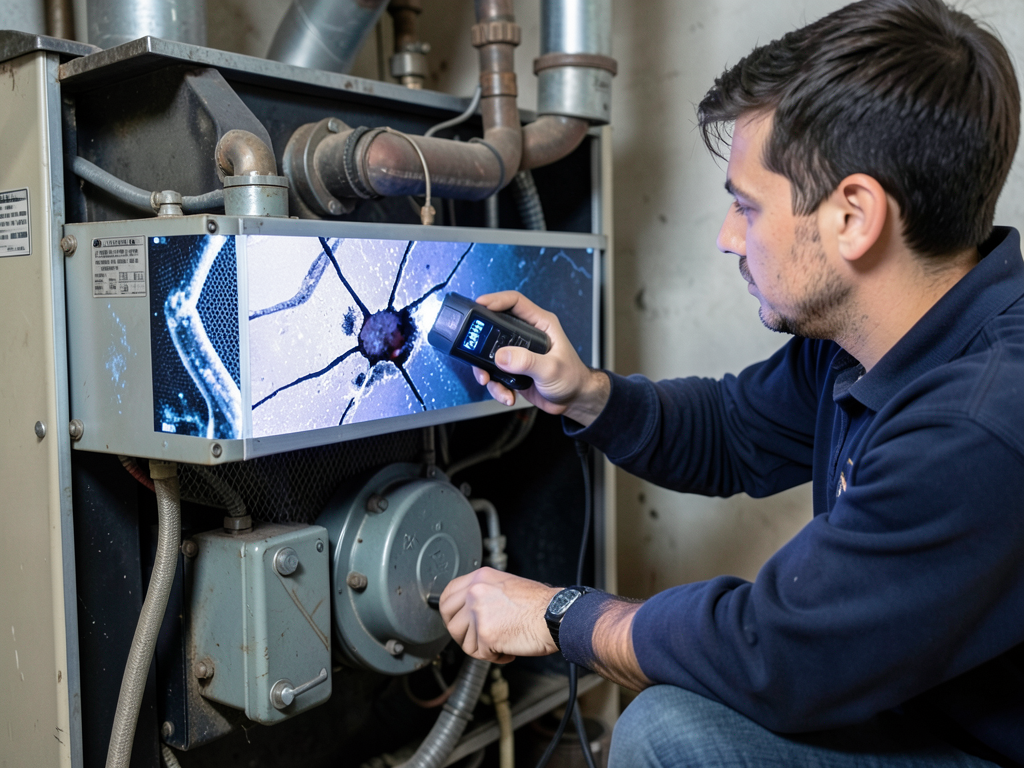
Technician inspecting a cracked heat exchanger in a Roslindale home’s 20-year-old furnace, showing visible rust and corrosion patterns typical in Boston’s humid climate.
Why Roslindale Homes Face Higher CO Risks
Roslindale’s mix of historic Victorian homes and mid-century construction creates unique carbon monoxide vulnerabilities. Many homes in the 02131 zip code were built before modern ventilation standards and still rely on their original heating systems. Upgrading Historic Back Bay Homes with Central Air (Without Ruining the Interior Walls).
The neighborhood’s heavy snowfall patterns during Boston winters create additional risks. Snow drifts can block furnace exhaust vents, causing dangerous backdrafting. Roslindale’s mature tree canopy also contributes to debris accumulation in rooftop vents.
Older homes in the Walter Street and Washington Street corridors often have shared chimney flues that weren’t designed for today’s high-efficiency appliances. This creates negative pressure situations where CO gets pulled back into living spaces.
The Massachusetts Fuel Gas Code (248 CMR 4.00) requires specific venting configurations for gas appliances, but many Roslindale homes predate these requirements. Annual inspections by licensed HVAC technicians are essential for compliance and safety.
Immediate Steps to Take If You Suspect a CO Leak
Quick action saves lives when carbon monoxide is involved. Follow this emergency protocol:
- Get Fresh Air Immediately
Open windows and doors on your way out. Don’t waste time airing out the house completely.
- Evacuate All Occupants
Include pets. Carbon monoxide affects everyone in the home, not just those near the furnace.
- Call Emergency Services
Dial 911 from outside the home. Tell dispatchers you suspect carbon monoxide poisoning.
- Shut Off the Furnace
If you can safely access the furnace switch, turn it off. Don’t attempt repairs yourself.
- Contact National Grid
Call 1-800-525-8222 for gas emergency response. They’ll check for leaks and shut off service if needed.
- Seek Medical Attention
Even mild symptoms require evaluation. CO poisoning can cause delayed neurological effects.
Prevention Through Professional Maintenance
Annual furnace maintenance is your best defense against carbon monoxide risks. A comprehensive tune-up includes:
- Heat exchanger inspection using specialized cameras and testing equipment
- Combustion analysis to verify proper fuel-to-air ratios
- Flue pipe examination for blockages, corrosion, or disconnections
- Burner cleaning and adjustment for optimal efficiency
- Carbon monoxide detector testing and replacement recommendations
- Safety control verification including limit switches and flame sensors
The National Fire Protection Association (NFPA) Standard 54 requires annual inspections for fuel-burning appliances. This isn’t just a recommendation—it’s a critical safety requirement. NFPA Carbon Monoxide Safety Guidelines.
During Boston’s humid summers, moisture can accelerate corrosion in furnace components. Fall maintenance before heating season is particularly important for Roslindale homes.
Carbon Monoxide Detector Placement and Maintenance
Proper detector placement is crucial for early warning. Install CO detectors:
- On every level of your home
- Outside sleeping areas
- Near, but not directly above, fuel-burning appliances
- At least 15 feet from cooking appliances to avoid false alarms
Massachusetts law requires CO detectors in all residential buildings. The devices must be replaced every 5-7 years, even if they appear to be working. Test monthly and replace batteries annually. What to Do When Your Back Bay AC Unit Stops Working in July.
Consider low-level CO monitors that detect smaller concentrations over longer periods. Standard detectors only alarm at high levels, but chronic low-level exposure can still cause health problems.
Understanding Heat Exchanger Failure
The heat exchanger is the metal component that separates combustion gases from your home’s air. When it cracks or corrodes, CO escapes into your living space. Common causes of heat exchanger failure include:
- Metal fatigue from repeated heating and cooling cycles
- Corrosion from moisture and combustion byproducts
- Overheating due to restricted airflow or dirty filters
- Manufacturing defects in older units
Heat exchangers typically last 15-20 years in Boston’s climate. Roslindale homes with furnaces over 15 years old should have their heat exchangers inspected annually using infrared cameras and combustion analyzers.
Signs of heat exchanger problems include visible cracks, rust holes, or abnormal flame patterns when the blower motor starts. These require immediate professional attention.
Backdrafting Risks in Older Roslindale Homes
Backdrafting occurs when exhaust gases get pulled back into your home instead of venting outside. This dangerous condition is common in Roslindale’s older construction due to:
- Shared chimney flues with multiple appliances
- Depressurization from powerful kitchen exhaust fans
- Blocked or damaged flue pipes
- Negative pressure from modern airtight construction
A simple backdraft test involves holding a mirror near the draft hood while the furnace runs. If condensation appears, exhaust gases are spilling into your home.
Professional technicians use draft gauges and combustion analyzers to detect backdrafting that isn’t visible to homeowners. This testing should be part of every annual inspection.
Emergency Contacts for Roslindale Residents
Keep these numbers readily available:
| Service | Phone Number | Response Time |
|---|---|---|
| Emergency Services (911) | 911 | Immediate |
| National Grid Emergency | 1-800-525-8222 | 60-90 minutes |
| Boston Fire Department Non-Emergency | 617-343-8000 | 24 hours |
| Titan HVAC Emergency Service | (617) 758-1599 | 30-60 minutes |
National Grid technicians can shut off gas service if they detect dangerous conditions. This protects your family but may leave you without heat until repairs are completed.
Cost Factors for CO Safety Improvements
Investing in carbon monoxide safety involves several potential upgrades:
- Basic CO detectors: $25-50 each
- Low-level CO monitors: $100-200
- Heat exchanger inspection: $150-300
- Furnace replacement with modern sealed combustion: $4,000-8,000
- Chimney liner installation: $1,500-3,000
While the upfront costs may seem significant, they pale in comparison to the potential medical costs and emotional trauma of a CO incident. Many Roslindale homes qualify for Mass Save rebates on high-efficiency heating equipment that includes safety upgrades.
Seasonal Considerations for Roslindale Homes
Carbon monoxide risks fluctuate with Boston’s seasons:
- Fall: First use of heating systems after summer can reveal problems. Schedule inspections before cold weather hits.
- Winter: Heavy snow can block vents and exhaust pipes. Clear snow at least 3 feet from all outdoor vents.
- Spring: Melting snow can cause water damage to venting systems. Check for rust and corrosion.
- Summer: Humidity accelerates corrosion. Consider off-season inspections when HVAC companies are less busy.
Roslindale’s freeze-thaw cycles are particularly hard on older venting systems. The expansion and contraction of metal components can create gaps that allow CO to escape.
Professional Certification and Trust
When selecting an HVAC contractor for CO safety work, verify these credentials:
- NATE (North American Technician Excellence) certification
- Massachusetts State Oil and Gas Technician License
- EPA 608 Certification for refrigerant handling
- Local business license and insurance
Certified technicians use combustion analyzers that measure CO levels in parts per million, flue temperature, and oxygen content. These precise measurements identify problems that visual inspections miss.
Titan HVAC employs only NATE-certified technicians with an average of 10+ years experience serving Roslindale and surrounding Boston neighborhoods. Our team understands the unique challenges of older Boston homes.
Frequently Asked Questions
How often should I replace my carbon monoxide detectors?
Replace CO detectors every 5-7 years, even if they appear to be working. The sensors degrade over time and become less sensitive. Write the installation date on the back with a permanent marker. The Most Reliable Heat Pump Installation Teams in Cambridge.
Can I test my furnace for CO leaks myself?
No. Professional testing requires specialized equipment like combustion analyzers and infrared cameras. DIY testing with handheld monitors often gives false readings and misses hidden problems like cracked heat exchangers.
What’s the difference between a CO detector and a CO monitor?
Detectors alarm at high CO levels (70+ ppm), while monitors track low-level exposure over time. Monitors are better for chronic exposure detection but cost more. Every home needs at least one detector on each level.
How long does a furnace inspection take?
A thorough inspection takes 60-90 minutes. Technicians check the heat exchanger, test combustion efficiency, inspect venting, test safety controls, and check CO levels. Rush inspections often miss critical safety issues.
Should I be concerned about my gas fireplace?
Yes. Gas fireplaces produce carbon monoxide and need annual maintenance. Check for yellow flames, unusual odors, or condensation on nearby surfaces. Have the venting system inspected annually.
Take Action Today to Protect Your Family
Carbon monoxide doesn’t wait for convenient times to create problems. Don’t let another heating season pass without ensuring your Roslindale home is safe. A simple inspection could prevent a tragedy and give you peace of mind.
Call (617) 758-1599 today to schedule your comprehensive furnace safety inspection. Our NATE-certified technicians will check for CO risks, inspect your heat exchanger, test your venting system, and ensure your family is protected.
Pick up the phone and call (617) 758-1599 before the next cold snap hits. Your family’s safety is worth the investment. For more information, visit CDC Carbon Monoxide Poisoning Information.
{
“@context”: “https://schema.org”,
“@type”: “BlogPosting”,
“headline”: “Protecting Your Roslindale Family From Carbon Monoxide Risks in Older Heating Systems”,
“description”: “Learn how to protect your Roslindale home from carbon monoxide risks in older heating systems. Get Boston-specific safety tips and emergency contacts.”,
“wordCount”: 1805,
“datePublished”: “2026-05-21T12:19:00.000Z”,
“dateModified”: “2026-05-21T12:19:00.000Z”,
“inLanguage”: “en-US”,
“mainEntityOfPage”: {
“@type”: “WebPage”,
“@id”: “https://titanhvacboston.com”
},
“publisher”: {
“@type”: “LocalBusiness”,
“name”: “Titan HVAC Boston”,
“url”: “https://titanhvacboston.com”
},
“author”: {
“@type”: “Organization”,
“name”: “Titan HVAC Boston”,
“url”: “https://titanhvacboston.com”
},
“image”: {
“@type”: “ImageObject”,
“url”: “https://titanhvacboston.com/wp-content/uploads/2026/03/protecting-your-roslindale-family-from-carbon-mono-1.png”
}
}
{
“@context”: “https://schema.org”,
“@type”: “HVACBusiness”,
“name”: “Titan HVAC Boston”,
“url”: “https://titanhvacboston.com”,
“address”: {
“@type”: “PostalAddress”,
“addressLocality”: “Boston”
},
“areaServed”: {
“@type”: “City”,
“name”: “Boston”
}
}
{
“@context”: “https://schema.org”,
“@type”: “FAQPage”,
“mainEntity”: [
{
“@type”: “Question”,
“name”: “How often should I replace my carbon monoxide detectors?”,
“acceptedAnswer”: {
“@type”: “Answer”,
“text”: “Replace CO detectors every 5-7 years, even if they appear to be working. The sensors degrade over time and become less sensitive. Write the installation date on the back with a permanent marker. The Most Reliable Heat Pump Installation Teams in Cambridge.”
}
},
{
“@type”: “Question”,
“name”: “Can I test my furnace for CO leaks myself?”,
“acceptedAnswer”: {
“@type”: “Answer”,
“text”: “No. Professional testing requires specialized equipment like combustion analyzers and infrared cameras. DIY testing with handheld monitors often gives false readings and misses hidden problems like cracked heat exchangers.”
}
},
{
“@type”: “Question”,
“name”: “What’s the difference between a CO detector and a CO monitor?”,
“acceptedAnswer”: {
“@type”: “Answer”,
“text”: “Detectors alarm at high CO levels (70+ ppm), while monitors track low-level exposure over time. Monitors are better for chronic exposure detection but cost more. Every home needs at least one detector on each level.”
}
},
{
“@type”: “Question”,
“name”: “How long does a furnace inspection take?”,
“acceptedAnswer”: {
“@type”: “Answer”,
“text”: “A thorough inspection takes 60-90 minutes. Technicians check the heat exchanger, test combustion efficiency, inspect venting, test safety controls, and check CO levels. Rush inspections often miss critical safety issues.”
}
},
{
“@type”: “Question”,
“name”: “Should I be concerned about my gas fireplace?”,
“acceptedAnswer”: {
“@type”: “Answer”,
“text”: “Yes. Gas fireplaces produce carbon monoxide and need annual maintenance. Check for yellow flames, unusual odors, or condensation on nearby surfaces. Have the venting system inspected annually.”
}
}
]
}
{
“@context”: “https://schema.org”,
“@type”: “HowTo”,
“name”: “Emergency CO Response”,
“step”: [
{
“@type”: “HowToStep”,
“position”: 1,
“name”: “Get Fresh Air Immediately”,
“text”: “Open windows and doors on your way out. Don’t waste time airing out the house completely.”
},
{
“@type”: “HowToStep”,
“position”: 2,
“name”: “Evacuate All Occupants”,
“text”: “Include pets. Carbon monoxide affects everyone in the home, not just those near the furnace.”
},
{
“@type”: “HowToStep”,
“position”: 3,
“name”: “Call Emergency Services”,
“text”: “Dial 911 from outside the home. Tell dispatchers you suspect carbon monoxide poisoning.”
},
{
“@type”: “HowToStep”,
“position”: 4,
“name”: “Shut Off the Furnace”,
“text”: “If you can safely access the furnace switch, turn it off. Don’t attempt repairs yourself.”
},
{
“@type”: “HowToStep”,
“position”: 5,
“name”: “Contact National Grid”,
“text”: “Call 1-800-525-8222 for gas emergency response. They’ll check for leaks and shut off service if needed.”
},
{
“@type”: “HowToStep”,
“position”: 6,
“name”: “Seek Medical Attention”,
“text”: “Even mild symptoms require evaluation. CO poisoning can cause delayed neurological effects.”
}
],
“image”: “https://titanhvacboston.com/wp-content/uploads/2026/03/protecting-your-roslindale-family-from-carbon-mono-1.png”
}
{
“@context”: “https://schema.org”,
“@type”: “BreadcrumbList”,
“itemListElement”: [
{
“@type”: “ListItem”,
“position”: 1,
“name”: “Home”,
“item”: “https://titanhvacboston.com”
},
{
“@type”: “ListItem”,
“position”: 2,
“name”: “Blog”,
“item”: “https://titanhvacboston.com/blog”
},
{
“@type”: “ListItem”,
“position”: 3,
“name”: “Protecting Your Roslindale Family From Carbon Monoxide Risks in Older Heating Systems”
}
]
}
{
“@context”: “https://schema.org”,
“@type”: “Service”,
“serviceType”: “HVAC”,
“provider”: {
“@type”: “LocalBusiness”,
“name”: “Titan HVAC Boston”,
“url”: “https://titanhvacboston.com”
},
“areaServed”: {
“@type”: “City”,
“name”: “Boston”
},
“description”: “Learn how to protect your Roslindale home from carbon monoxide risks in older heating systems. Get Boston-specific safety tips and emergency contacts.”
}