
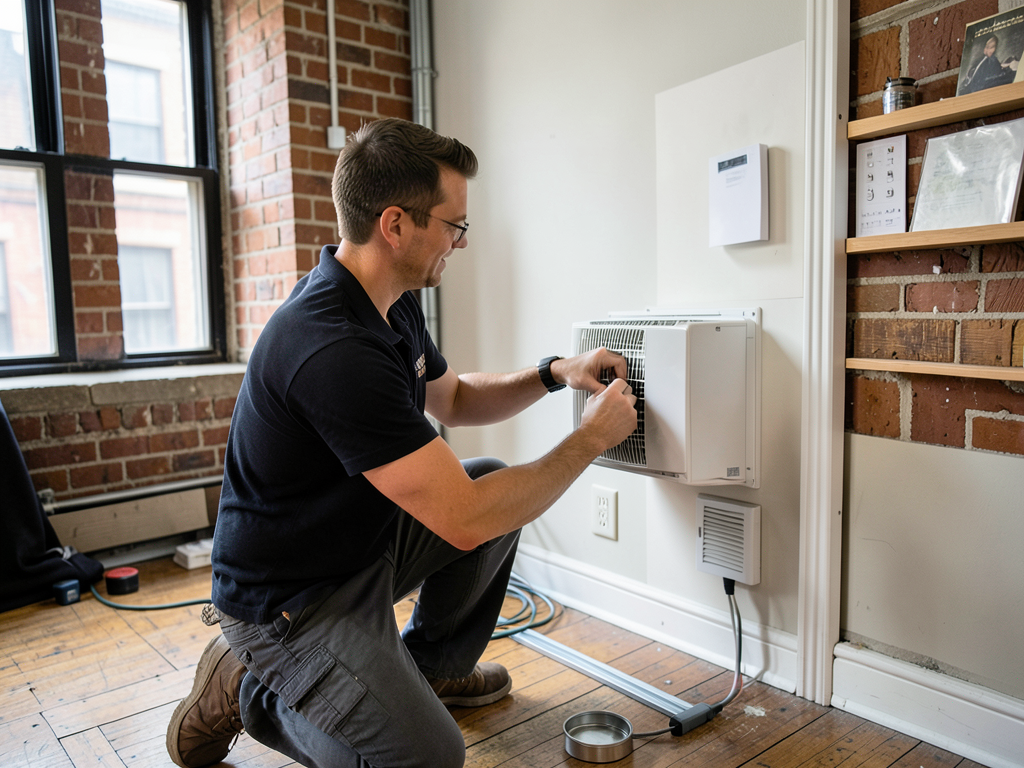
Finding the right air conditioner for a 500 square foot North End studio requires more than just picking a unit off the shelf. Boston’s historic North End presents unique challenges including high humidity, brick thermal mass, and often outdated electrical systems. The wrong AC size leads to short cycling, wasted energy, and uncomfortable living conditions. Mass Save website.
Most North End studios built before 1930 feature plaster walls, single-pane windows, and shared party walls that complicate cooling loads. A properly sized unit accounts for these factors while delivering consistent comfort during Boston’s humid summers. This guide walks through the exact calculations and considerations needed to select the perfect AC for your space.
Understanding BTU Requirements for Small Boston Spaces
British Thermal Units measure cooling capacity. For a basic 500 square foot space, the starting point is 12000 to 15000 BTU. North End studios often need adjustments due to their unique characteristics.
The standard calculation multiplies square footage by 25 BTU. For 500 square feet, that equals 12500 BTU. But this baseline assumes modern construction with proper insulation and average sun exposure.
North End buildings typically require a 15 to 20 percent increase due to older construction methods. This means a 14375 to 15000 BTU unit becomes the minimum recommendation for most studios in this neighborhood.
Factors That Increase Cooling Load in Historic Buildings
Older buildings present several challenges that increase cooling requirements. High ceilings common in North End studios add significant volume. A standard 8 foot ceiling assumption becomes 10 to 12 feet in many units, increasing the required BTU by 25 percent.
Single-pane windows allow substantial heat gain. If your studio faces south or west, add another 10 percent to your BTU calculation. North facing units might need less, but Boston’s urban heat island effect still impacts cooling needs.
Shared brick walls in attached buildings create thermal mass that absorbs heat during the day and releases it at night. This requires continuous cooling rather than cycling on and off, favoring slightly larger units with inverter technology. Benefits of Inverter Technology.
Window Units vs. Ductless Mini-Splits for Small Spaces
Window units offer the most affordable solution at $300 to $600 for the appropriate size. Installation takes minutes and they work well for renters. However they block windows, create security concerns, and often struggle with Boston’s humidity levels. The Most Reliable Heat Pump Installation Teams in Cambridge.
Ductless mini-splits cost $2500 to $4000 installed but provide superior performance. These systems handle humidity better, operate more quietly, and don’t block windows. They also offer heating capabilities for spring and fall shoulder seasons.
For North End studios, mini-splits often make more sense despite higher upfront costs. The energy savings over multiple seasons typically offset the initial investment within 3 to 4 years.
Electrical Considerations for Older Buildings
Many North End buildings have 15 amp circuits that cannot support larger AC units. A 15000 BTU window unit draws 12 to 13 amps, leaving minimal capacity for other devices. This often requires dedicated circuits or choosing smaller units.
Older wiring poses another challenge. Cloth insulated wiring common in buildings from the 1920s to 1950s cannot handle continuous loads above 80 percent of rated capacity. This means a 15 amp circuit safely supports only 12 amps continuous draw.
Before purchasing any AC unit, check your electrical panel’s capacity and wiring condition. Many North End buildings require electrical upgrades before installing modern cooling systems.
Energy Efficiency and Boston’s Utility Rates
Massachusetts has some of the highest electricity rates in the country, currently averaging 29 cents per kilowatt-hour. An inefficient AC unit can cost $50 to $80 monthly during peak summer months.
Energy Star certified units use 10 to 15 percent less energy than standard models. For a 500 square foot studio running 8 hours daily, this translates to $40 to $60 in annual savings. Over a 10 year lifespan, that’s $400 to $600 in utility savings.
SEER2 ratings now replace the older SEER standard. Look for units with SEER2 ratings of 14 or higher for window units, and 16 plus for mini-splits to maximize efficiency in Boston’s climate.
Installation Considerations for Urban Living
North End window installations face unique challenges. Narrow streets limit access for large equipment. Many buildings have decorative window casings that require careful modification to install AC units properly.
Noise ordinances in Boston restrict outdoor unit operation between 11 PM and 7 AM. This affects window unit selection, as some models operate at 55 plus decibels – louder than a normal conversation.
Building management often restricts exterior modifications in historic districts. Always check with your landlord or condo association before purchasing any AC unit that requires exterior changes. Upgrading Historic Back Bay Homes with Central Air (Without Ruining the Interior Walls).
Humidity Control in Boston’s Coastal Climate
Boston summers bring high humidity, often exceeding 80 percent relative humidity. Standard AC units remove some moisture but struggle with Boston’s coastal air masses. This leads to that uncomfortable cold but sticky feeling.
Units with dedicated dehumidification modes or variable speed compressors handle humidity better. These systems run longer at lower speeds, removing more moisture without overcooling the space.
For North End studios, humidity control often matters more than raw cooling capacity. A slightly undersized but high quality unit often provides better comfort than an oversized model that short cycles.
Cost Considerations and Available Rebates
Window units range from $300 to $800 depending on features and efficiency. Installation might add $100 to $200 if electrical work is needed. Total investment: $400 to $1000.
Mini-splits cost $2500 to $4000 installed, including electrical work and mounting hardware. While expensive upfront, they offer the best long term value for year round comfort.
Mass Save offers rebates up to $500 for high efficiency cooling equipment. These rebates apply to both window units and mini-splits purchased through participating retailers. Check www.masssave.com for current offers before purchasing.
Maintenance Requirements for Small AC Units
Window units need annual cleaning of coils and filters. In Boston’s urban environment, this often means cleaning every 2 to 3 months due to dust and pollen. Dirty filters reduce efficiency by 15 percent and can cause premature failure.
Mini-splits require professional cleaning every 2 to 3 years. The indoor units have washable filters that need monthly cleaning during heavy use. Outdoor units need clear space around them for proper airflow.
Both types benefit from covering during off season months. Boston’s freeze thaw cycles can damage exposed units, reducing lifespan by several years.
When to Call a Professional
DIY installation works for most window units. However, call a professional if your electrical panel needs upgrading, if you need to modify historic window frames, or if you’re considering a mini-split installation.
Professional HVAC technicians understand Boston’s building codes and can ensure proper installation. They also handle the disposal of old units, which contains refrigerants requiring special handling under EPA regulations.
Call (617) 758-1599 today to schedule your inspection. Our technicians specialize in North End studio cooling solutions and can recommend the perfect system for your specific needs.
Making the Final Decision
For most 500 square foot North End studios, a 14000 to 15000 BTU unit provides optimal comfort. Choose Energy Star certification for efficiency, and consider your electrical capacity before making final decisions.
Renters might prefer window units for portability, while owners should consider mini-splits for better performance and potential heating benefits. Factor in humidity control capabilities, especially important in Boston’s coastal climate.
The right AC unit transforms a hot, sticky studio into a comfortable retreat during Boston’s humid summers. Take time to evaluate your specific needs, building constraints, and budget before making your final selection. Finding the Right Ductless Mini Split for a Beacon Hill Brownstone.
Frequently Asked Questions
What size AC do I need for a 500 sq ft studio in Boston?
A 14000 to 15000 BTU unit typically works best for 500 square foot North End studios. This accounts for Boston’s humidity and older building construction methods.
Can I install a window AC unit myself in my North End apartment?
Most window units install easily with basic tools. However, check your building’s rules first, especially in historic districts where exterior modifications may be restricted.
How much does it cost to cool a 500 sq ft studio in Boston during summer?
Expect $40 to $80 monthly depending on usage, unit efficiency, and electricity rates. Energy Star certified units cost 10 to 15 percent less to operate than standard models.
Do I need a permit to install an AC unit in Boston?
Window units typically don’t require permits. Mini-splits and any work involving electrical panel changes require permits from the Boston Inspectional Services Department.
{
“@context”: “https://schema.org”,
“@type”: “BlogPosting”,
“headline”: “How to Properly Size a New AC Unit for a 500 Square Foot North End Studio”,
“description”: “Find the right AC size for your 500 sq ft North End studio. Learn BTU calculations for Boston’s historic buildings and get expert cooling recommendations.”,
“wordCount”: 1439,
“datePublished”: “2026-06-08T07:25:00.000Z”,
“dateModified”: “2026-06-08T07:25:00.000Z”,
“inLanguage”: “en-US”,
“mainEntityOfPage”: {
“@type”: “WebPage”,
“@id”: “https://titanhvacboston.com”
},
“publisher”: {
“@type”: “LocalBusiness”,
“name”: “Titan HVAC Boston”,
“url”: “https://titanhvacboston.com”
},
“author”: {
“@type”: “Organization”,
“name”: “Titan HVAC Boston”,
“url”: “https://titanhvacboston.com”
},
“image”: {
“@type”: “ImageObject”,
“url”: “https://titanhvacboston.com/wp-content/uploads/2026/03/how-to-properly-size-a-new-ac-unit-for-a-500-squar-1.png”
}
}
{
“@context”: “https://schema.org”,
“@type”: “HVACBusiness”,
“name”: “Titan HVAC Boston”,
“url”: “https://titanhvacboston.com”,
“address”: {
“@type”: “PostalAddress”,
“addressLocality”: “Boston”
},
“areaServed”: {
“@type”: “City”,
“name”: “Boston”
}
}
{
“@context”: “https://schema.org”,
“@type”: “FAQPage”,
“mainEntity”: [
{
“@type”: “Question”,
“name”: “What size AC do I need for a 500 sq ft studio in Boston?”,
“acceptedAnswer”: {
“@type”: “Answer”,
“text”: “A 14000 to 15000 BTU unit typically works best for 500 square foot North End studios. This accounts for Boston’s humidity and older building construction methods.”
}
},
{
“@type”: “Question”,
“name”: “Can I install a window AC unit myself in my North End apartment?”,
“acceptedAnswer”: {
“@type”: “Answer”,
“text”: “Most window units install easily with basic tools. However, check your building’s rules first, especially in historic districts where exterior modifications may be restricted.”
}
},
{
“@type”: “Question”,
“name”: “How much does it cost to cool a 500 sq ft studio in Boston during summer?”,
“acceptedAnswer”: {
“@type”: “Answer”,
“text”: “Expect $40 to $80 monthly depending on usage, unit efficiency, and electricity rates. Energy Star certified units cost 10 to 15 percent less to operate than standard models.”
}
},
{
“@type”: “Question”,
“name”: “Do I need a permit to install an AC unit in Boston?”,
“acceptedAnswer”: {
“@type”: “Answer”,
“text”: “Window units typically don’t require permits. Mini-splits and any work involving electrical panel changes require permits from the Boston Inspectional Services Department.”
}
}
]
}
{
“@context”: “https://schema.org”,
“@type”: “BreadcrumbList”,
“itemListElement”: [
{
“@type”: “ListItem”,
“position”: 1,
“name”: “Home”,
“item”: “https://titanhvacboston.com”
},
{
“@type”: “ListItem”,
“position”: 2,
“name”: “Blog”,
“item”: “https://titanhvacboston.com/blog”
},
{
“@type”: “ListItem”,
“position”: 3,
“name”: “How to Properly Size a New AC Unit for a 500 Square Foot North End Studio”
}
]
}
{
“@context”: “https://schema.org”,
“@type”: “Service”,
“serviceType”: “HVAC”,
“provider”: {
“@type”: “LocalBusiness”,
“name”: “Titan HVAC Boston”,
“url”: “https://titanhvacboston.com”
},
“areaServed”: {
“@type”: “City”,
“name”: “Boston”
},
“description”: “Find the right AC size for your 500 sq ft North End studio. Learn BTU calculations for Boston’s historic buildings and get expert cooling recommendations.”
}