
Comparing Tankless Water Heaters and Traditional Tanks for Small Bay Village Homes
Bay Village’s narrow streets and compact row houses make every square foot count. Choosing between a tankless water heater and a traditional tank system means weighing space savings against upfront costs and long-term performance in Boston’s harsh winters. This guide breaks down the technical differences maintenance needs and Mass Save rebates so you can make the right call for your home. Mass Save rebates.
Key Differences at a Glance
| Feature | Tankless (On-Demand) | Traditional Tank |
|---|---|---|
| Space Required | Mounts on wall 2′ x 2′ x 1′ | Floor space 2′ x 2′ x 5′ tall |
| Lifespan | 20+ years with flushing | 10-12 years average |
| Energy Use | High-efficiency condensing | Standby heat loss constant |
| Hot Water Supply | Unlimited (within GPM limits) | 40-50 gallons then recovery |
| Annual Energy Cost* | $200-300 | $400-500 |
*Based on Boston’s average residential usage and National Grid rates in 2026.
Performance in Cold Climates: The Boston Groundwater Factor
New England’s winter groundwater hovers around 40-45°F. That cold water entering your system means tankless units must work harder to heat it on demand. A typical 199000 BTU condensing tankless delivers about 5.8 gallons per minute at a 70°F rise. That’s enough for two showers and a dishwasher running together. Traditional tanks don’t care about incoming temperature because they preheat and store water. But they lose heat constantly through the tank walls even with insulation.
In Bay Village’s older homes many have ½-inch supply lines that further limit flow. A tankless system with proper ¾-inch piping can overcome this bottleneck. But if your home has low pressure from aging mains the tankless might struggle to deliver rated GPM. That’s why a pre-installation flow test matters. The Most Reliable Heat Pump Installation Teams in Cambridge.
Cost Analysis: Upfront Investment vs. Long-Term Savings
A standard 50-gallon traditional tank costs about $1200-1500 installed in Boston including permits. A tankless system runs $3000-4000 installed with upgraded gas lines and venting. The higher cost comes from the need for Category III stainless steel venting and sometimes a larger gas meter. But tankless units last twice as long and cut energy use by 30-40 percent. Energy Star water heater efficiency.
Over 15 years a tankless owner saves roughly $1500-2000 in energy costs. Add in Mass Save rebates up to $700 and the payback period shrinks to 6-8 years. If you plan to stay in your Bay Village home longer than that the tankless math works in your favor.
Energy Efficiency and Mass Save Rebates
Mass Save offers rebates for both system types but the biggest incentives go to high-efficiency condensing models. A qualifying tankless with 0.87 UEF or better can earn up to $700 back. Traditional tanks with 0.64 UEF or better earn smaller rebates around $150-250. National Grid and Eversource also offer additional per-therm rebates for gas customers.
To qualify you must use a licensed Massachusetts plumber and install a thermal expansion tank. The utility will inspect the install before issuing the rebate. Some Bay Village homes built before 1980 may need a gas line upgrade to meet code. That’s an extra $500-800 but it’s required for safety and rebate eligibility.
Space Savings and Installation Requirements for Older Boston Homes
Tankless units free up floor space by mounting on an exterior wall or in a utility closet. In Bay Village’s narrow floor plans that can mean reclaiming 15-20 square feet. But the trade-off is venting. Tankless systems need Category III stainless steel vent pipes that run outside. In brick row houses that often means drilling through an exterior wall and sealing it properly to prevent drafts.
Traditional tanks vent through a standard B-vent chimney. If your home still has a shared brick chimney you might need a new liner for code compliance. That’s another $800-1200. Tankless units also require a condensate drain line. In basements without floor drains you’ll need to pump the condensate to a utility sink or sump.
Maintenance and Lifespan: What to Expect
Traditional tanks need an annual sediment flush and anode rod check. The anode rod sacrifices itself to prevent tank corrosion. Replace it every 3-5 years and the tank can last 12-15 years. Tankless units need a different approach. Every year you should flush the heat exchanger with food-grade citric acid to remove scale. In Boston’s moderately hard water that’s critical. Skip it and efficiency drops 20-30 percent in three years.
Tankless also have a water filter screen that catches debris. Clean it every six months. The electronic ignition and flow sensors need no service unless they fail. When they do replacement parts cost $150-300. Traditional tanks rarely have electronic parts but when the thermostat or gas valve fails it’s often cheaper to replace the whole unit.
Verdict: Which is Right for Your Household?
If your Bay Village home has one or two occupants and you value space and efficiency a tankless system makes sense. The rebates cut the pain of the higher upfront cost and you’ll never run out of hot water during back-to-back showers. If you have a large family or low water pressure a traditional tank might be more reliable day to day.
Consider your plans too. If you’ll move in five years the tankless premium might not pay off. If you’re staying long-term the energy savings and space recovery add up. Either way get a professional flow test and gas line inspection before deciding. That one step prevents surprises during install.
Frequently Asked Questions
Do tankless water heaters work in freezing weather?
Yes. Modern units have built-in freeze protection down to -30°F. But the pipes feeding the unit must be insulated or the water inside can freeze and crack the heat exchanger.
How long does a tankless install take?
Most installs finish in one day. Gas line upgrades or venting changes can add a half day. The unit needs a 24-hour burn-in test before full use.
Can I install a tankless myself?
No. Massachusetts code requires a licensed plumber and gas fitter. DIY installs void warranties and can create dangerous carbon monoxide leaks.
Will a tankless save enough to justify the cost?
For a two-person household yes. The energy savings plus Mass Save rebates often offset the higher install cost within 6-8 years.
What size tankless do I need?
It depends on your peak hot water demand. A typical Bay Village condo needs a 199000 BTU unit. Larger homes with multiple bathrooms may need 199000-380000 BTU.
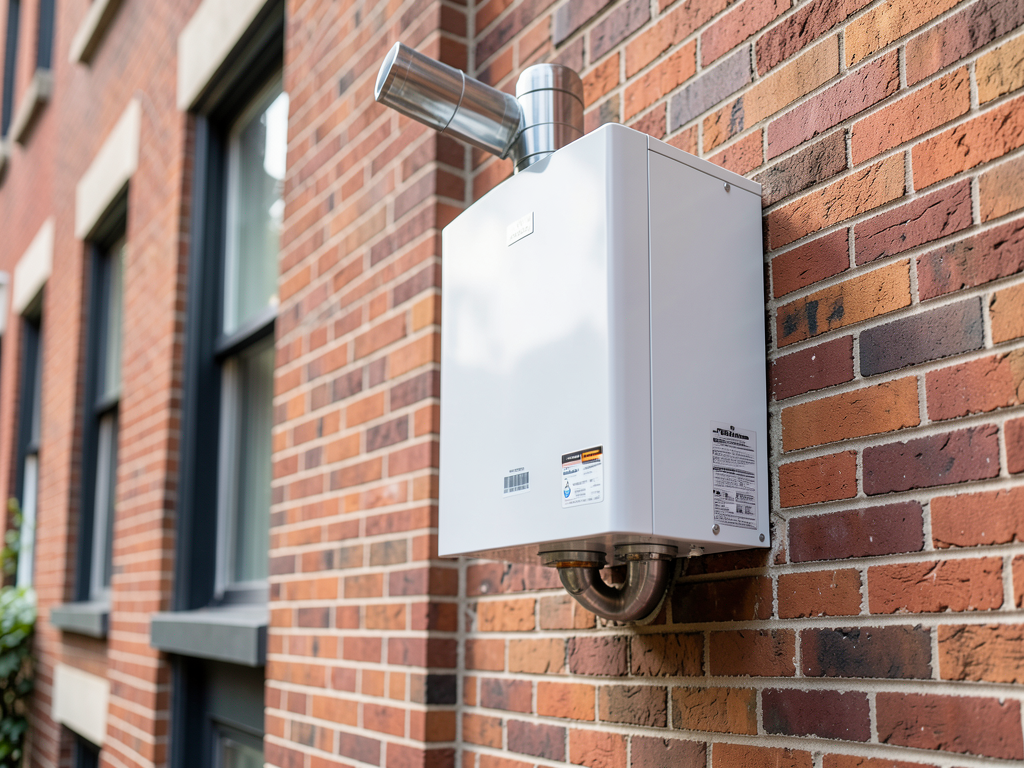
Diagram showing how a tankless water heater mounts on an exterior wall with stainless steel venting and condensate drain line.
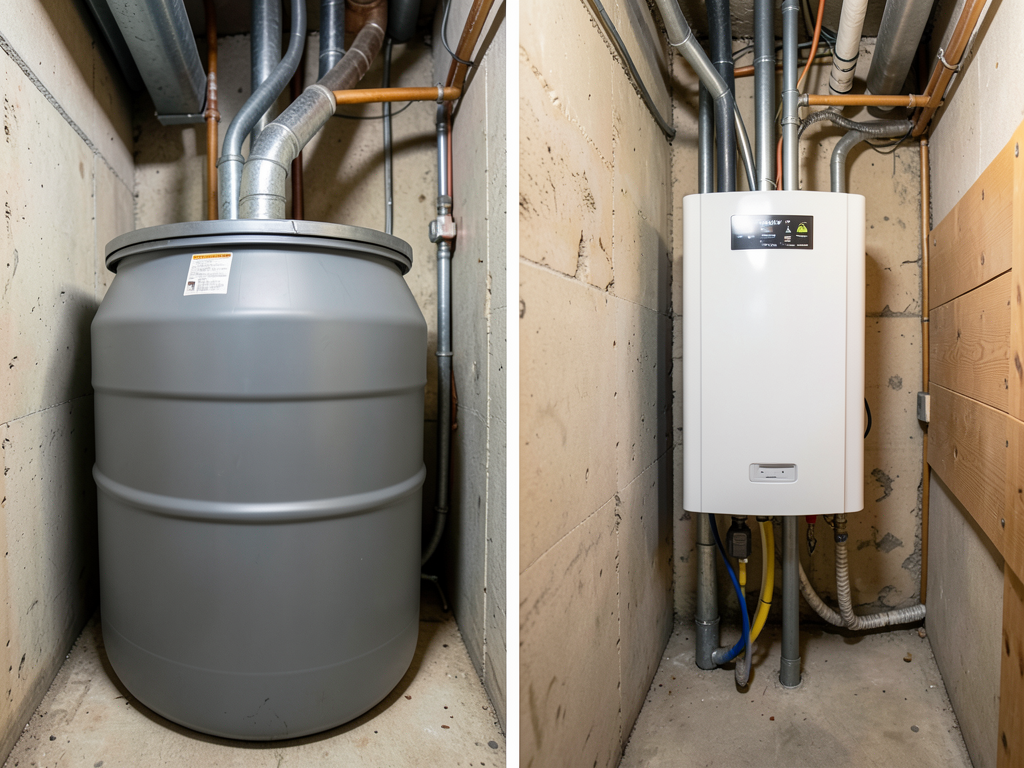
Side-by-side comparison of a 50-gallon traditional tank and a wall-mounted tankless unit installed in a narrow Boston basement.
Close-up of a tankless heat exchanger before and after flushing to show scale buildup and clean surfaces.
Next Steps
Ready to upgrade your water heating system? Call (617) 758-1599 today to schedule a free in-home consultation. We’ll test your flow rate check your gas line and show you exactly which system fits your Bay Village home. Don’t wait until your old tank fails on a cold January morning.
{
“@context”: “https://schema.org”,
“@type”: “BlogPosting”,
“headline”: “Comparing Tankless Water Heaters and Traditional Tanks for Small Bay Village Homes”,
“description”: “Bay Village’s tight spaces demand smart water heating. Compare tankless vs. tank options with local rebates, Boston codes, and real installation insights from Titan HVAC.”,
“wordCount”: 1175,
“datePublished”: “2026-04-25T06:50:00.000Z”,
“dateModified”: “2026-04-25T06:50:00.000Z”,
“inLanguage”: “en-US”,
“mainEntityOfPage”: {
“@type”: “WebPage”,
“@id”: “https://titanhvacboston.com”
},
“publisher”: {
“@type”: “LocalBusiness”,
“name”: “Titan HVAC Boston”,
“url”: “https://titanhvacboston.com”
},
“author”: {
“@type”: “Organization”,
“name”: “Titan HVAC Boston”,
“url”: “https://titanhvacboston.com”
},
“image”: {
“@type”: “ImageObject”,
“url”: “https://titanhvacboston.com/wp-content/uploads/2026/03/comparing-tankless-water-heaters-and-traditional-t-1.png”
}
}
{
“@context”: “https://schema.org”,
“@type”: “HVACBusiness”,
“name”: “Titan HVAC Boston”,
“url”: “https://titanhvacboston.com”,
“address”: {
“@type”: “PostalAddress”,
“addressLocality”: “Boston”
},
“areaServed”: {
“@type”: “City”,
“name”: “Boston”
}
}
{
“@context”: “https://schema.org”,
“@type”: “FAQPage”,
“mainEntity”: [
{
“@type”: “Question”,
“name”: “Verdict: Which is Right for Your Household?”,
“acceptedAnswer”: {
“@type”: “Answer”,
“text”: “If your Bay Village home has one or two occupants and you value space and efficiency a tankless system makes sense. The rebates cut the pain of the higher upfront cost and you’ll never run out of hot water during back-to-back showers. If you have a large family or low water pressure a traditional tank might be more reliable day to day.”
}
},
{
“@type”: “Question”,
“name”: “Do tankless water heaters work in freezing weather?”,
“acceptedAnswer”: {
“@type”: “Answer”,
“text”: “Yes. Modern units have built-in freeze protection down to -30°F. But the pipes feeding the unit must be insulated or the water inside can freeze and crack the heat exchanger.”
}
},
{
“@type”: “Question”,
“name”: “How long does a tankless install take?”,
“acceptedAnswer”: {
“@type”: “Answer”,
“text”: “Most installs finish in one day. Gas line upgrades or venting changes can add a half day. The unit needs a 24-hour burn-in test before full use.”
}
},
{
“@type”: “Question”,
“name”: “Can I install a tankless myself?”,
“acceptedAnswer”: {
“@type”: “Answer”,
“text”: “No. Massachusetts code requires a licensed plumber and gas fitter. DIY installs void warranties and can create dangerous carbon monoxide leaks.”
}
},
{
“@type”: “Question”,
“name”: “Will a tankless save enough to justify the cost?”,
“acceptedAnswer”: {
“@type”: “Answer”,
“text”: “For a two-person household yes. The energy savings plus Mass Save rebates often offset the higher install cost within 6-8 years.”
}
},
{
“@type”: “Question”,
“name”: “What size tankless do I need?”,
“acceptedAnswer”: {
“@type”: “Answer”,
“text”: “It depends on your peak hot water demand. A typical Bay Village condo needs a 199000 BTU unit. Larger homes with multiple bathrooms may need 199000-380000 BTU.”
}
}
]
}
{
“@context”: “https://schema.org”,
“@type”: “BreadcrumbList”,
“itemListElement”: [
{
“@type”: “ListItem”,
“position”: 1,
“name”: “Home”,
“item”: “https://titanhvacboston.com”
},
{
“@type”: “ListItem”,
“position”: 2,
“name”: “Blog”,
“item”: “https://titanhvacboston.com/blog”
},
{
“@type”: “ListItem”,
“position”: 3,
“name”: “Comparing Tankless Water Heaters and Traditional Tanks for Small Bay Village Homes”
}
]
}
{
“@context”: “https://schema.org”,
“@type”: “Service”,
“serviceType”: “HVAC”,
“provider”: {
“@type”: “LocalBusiness”,
“name”: “Titan HVAC Boston”,
“url”: “https://titanhvacboston.com”
},
“areaServed”: {
“@type”: “City”,
“name”: “Boston”
},
“description”: “Bay Village’s tight spaces demand smart water heating. Compare tankless vs. tank options with local rebates, Boston codes, and real installation insights from Titan HVAC.”
}