
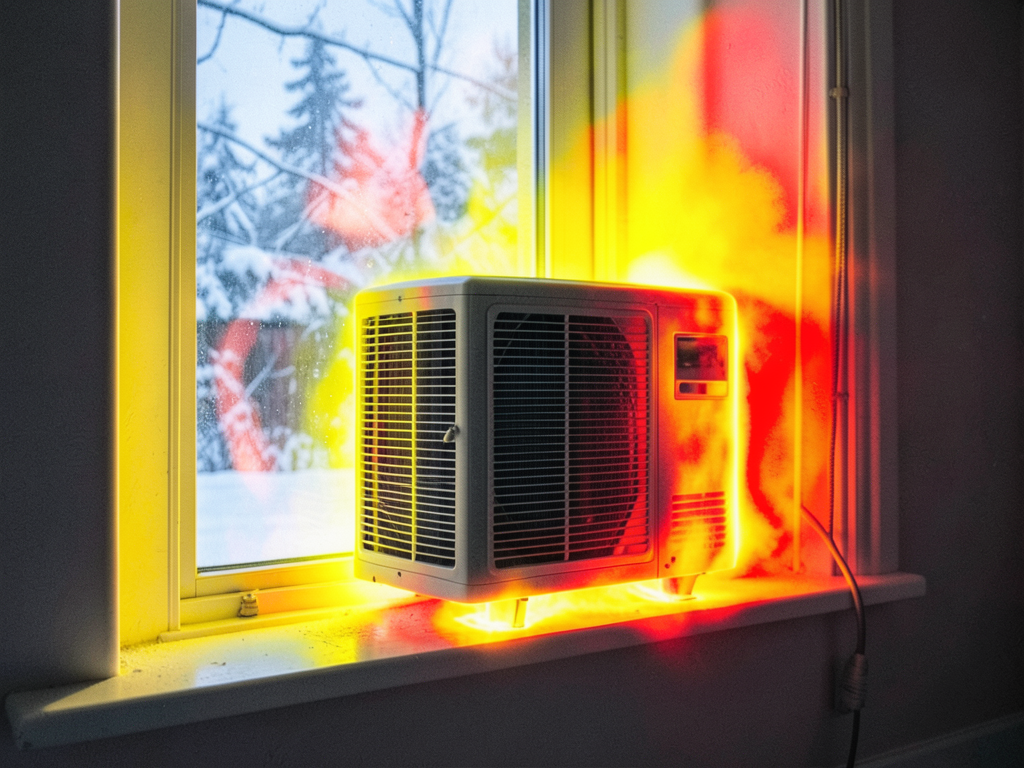
Why Leaving Your Window AC in All Winter is Ruining Your Medford Heating Bill
Every fall, thousands of Medford homeowners make the same mistake: they leave their window air conditioners in place through the winter. What seems like a minor convenience is actually costing you hundreds of dollars in wasted heating energy and risking serious damage to your HVAC system. The cold Massachusetts winters create a perfect storm of heat loss, moisture buildup, and mechanical stress that can turn your summer cooling unit into a winter energy drain. Massachusetts State Building Code 780 CMR.
Medford’s historic homes along Mystic Avenue and Riverside Avenue were built in the early 1900s with single-pane windows that were never designed for modern AC units. When you install a window air conditioner in these older frames, you create gaps that allow heated air to escape at an alarming rate. During a typical January freeze when temperatures drop below 20°F, the heat loss through these unsealed units can increase your National Grid bill by 15-20%. Upgrading Historic Back Bay Homes with Central Air (Without Ruining the Interior Walls).
The Hidden Cost of Heat Loss Through Your Window AC
Window air conditioners create an R-value of approximately 2.0 in your window opening, compared to the R-13 or higher that properly insulated windows provide. This means heat escapes through your AC unit at roughly six to seven times the rate it would through a standard double-pane window. In Medford’s climate, where winter heating season runs from November through March, that translates to approximately 1,200-1,500 BTU of heat loss per hour per unit.
Let’s put that in perspective. A typical Medford home with two window AC units running through winter wastes enough heat energy to warm an additional 500 square feet of living space. Over a five-month heating season, this heat loss can add $300-450 to your heating costs, depending on your fuel source and home size.

4 Ways Your Window AC is Damaging Your Home This Winter
Beyond the energy waste, leaving your AC in creates several serious problems that can lead to costly repairs. Here’s what’s actually happening inside and around your unit during a Medford winter:
- Ice Dam Formation Around the Unit – When warm indoor air hits the cold metal frame of your AC, condensation forms and freezes. This ice buildup can expand and damage both the window frame and the AC mounting brackets.
- Moisture and Mold Growth – The temperature differential between your warm living room and the freezing outdoor air creates condensation inside the unit. This moisture becomes a breeding ground for mold and mildew, which can spread to your indoor air when you turn the unit back on in spring.
- Mechanical Damage to Coils and Compressor – Freeze-thaw cycles cause the copper coils and aluminum fins to expand and contract, leading to microscopic cracks that reduce efficiency and can cause refrigerant leaks.
- Pest Entry Points – The gaps around your AC unit become perfect entry points for mice and other rodents seeking winter shelter. Medford’s older homes along Winthrop Street and near Tufts University are particularly vulnerable to these winter invasions.
Massachusetts Building Code Requirements for Window Units
According to the Massachusetts State Building Code 780 CMR Section 401.0, window air conditioners must be properly sealed and weatherized when installed. This code requires that any opening created for an AC unit be sealed to prevent air infiltration and maintain the thermal envelope of the building. Leaving an AC unit in place without proper winterization violates these energy efficiency requirements. Mass Save energy efficiency program.
The code also references the International Energy Conservation Code (IECC) which mandates that all exterior openings maintain an air leakage rate of less than 0.40 cubic feet per minute per square foot at 25 pascals pressure. A standard window AC unit, even when properly installed, typically allows 2-3 times this amount of air leakage.
How to Winterize Your Window AC (If You Can’t Remove It)
If removing your window AC isn’t an option due to physical limitations or rental agreements, proper winterization can significantly reduce the damage and energy waste. Here’s the professional method we use for Medford homes:
- Clean and Dry the Unit
Remove the front panel and clean all accessible surfaces with a mild detergent solution. Allow the unit to dry completely for 24 hours to prevent mold growth.
- Remove the Drain Plug
Take out the small rubber drain plug from the bottom of the unit. This allows any condensation to drain out rather than freeze and expand inside the unit.
- Install Rigid Foam Insulation
Cut pieces of 1-inch rigid foam board to fit the gaps on either side of the unit. This provides an R-5 insulation value compared to the R-1 provided by typical vinyl side panels.
- Apply Weatherstripping Tape
Seal all gaps between the unit and window frame with high-quality, cold-weather rated weatherstripping tape. This prevents drafts and moisture infiltration.
- Add a Breathable Cover
Install a breathable canvas or mesh AC cover over the entire exterior. Avoid plastic covers which trap moisture and promote rust.

The Boston Factor: Preparing for Nor’easters and Heavy Snow
Medford’s location just north of Boston means we’re frequently hit by powerful nor’easters that bring heavy snow, ice, and strong winds. These storms create unique challenges for window AC units that most generic advice doesn’t address.
During a typical nor’easter, wind-driven snow can pile up against your window AC, creating additional pressure on the mounting brackets and window frame. The salt spray carried inland from the coast can accelerate corrosion on the unit’s metal components. Medford’s proximity to the Mystic River means we also deal with higher humidity levels that increase the risk of condensation and ice formation.
For homes in flood-prone areas near the river, the risk extends beyond just the AC unit. Heavy snow followed by rapid warming can lead to basement flooding, which may affect the electrical connections to your window units. Always check your GFCI outlets and consider having a professional inspect your electrical connections before the heating season begins.
Modern Solutions: Heat Pumps and Ductless Mini-Splits
The HVAC industry has evolved significantly since most Medford homes were built. Modern heat pump technology allows you to replace your window AC with a system that provides both cooling and heating efficiently. Unlike traditional window units, these systems are designed to operate year-round and include features that prevent the heat loss problems associated with older AC units.
Ductless mini-split systems are particularly well-suited for Medford’s historic homes. These units mount high on walls or ceilings, eliminating the need to cut into existing window frames. They also provide zoned heating and cooling, which can reduce your overall energy consumption by 20-30% compared to window units or central systems that heat or cool your entire home.
Mass Save, the state’s energy efficiency program, offers rebates of up to $1,600 for installing qualifying heat pump systems. For Medford residents, this can offset a significant portion of the installation cost while providing immediate energy savings. The Most Reliable Heat Pump Installation Teams in Cambridge.

Cost Comparison: Window AC vs. Modern Heat Pump
| System Type | Annual Operating Cost | Installation Cost | Expected Lifespan | Energy Savings |
|---|---|---|---|---|
| Window AC + Separate Heater | $850-1,200 | $300-500 | 5-7 years | 0% |
| Heat Pump System | $450-650 | $3,500-5,000 | 15-20 years | 40-60% |
Frequently Asked Questions
Can I just cover my window AC with plastic instead of removing it?
Plastic covers trap moisture and can actually accelerate corrosion and mold growth. Use a breathable canvas or mesh cover specifically designed for AC units, and combine it with interior insulation for best results.
How much money will I save by removing my window AC units?
Most Medford homeowners save between $150-300 per heating season by properly removing or winterizing their window AC units. The exact savings depend on your home’s insulation quality and heating system efficiency.
Are there any window AC units that are safe to leave in during winter?
Traditional cooling-only window units should always be removed or winterized. However, modern heat pump window units are designed to operate year-round and include features to prevent heat loss and freeze damage.
What’s the best way to store a window AC unit during winter?
Store your unit in a dry, climate-controlled space like a basement or closet. Clean it thoroughly before storage, remove the drain plug, and cover it with a breathable fabric cover to prevent dust accumulation.
Does leaving my AC in violate my lease agreement?
Many Medford rental agreements require tenants to remove window units during winter months. Check your lease or consult with your landlord, as leaving units in place could potentially violate building codes or insurance requirements.
Take Action Before the Next Cold Snap Hits Medford
The cost of leaving your window AC in all winter extends far beyond your heating bill. You’re risking structural damage to your home, creating entry points for pests, and potentially shortening the lifespan of your cooling equipment. With Medford’s winter temperatures regularly dropping into the teens and our area’s tendency for heavy snowstorms, the risks are simply too high to ignore.
If you’re not comfortable removing your units yourself or want to explore more permanent heating and cooling solutions, our team at Titan HVAC Boston has been serving Medford and the surrounding communities for over 15 years. We understand the unique challenges of heating historic homes and can help you find solutions that protect your home and your wallet.
Call (617) 758-1599 today to schedule your inspection. Don’t wait until the next nor’easter hits – the longer you leave those units in, the more damage they’re causing and the more money you’re wasting on heating bills.
Ready to upgrade to a modern, efficient system? Our heat pump installation specialists can show you exactly how much you’ll save compared to your current setup. Pick up the phone and call (617) 758-1599 before the next storm hits.
{
“@context”: “https://schema.org”,
“@type”: “BlogPosting”,
“headline”: “Why Leaving Your Window AC in All Winter is Ruining Your Medford Heating Bill”,
“description”: “Leaving your window AC in all winter costs Medford homeowners hundreds in heating bills. Learn how to protect your home and save energy this winter.”,
“wordCount”: 1643,
“datePublished”: “2026-05-03T07:29:00.000Z”,
“dateModified”: “2026-05-03T07:29:00.000Z”,
“inLanguage”: “en-US”,
“mainEntityOfPage”: {
“@type”: “WebPage”,
“@id”: “https://titanhvacboston.com”
},
“publisher”: {
“@type”: “LocalBusiness”,
“name”: “Titan HVAC Boston”,
“url”: “https://titanhvacboston.com”
},
“author”: {
“@type”: “Organization”,
“name”: “Titan HVAC Boston”,
“url”: “https://titanhvacboston.com”
},
“image”: {
“@type”: “ImageObject”,
“url”: “https://titanhvacboston.com/wp-content/uploads/2026/03/why-leaving-your-window-ac-in-all-winter-is-ruinin-1.png”
}
}
{
“@context”: “https://schema.org”,
“@type”: “HVACBusiness”,
“name”: “Titan HVAC Boston”,
“url”: “https://titanhvacboston.com”,
“address”: {
“@type”: “PostalAddress”,
“addressLocality”: “Boston”
},
“areaServed”: {
“@type”: “City”,
“name”: “Boston”
}
}
{
“@context”: “https://schema.org”,
“@type”: “FAQPage”,
“mainEntity”: [
{
“@type”: “Question”,
“name”: “Can I just cover my window AC with plastic instead of removing it?”,
“acceptedAnswer”: {
“@type”: “Answer”,
“text”: “Plastic covers trap moisture and can actually accelerate corrosion and mold growth. Use a breathable canvas or mesh cover specifically designed for AC units, and combine it with interior insulation for best results.”
}
},
{
“@type”: “Question”,
“name”: “How much money will I save by removing my window AC units?”,
“acceptedAnswer”: {
“@type”: “Answer”,
“text”: “Most Medford homeowners save between $150-300 per heating season by properly removing or winterizing their window AC units. The exact savings depend on your home’s insulation quality and heating system efficiency.”
}
},
{
“@type”: “Question”,
“name”: “Are there any window AC units that are safe to leave in during winter?”,
“acceptedAnswer”: {
“@type”: “Answer”,
“text”: “Traditional cooling-only window units should always be removed or winterized. However, modern heat pump window units are designed to operate year-round and include features to prevent heat loss and freeze damage.”
}
},
{
“@type”: “Question”,
“name”: “What’s the best way to store a window AC unit during winter?”,
“acceptedAnswer”: {
“@type”: “Answer”,
“text”: “Store your unit in a dry, climate-controlled space like a basement or closet. Clean it thoroughly before storage, remove the drain plug, and cover it with a breathable fabric cover to prevent dust accumulation.”
}
},
{
“@type”: “Question”,
“name”: “Does leaving my AC in violate my lease agreement?”,
“acceptedAnswer”: {
“@type”: “Answer”,
“text”: “Many Medford rental agreements require tenants to remove window units during winter months. Check your lease or consult with your landlord, as leaving units in place could potentially violate building codes or insurance requirements.”
}
}
]
}
{
“@context”: “https://schema.org”,
“@type”: “HowTo”,
“name”: “How to Winterize a Window AC”,
“step”: [
{
“@type”: “HowToStep”,
“position”: 1,
“name”: “Clean and Dry the Unit”,
“text”: “Remove the front panel and clean all accessible surfaces with a mild detergent solution. Allow the unit to dry completely for 24 hours to prevent mold growth.”
},
{
“@type”: “HowToStep”,
“position”: 2,
“name”: “Remove the Drain Plug”,
“text”: “Take out the small rubber drain plug from the bottom of the unit. This allows any condensation to drain out rather than freeze and expand inside the unit.”
},
{
“@type”: “HowToStep”,
“position”: 3,
“name”: “Install Rigid Foam Insulation”,
“text”: “Cut pieces of 1-inch rigid foam board to fit the gaps on either side of the unit. This provides an R-5 insulation value compared to the R-1 provided by typical vinyl side panels.”
},
{
“@type”: “HowToStep”,
“position”: 4,
“name”: “Apply Weatherstripping Tape”,
“text”: “Seal all gaps between the unit and window frame with high-quality, cold-weather rated weatherstripping tape. This prevents drafts and moisture infiltration.”
},
{
“@type”: “HowToStep”,
“position”: 5,
“name”: “Add a Breathable Cover”,
“text”: “Install a breathable canvas or mesh AC cover over the entire exterior. Avoid plastic covers which trap moisture and promote rust.”
}
],
“image”: “https://titanhvacboston.com/wp-content/uploads/2026/03/why-leaving-your-window-ac-in-all-winter-is-ruinin-1.png”
}
{
“@context”: “https://schema.org”,
“@type”: “BreadcrumbList”,
“itemListElement”: [
{
“@type”: “ListItem”,
“position”: 1,
“name”: “Home”,
“item”: “https://titanhvacboston.com”
},
{
“@type”: “ListItem”,
“position”: 2,
“name”: “Blog”,
“item”: “https://titanhvacboston.com/blog”
},
{
“@type”: “ListItem”,
“position”: 3,
“name”: “Why Leaving Your Window AC in All Winter is Ruining Your Medford Heating Bill”
}
]
}
{
“@context”: “https://schema.org”,
“@type”: “Service”,
“serviceType”: “HVAC”,
“provider”: {
“@type”: “LocalBusiness”,
“name”: “Titan HVAC Boston”,
“url”: “https://titanhvacboston.com”
},
“areaServed”: {
“@type”: “City”,
“name”: “Boston”
},
“description”: “Leaving your window AC in all winter costs Medford homeowners hundreds in heating bills. Learn how to protect your home and save energy this winter.”
}